


Beakr connects to your existing tools, builds an institutional memory layer, and automates workflows — helping research teams move faster without losing context, control, or provenance.
Metagov x Future of Science Seminar - Discourse Graphs with Matt Akamatsu
Atlas Research - AI-Powered Research Platform
Transform your research workflow with Atlas - an AI-powered platform for data analysis, PDF processing, and interactive notebooks.

Using X-Labs to Unleash AI-Driven Scientific Breakthroughs | IFP
How to adapt our science funding mechanisms to the unique infrastructure needs of large-scale AI projects

AI Analytics Platform for Your Whole Team
Agentic notebooks, conversational self-serve, and Context Studio for governed AI answers — all in a unified platform for your whole team.
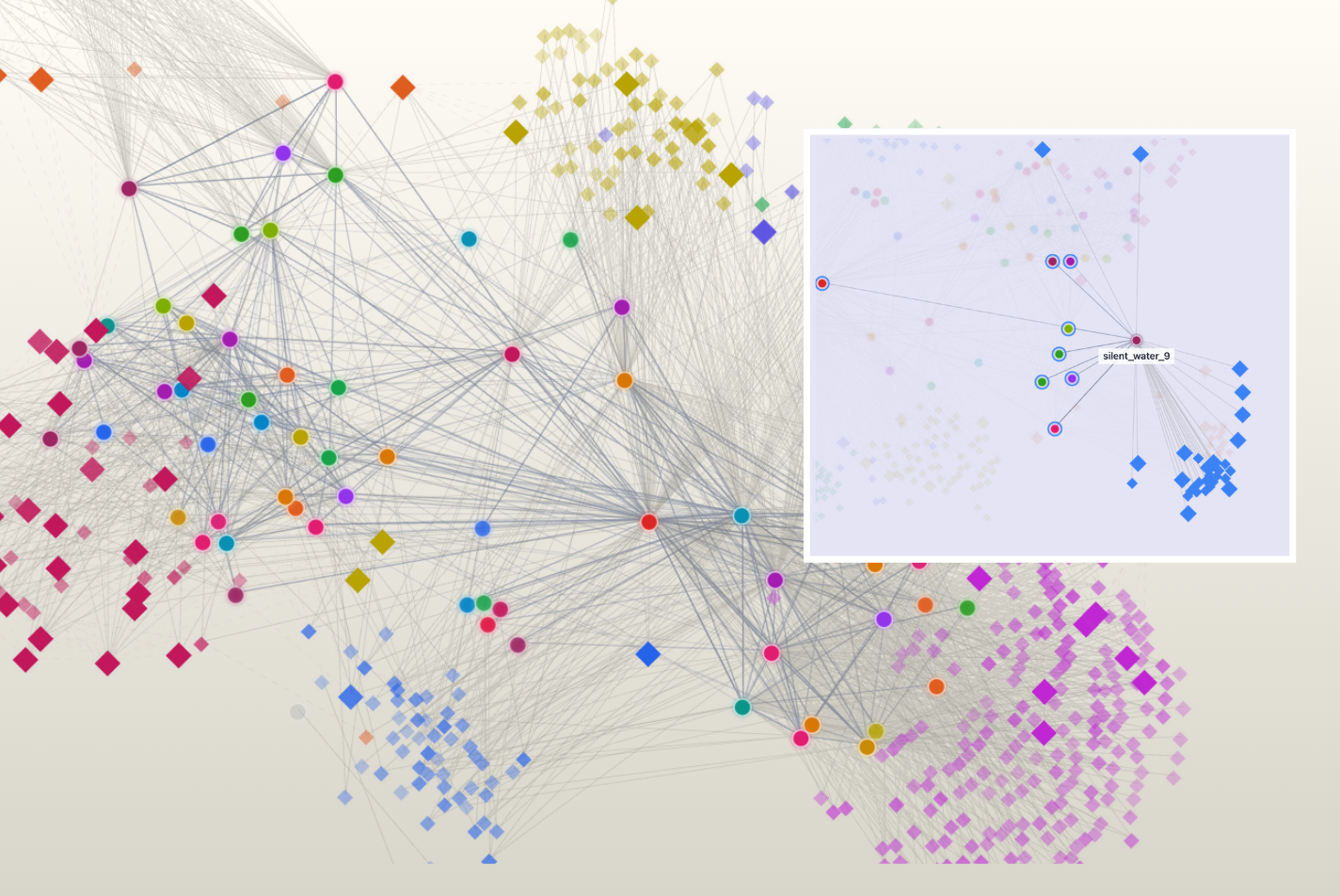
Kempner Researchers Create Social Network for “AI Scientists” to Collaborate - Kempner Institute
Science rarely advances exclusively through lone researchers. Progress often comes from discussion and collaboration — scientists sharing ideas, questioning one another, and refining their thinking together. Now, a team of […]
DAIR Institute
The Distributed AI Research Institute is a globally distributed organization of academics, activists, and engineers conducting community-rooted research.

Sustainable coordination in research labs via graph-enabled idea boards
Our 'graph-enabled idea board' serves as a hub for capturing excess research ideas, allocating microprojects, and properly attributing credit. We'd like to investigate its potential for enabling newcomers to quickly and effectively contribute to ongoing projects.
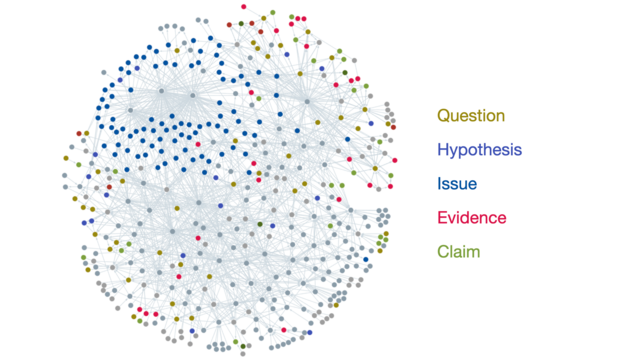
The AI Roles Continuum: Blurring the Boundary Between Research and...
The rapid scaling of deep neural networks and large language models has collapsed the once-clear divide between "research" and "engineering" in AI organizations. Drawing on a qualitative synthesis...

AI agents team up in Agent Laboratory to speed scientific research
Johns Hopkins University and AMD have developed Agent Laboratory, a new open-source framework that pairs human creativity with AI-powered workflows.

Anthropic Teams Up With Its Rivals to Keep AI From Hacking Everything
The AI lab's Project Glasswing will bring together Apple, Google, and more than 45 other organizations. They'll use the new Claude Mythos Preview model to test advancing AI cybersecurity capabilities.

Measuring AI’s capability to accelerate biological research in the wet lab
OpenAI introduces a real-world evaluation framework to measure how AI can accelerate biological research in the wet lab. Using GPT-5 to optimize a molecular cloning protocol, the work explores both the promise and risks of AI-assisted experimentation.
AI-powered research talks
Discover, run, and publish academic talks as AI-enhanced, citable video that increases visibility, engagement and citations.
Elicit: AI for scientific research
Use AI to search, summarize, extract data from, and chat with over 125 million papers. Used by over 2 million researchers in academia and industry.

Elicit: AI for scientific research
Use AI to search, summarize, extract data from, and chat with over 125 million papers. Used by over 2 million researchers in academia and industry.
Artificial intelligence and illusions of understanding in scientific research
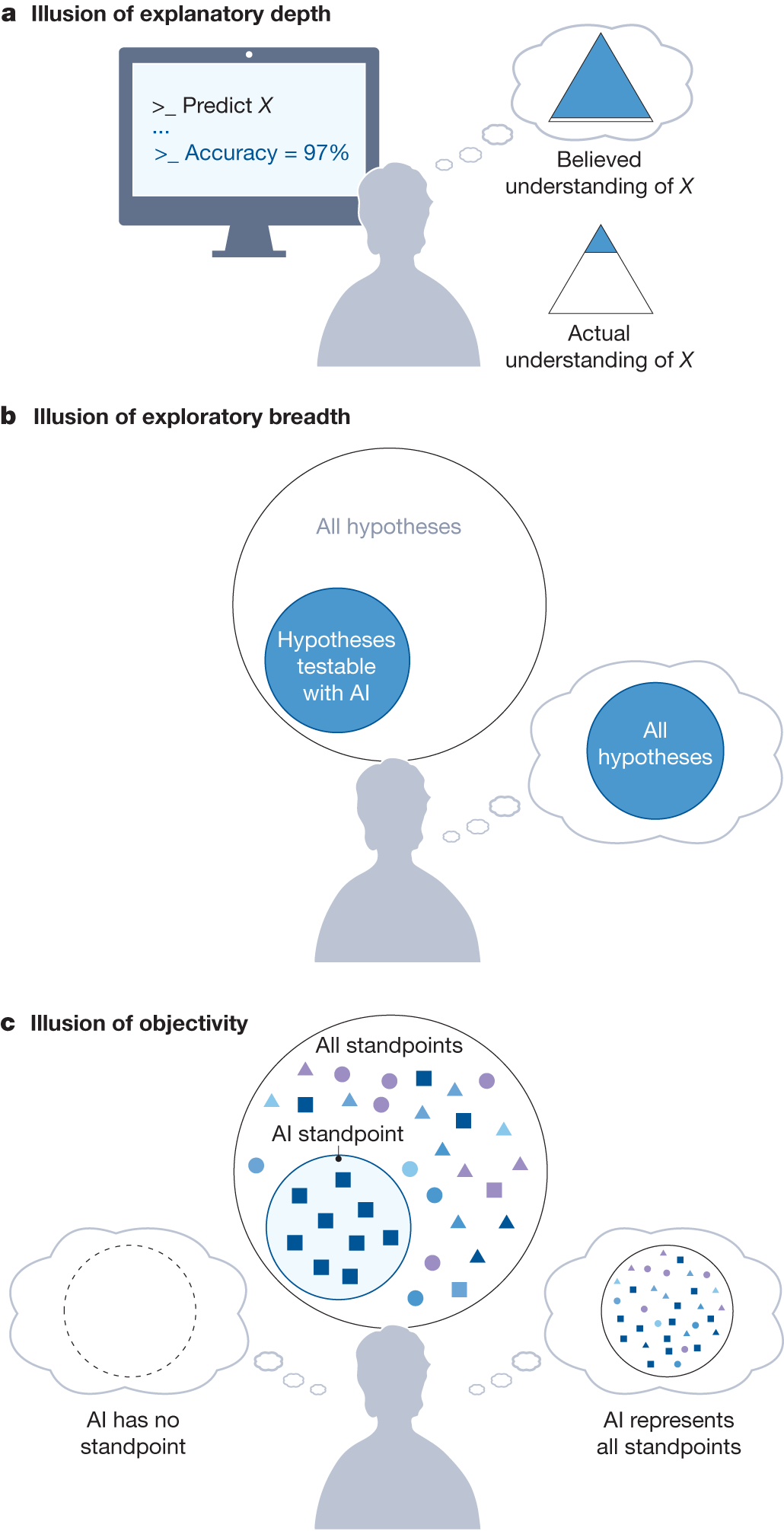
Scientists are enthusiastically imagining ways in which artificial intelligence (AI) tools might improve research. Why are AI tools so attractive and what are the risks of implementing them across the research pipeline? Here we develop a taxonomy of scientists’ visions for AI, observing that their appeal comes from promises to improve productivity and objectivity by overcoming human shortcomings. But proposed AI solutions can also exploit our cognitive limitations, making us vulnerable to illusions of understanding in which we believe we understand more about the world than we actually do. Such illusions obscure the scientific community’s ability to see the formation of scientific monocultures, in which some types of methods, questions and viewpoints come to dominate alternative approaches, making science less innovative and more vulnerable to errors. The proliferation of AI tools in science risks introducing a phase of scientific enquiry in which we produce more but understand less. By analysing the appeal of these tools, we provide a framework for advancing discussions of responsible knowledge production in the age of AI.
"The truly visionary AI for Science company is not automating experiments or AI-generating Nature papers, but building technology to improve the collective sensemaking ability of scientists @cosmik.network and alphaXiv are both examples of startups trying to build new sensemaking infrastructure"

Science as Collective Sensemaking
republicofscience.substack.com