A new book explores the ambiguous dominion of those who feign expertise online for clout.
interfluidity » Consensus not censorship
We’ve become obsessed over the past few years with the problem of misinformation. And for good reason. “Flood the zone with shit” is now standard operating procedure for a variety of interests and factions. Groups who pretend to be above that kind of thing let confirmation bias do the same work, elevating conjectures they find convenient to believe far beyond the evidentiary basis for believing them, and transmuting concurrence among prestigious groups whose biases are aligned into “authority” to which they demand deferrence. Casual information consumers become divided into two camps, the “do your own research” types who imagine, mistakenly, that they are capable of seeing through all this (and so succumb to their own confirmation bias), and those who more accurately understand that they cannot reliably distinguish truth from bullshit (and so opt out of democratic deliberation with a shrug, other than perhaps to vote for the candidates whose political party they distrust less).
Concentric Groups, Knowledge Bridges and Epistemic Communities
vs Elitism, Celebrity and Oligarchy This article is part of a series: ‘Stigmergy: Systems of Mass Collaboration’. Note: Concentric circles relate to sound amplification – the voic…

epistemic garden - mapping how ideas spread online
We're building tools to help communities understand their information landscape and protect against harmful coordinated narratives.
Amplification | The Paper Pilot
The Paper Pilot's digital garden of thoughts on philosophy, politics, and sociology
The Internet is Full of Strangers | The Paper Pilot
The Paper Pilot's digital garden of thoughts on philosophy, politics, and sociology
On Authority | The Paper Pilot
The Paper Pilot's digital garden of thoughts on philosophy, politics, and sociology
Dead Internet Theory Came True
Alasdair MacIntyre’s Philosophy in Practice
It is a curious thing when an artist, thinker, or writer gains influence outside the audience he intends or is comfortable with. When a thinker associated with the right becomes popular on the left, or a novelist associated with the progressive left becomes popular among conservative readers, there can be a sort of strain felt between the audience in fact and the “true” audience, or between those who feel themselves to be the authentic recipients of a work’s message and meaning and those who, to the true believers, come across as opportunistic in their enjoyment of works in tension with their own views. The same is true when a writer working within an academic discipline gets picked up by those outside it: Those working within that discipline may find the co-opting of these thinkers misplaced at best or malicious at worst.

Opinion | Meet the Renegades of the Intellectual Dark Web (Published 2018)
An alliance of heretics is making an end run around the mainstream conversation. Should we be listening?

Becoming the Product - Set Margins'
€24.00 In stock Becoming the Product quantity Add to cart Category: Books Tags: #designwriting, #institutionalcritique, #internetcritique Description Additional information Description In Becoming the Product: The Critical Internet Researcher as a Virtual Intellectual, the evolution of critical internet research takes center stage. By examining the pioneering work of early net critic Geert Lovink and the influencer-style […]

‘There’s a Value in What We Produce Because We Feel – and an AI Chatbot Can’t Feel’
Byline Times' Editor in Chief meets Kate Devlin, Professor of AI and Society at King’s College London, to explore how relationships with AI companions aren’t particularly new, why she believes the under-16s social media ban is flawed, and why human creativity can't be matched
#769: Nothing you see online is true
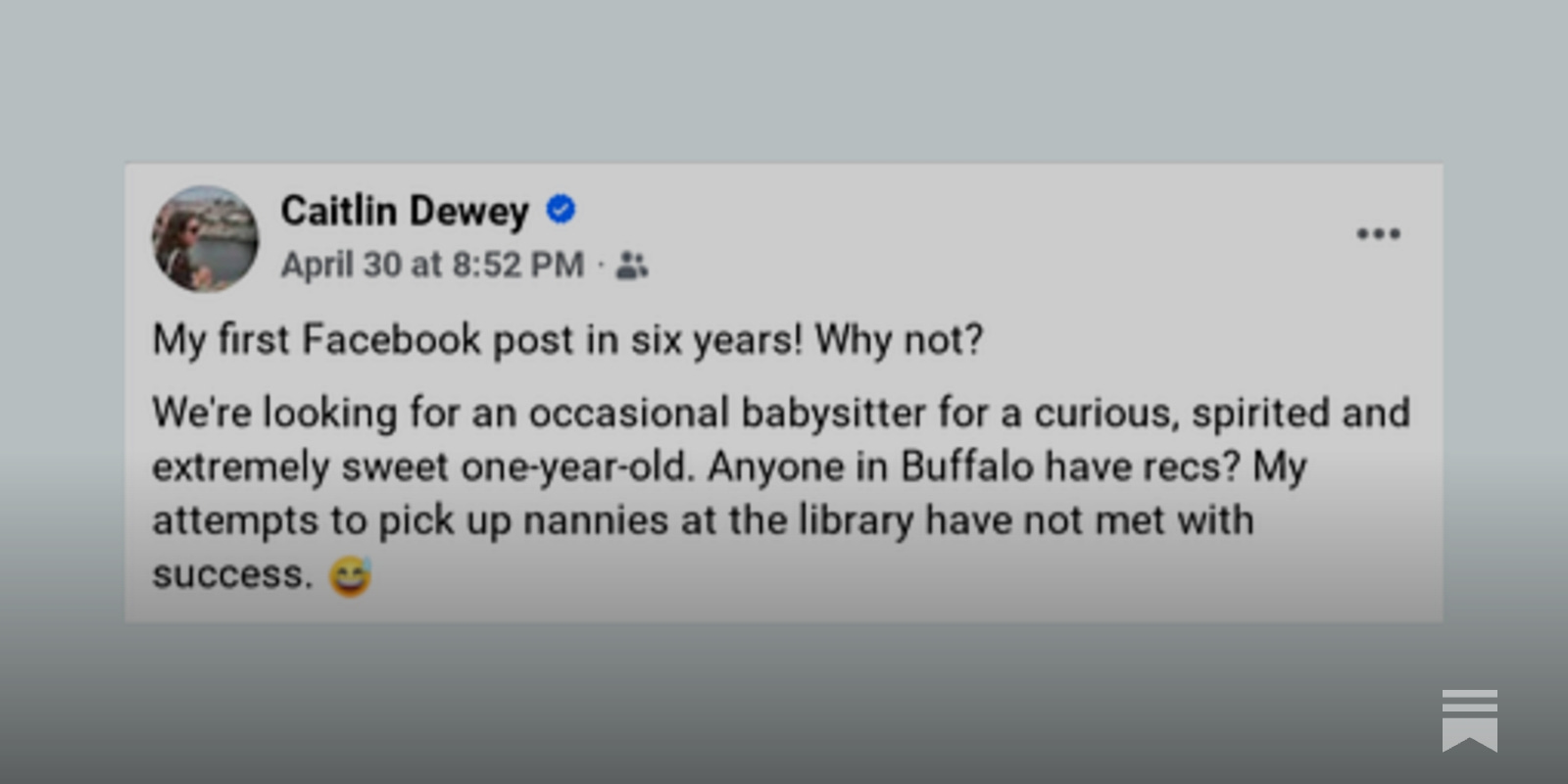
Clipping as emergent online literacy, the women self-injecting bootleg Botox and the woes of Facebook nanny groups
Joe Bak-Coleman
I’m a computational social scientist whose research explores how collectives make decisions in the face of uncertainty, focusing on the impact of digital technologies on collective behavior.

What’s in a name? A forward view of anonymity online
Demos is Britain’s leading cross-party think-tank. We produce original research, publish innovative thinkers and host thought-provoking events.
"This isn’t theoretical: it’s practicing interdependence on an embodied level"
A Q&A with entrepreneur, writer, and network-builder, Jenn Brandel

Free Speech on the Internet: The Crisis of Epistemic Authority
Abstract. Much of our knowledge of the world comes not from direct sensory experience, but from reliance on epistemic authorities: individuals or institutions that tell us what we ought to believe. For example, what most of us believe about natural selection, climate change, or the Holocaust comes from our reliance on epistemic authorities (scientists, historians). Sustaining epistemic authority depends, crucially, on social institutions that inculcate reliable second-order norms about whom to believe about what. The traditional media were crucial, in the age of mass democracy, with promulgating and sustaining such norms. The internet has obliterated the intermediaries who made that possible, and, in the process, undermined the epistemic standing of actual experts. This essay considers some possible changes to existing free speech doctrine to remedy the epistemological crisis brought about by the internet.