


The growing resort business around the Sundarbans, with little regard for its fragile ecosystem, is deeply worrying.
Nature Risk Rising: Why the Crisis Engulfing Nature Matters for Business and the Economy
Nature Risk Rising, the first report in the NNE series, explains how nature-related risks matter to business, why they must be urgently mainstreamed into risk management strategies and why it is vital to prioritize the protection of nature’s assets and services within the broader global economic growth agenda.
Space to Grow — the privatisation of the solar system
A useful primer explains how cosmic exploration has been commercialised and explores the challenges in policing this new wild west

Opinion | An Age of Extinction Is Coming. Here’s How to Survive. (Published 2025)
Everything is under threat. What you care about can make it to the other side.

Solarpunk Futures
The social ecological storytelling game where you and your friends build a better world.

The ‘wicked trinity’ of late capitalism: Governing in an era of stagnation, surplus humanity, and environmental breakdown
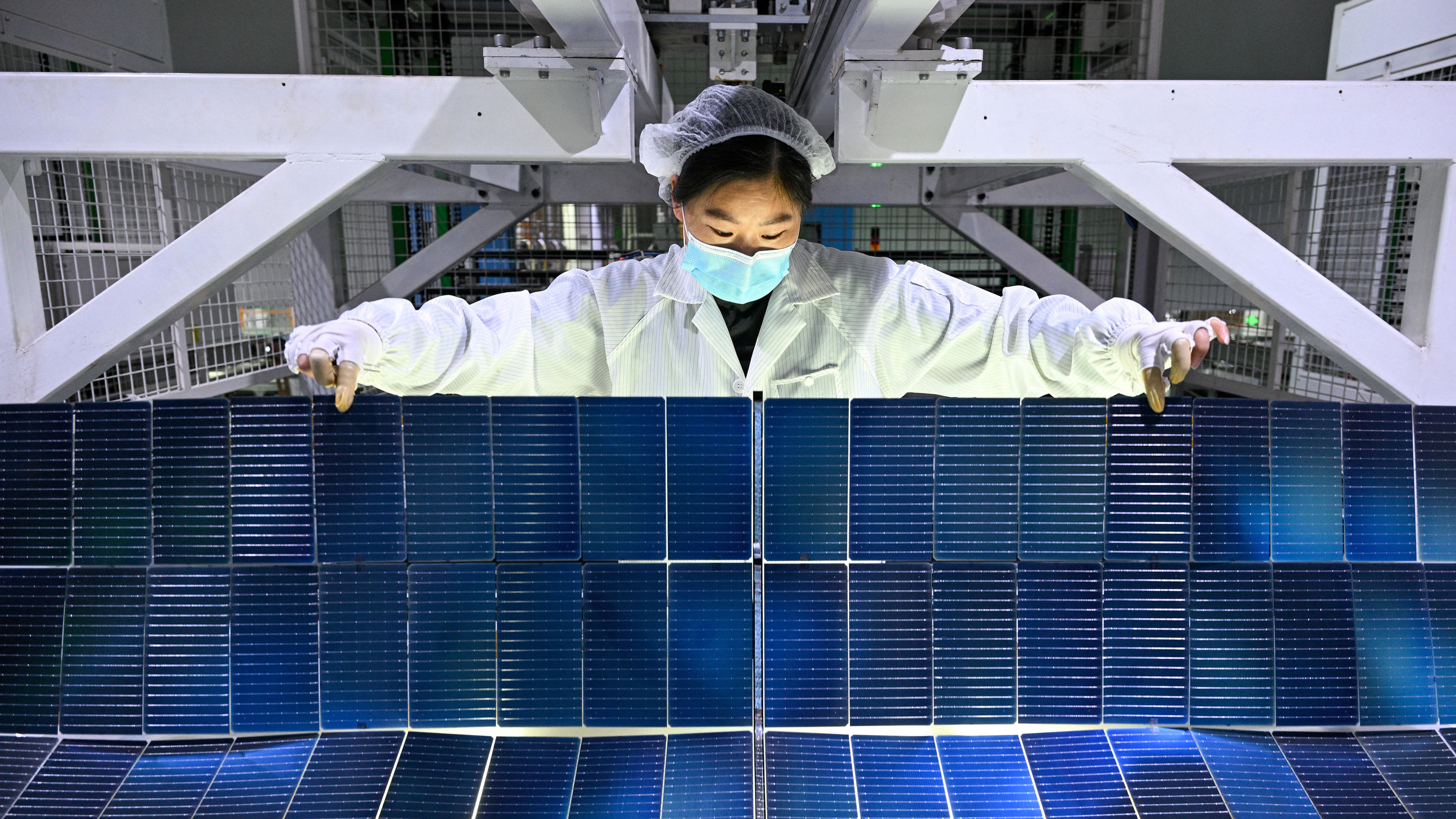
Scholars within the fields of political ecology, environmental political theory, and international political economy tend to evaluate the prospects of state-led environmental transitions in general terms – enquiring as to the capitalist state’s inherent properties and their environmental implications. Less attention has been paid to how the state’s green capacities are conditioned by contemporary evolutions in the form and pace of capital accumulation. Capitalism’s directional pattern of historical development poses unique challenges for green state projects. Its drive to raise labour productivity metabolises nature on a growing scale, while generating conditions of overproduction and rendering a progressively larger portion of the population superfluous to the production process.Thus, the question is not simply whether the state can rise to the challenge of climate change, but rather how states are scrambling to govern the intersecting crises of climate catastrophe, economic stagnation, and surplus humanity. This ‘wicked trinity’ compounds the tensions at the heart of the capitalist state, resulting in an increasing inability to perform its role while sustaining its liberal form. This governance trilemma is illustrated by the case of the solar photovoltaic boom, where the spectacular increase in the productivity and scale of solar panel manufacturing have generated oversupply and falling profitability. States have reacted by indefinitely providing subsidies, financing automation technologies thatexacerbate labour superfluity, and relocating solar panel manufacturing to places with authoritarian labour regimes. The case of photovoltaics is a microcosm of the general predicament faced by states as they struggle to govern capitalism’s secular developmental tendencies.
Pluralistic: The enshittification of solar (and how to stop it) (23 Sep 2025) – Pluralistic: Daily links from Cory Doctorow
I'm only a few chapters into Bill McKibben's stupendous new book Here Comes the Sun: A Last Chance for the Climate and a Fresh Chance for Civilization and I already know it's going to change my outlook forever:
Climate crisis on track to destroy capitalism, warns top insurer
Action urgently needed to save the conditions under which markets – and civilisation itself – can operate, says senior Allianz figure
The Fate of the News in the Age of the Coronavirus
Can a fragile media ecosystem survive the pandemic?

Stop Advertising The Atmosphere As Speculative Technology - thoughts (tiny)
The atproto enthusiast community is inadvertently turning others off to the ecosystem

China’s Solar Industry Is in Upheaval—The Effects Will Be Global
Rather than opening space for rivals, China’s solar industry shakeout is forging a more resilient core — embedding deeper into global value chains, securing a technological lead, and reshaping the industry’s future trajectory to its own long-term advantage.
Deep Response: An Emergency Education in Post-Consumer Praxis
You see the climate destabilization, biodiversity loss, resource scarcity, toxic bioaccumulation, and climate injustice happening all around us. You aren't the type to bury your head in the sand or shrug it off and so you roll up your sleeves. But where to start? How to ensure your work doesn't...

Stop Advertising The Atmosphere As Speculative Technology · thoughts (tiny)
The atproto enthusiast community is inadvertently turning others off to the ecosystem
From risk to flourishing: Seeds for responding to a complex world
Flourishing is the actualization of all beings toward their good -- not only individually but collectively, answering the question of `how do we live well with and for each other?'. In science as in society, the tendency to reduce, segregate, specialize, and settle has precluded embracing the concept of flourishing as a guiding principle. We aim to identify an approach to risk science research that promotes the flourishing of socio-ecological-technological systems (SETS). We discuss the normative role of an orientation toward flourishing for the field of risk science. We explore the possibility that (risk) science could be done in a way that is capable of pointing society toward a different future, one more resilient and more capable of flourishing. Our exploration mirrors the conversational nature of flourishing itself: examine ideologies traditionally believed to be rigidly in opposition and consider what emerges in the space(s) and conversation between them. We call this a dialectical approach. Within this paradigm grounded in conversation, pluralism, and pragmatism, we revisit three longstanding tensions in risk science: physical$|$social, determinism$|$uncertainty, contextuality$|$generality. Although these tensions are not new, revisiting them together through the lens of complexity science, and with explicit attention to the normative commitments that shape risk research, reveals underexplored possibilities for the field. Examining them in conversation with the other allows us to explore the provisional seeds for what might be termed complex risk science: interdependence, responsivity, participation, pluralism, openness, and ongoingness. Enacting the dialectical paradigm towards a risk science for a flourishing world will depend on creating collectives toward complex risk science, supporting them with skillfully governed commons, and centering care in our research.


