Philip welcomes Emma Holten, author of Deficit: How Feminist Economics Can Change the World. In their conversation, they discuss how the “deficit’ frame impacts how the economy thinks about women’s labor and how feminist economics can create lasting changes in the world.
What corporate thrillers tell us about the '90s economy
PLUS: Has Forum Brain crossed the gender divide?

Re-enchanting the world : feminism and the politics of the commons
xviii, 227 pages ; 23 cm; "Silvia Federici is one of the most important contemporary theorists of capitalism and feminist movements. In this collection of her work spanning over twenty years, she provides a detailed history and critique of the politics of the commons from a feminist perspective. In her clear and combative voice, Federici provides readers with an analysis of some of the key issues and debates in contemporary thinking on this subject. Drawing on rich historical research, she maps the connections between the previous forms of enclosure that occurred with the birth of capitalism and the destruction of the commons and the "new enclosures" at the heart of the present phase of global capitalist accumulation. Considering the commons from a feminist perspective, this collection centers on women and reproductive work as crucial to both our economic survival and the construction of a world free from the hierarchies and divisions capital has planted in the body of the world proletariat. Federici is clear that the commons should not be understood as happy islands in a sea of exploitative relations but rather autonomous spaces from which to challenge the existing capitalist organization of life and labor"--; Foreward by Peter Linebaugh; Includes bibliographical references (pages198-216) and index; On primitive accumulation, globalization, and reproduction -- Introduction to the new enclosures -- The debt crisis, Africa, and the new enclosures -- China: breaking the iron rice bowl -- From commoning to debt: financialization, microcredit, and the changing architecture of capital accumulation -- Beneath the United States, the Commons -- Commons against and beyond Capitalism -- The University: a knowledge common? -- Feminism and the politics of the commons in an era of primitive accumulation -- Women's struggles for land in Africa and the reconstruction of the commons -- Women's struggles for land and the common good in Latin America -- Marxism, feminism, and the commons -- From crisis to commons: reproductive work, affective labor and technology, and the transformation of everyday life -- Re-enchanting the world: technology, the body, and the construction of the commons

Feminism | The Paper Pilot
The Paper Pilot's digital garden of thoughts on philosophy, politics, and sociology
Gender | The Paper Pilot
The Paper Pilot's digital garden of thoughts on philosophy, politics, and sociology
Gender Trouble: Feminism and the Subversion of Identity
One of the most talked-about scholarly works of the past fifty years, Judith Butler’s Gender Trouble is as celebrated as it is controversial.Arguing that traditional feminism is wrong to look to a natural, 'essential' notion of the female, or indeed of sex or gender, Butler starts by questioning the category 'woman' and continues in this vein with examinations of 'the masculine' and 'the feminine'. Best known however, but also most often misinterpreted, is Butler's concept of gender as a reiterated social performance rather than the expression of a prior reality.Thrilling and provocative, few other academic works have roused passions to the same extent.

Re-enchanting the world: feminism and the politics of the commons
Silvia Federici is one of the most important contempora…

A Growing Gender Divide in the AI Economy — The Honest Economist
The article argues that AI is reshaping gender inequality even before the pay gap visibly widens. Women are more concentrated in clerical and administrative roles where AI can restructure work, while men are more concentrated in technical, AI-complementary roles. Among college graduates, the exposur

Gender Performativity | The Paper Pilot
The Paper Pilot's digital garden of thoughts on philosophy, politics, and sociology
Deep Care by Angela Hume | East Bay Booksellers
The story of the radical feminist networks who worked outside the law to defend abortion. Starting in the 1970s, small groups of feminist activists met regularly to study anatomy, practice pelvic exams on each other, and learn how to safely perform a procedure known as menstrual extraction, which can end a pregnancy, using equipment easily bought and assembled at home.
Social Reproduction Theory: Remapping Class, Recentering Oppression
This groundbreaking collection explores the profound power of Social Reproduction Theory to deepen our understanding of everyday life under capitalism. While many Marxists tend to focus on the productive economy, this book focuses on issues such as child care, health care, education, family life and the roles of gender, race and sexuality, all of which are central to understanding the relationship between economic exploitation and social oppression. In this book, leading writers such as Lise Vogel, Nancy Fraser, David McNally and Susan Ferguson reveal the ways in which daily and generational reproductive labour, found in households, schools, hospitals and prisons, also sustains the drive for accumulation. Presenting a more sophisticated alternative to intersectionality, these essays provide ideas which have important strategic implications for anti-capitalists, anti-racists and feminists attempting to find a path through the seemingly ever more complex world we live in.
013 - Olivier De Schutter on Why the Economy Creates Poverty – and How To Fix It
Women at Risk: Economic Inequalities in the Age of AI - TWF
As we come to the end of 2024, we are humbled by the impact we have been able to make together to improve the lives of […]

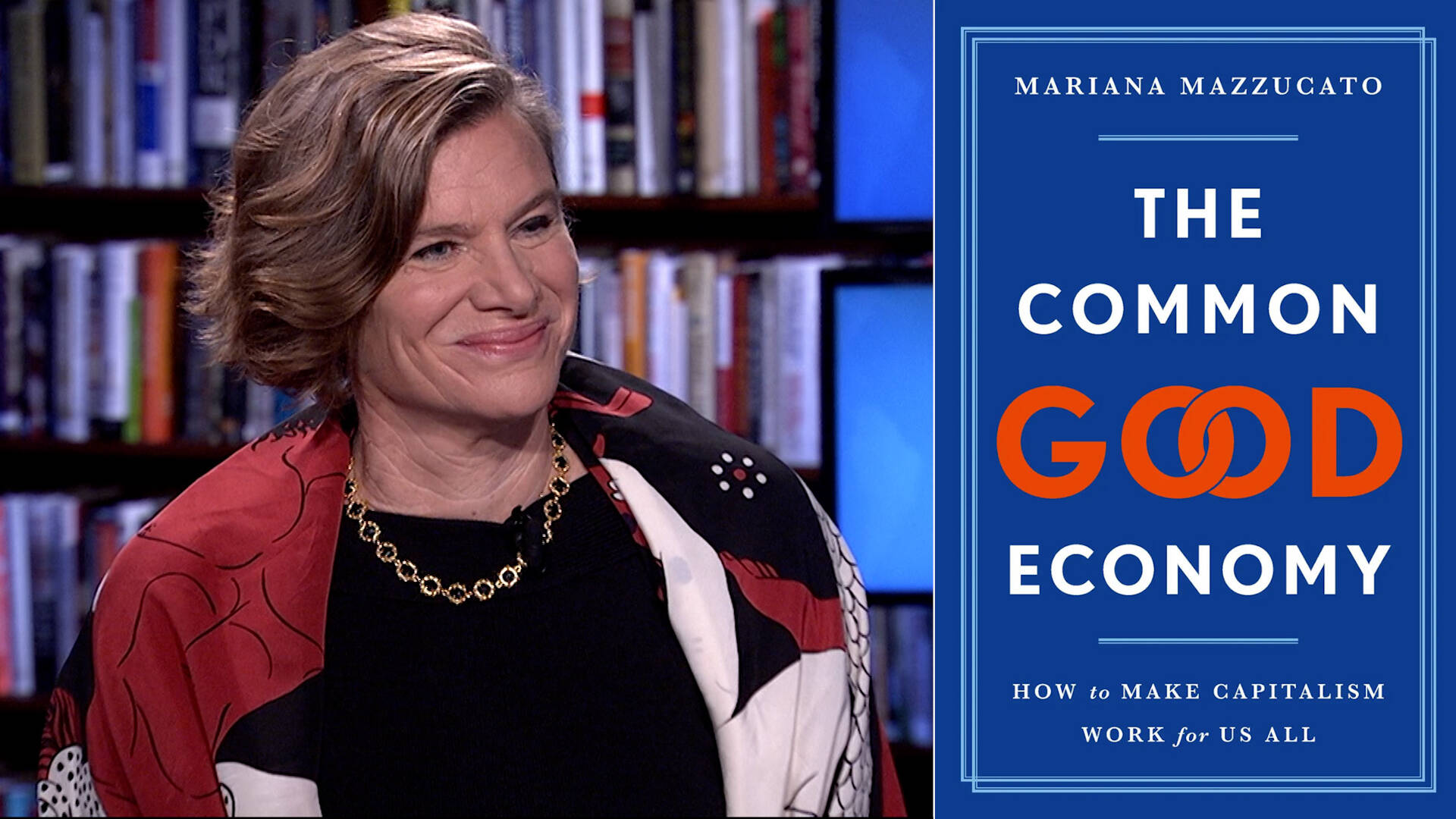
“The Common Good Economy”: Mariana Mazzucato on Fixing Capitalism
We speak with the economist Mariana Mazzucato, author of the new book The Common Good Economy: A New Compass.
David Graeber: "Spotlight on the financial sector did make apparent just how bizarrely skewed our economy is in terms of who gets rewarded"
David Graeber explains why the more your job helps others, the less you get paid

Can Longtermism Save Us All?
William MacAskill, author of What We Owe the Future, and Robert Wright debate longtermism.