

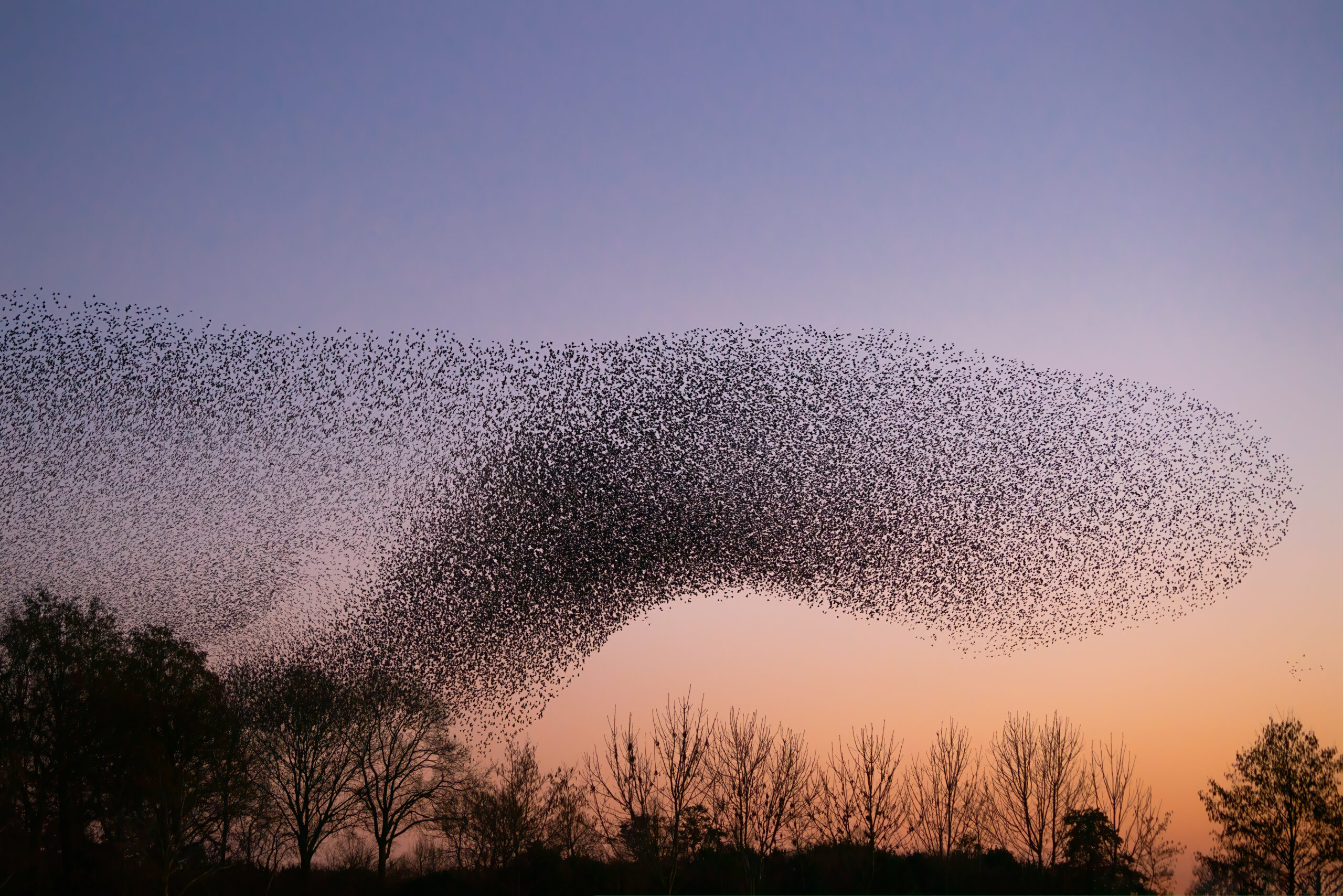
In this episode, Nate is joined by biologist and biophysicist Olivier Hamant to explore why living systems prioritize robustness over performance, and what that means for a civilization built almost entirely in the opposite direction.
The Optimization Trap: Why Too Much Efficiency Makes Us Fragile with Olivier Hamant
The Jevons Paradox of AI - Wesley's notes
Why AI can make us more productive but will never save us time
The AI Researcher Who Just Quit Anthropic Says It’s ‘Crunch Time for Humanity’
Jacob Coxon talks to WIRED about the “mini Manhattan project” inside Anthropic, the problem with alignment, and why AI labs have just a few years left to make their systems safe.

Why efficiency is dangerous and slowing down makes life better | Psyche Ideas
The urge to do everything faster and better is risky. Far wiser to do what’s good enough for the range of possible futures

Wisdom in a World in Crisis: The Counterintuitive Need to Slow Down and Find Spaciousness - The Great Simplification
In this episode, Nate is rejoined by philosopher and neuroscientist Iain McGilchrist for discussion on how our left-brain dominance obscures our sense of value, especially for abstract qualities such as truth, goodness, and beauty.

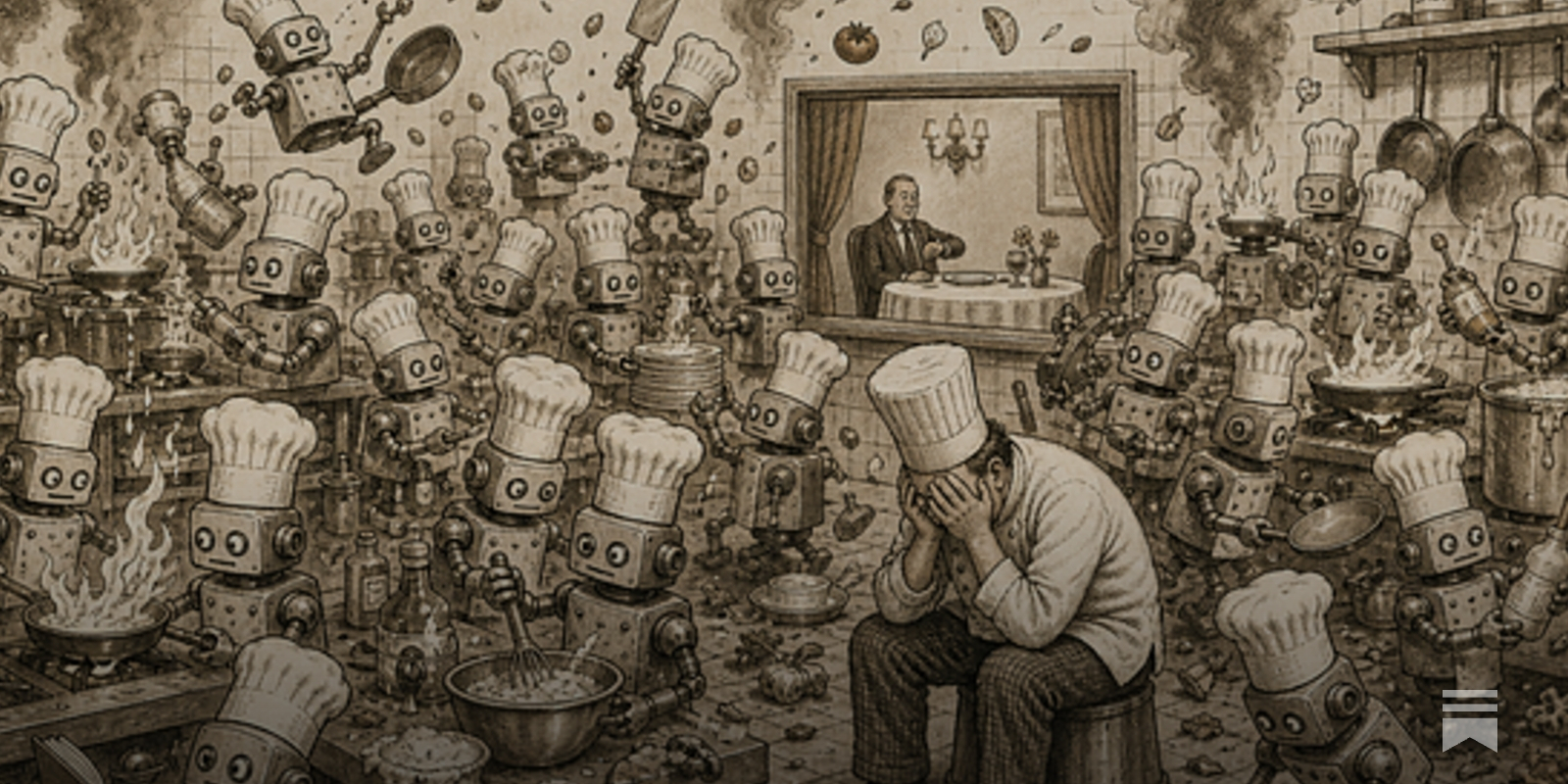
AI's Affordability Crisis
A year ago in The Back Of The AI Envelope I pointed out that the AI platforms were running the drug-dealer's algorithm, "the first one's fr...

Pace Layering: How Complex Systems Learn and Keep Learning · Journal of Design and Science
Pace layers provide many-leveled corrective, stabilizing feedback throughout the system. It is in the contradictions between these layers that civilization finds its surest health. I propose six significant levels of pace and size in a robust and adaptable civilization.

A Drive to Survive
Since 2005, Karl Friston's proposal that the principle of free energy minimization underpins the purposive behavior of living agents has evolved through thou...
Co-Creation: Systems Thinking Beyond the Machine
Complexity thinking is all the rage — in the arts and sciences. Yet, there are two different strands of thinking about complexity, which are often confounded. The first comes from cybernetics, focussing on control in complex situations. The second is ecological, aiming at sustainable participation in a reality beyond control. Their difference rests on a fundamental distinction: is complexity rooted in feedback regulation or collective co-creation? While feedback remains mechanistic, co-creation generates new spaces of possibilities. We need it to understand life and its evolution. And it empowers us to rewrite our future, to escape our mechanistic cage without abandoning scientific rigor. In this paper, we illustrate how we implement these powerful yet abstract principles through our artistic and philosophical practice.
Tom Costello on Twitter / X
Apropos of everything here’s my uninformed idea for alignment: homeostatic mechanisms (control systems / cybernetics) that force a system to optimize for satiation and normal-range variation (rather than maximization) across a set of goals such that, if any one of them were…— Tom Costello (@tomstello_) September 9, 2026
Efficiency is the Enemy
If you ever find yourself stressed, overwhelmed, sinking into stasis despite wanting to change, or frustrated when you can’t respond to new opportunities, you need more slack in your life. Here’s how slack works and why you need more of it.
How to be a wise optimist about science and technology?
I believe the central problem of the 21st century is how civilization co-evolves with science and technology. As our understanding of the world deepens, it enables technologies that confer ever more power to both improve and damage the world. There's currently much public discussion of this in the context of artificial superintelligence (ASI). However, it's a fundamental recurring challenge, affecting areas including climate change, genetic engineering, nanotechnology, geoengineering, brain-computer interfaces, and many more. How can we best benefit from science and technology, while supplying safety sufficient to ensure a healthy, flourishing civilization?
Solipsistic Superintelligence is Unlikely to be Cooperative
AI's central challenge is shifting from capability to coexistence. The dominant paradigm in AI research focuses on developing powerful agents that treat the world as an exogenous and stationary source of feedback. We contend that superintelligence, an extremely capable task solver, born out of such a solipsistic approach to AI design, is unlikely to be cooperative. Deploying AI systems induces endogenous non-stationarity, resulting in a train-test-deploy gap where historical distributions diverge from the deployment context. We refer to this as the self-undermining property of unilateral optimization. Closing this gap requires AI that participates in cooperation: the equilibrium-selection process through which multiple actors navigate their interdependence. We call for a non-solipsistic research paradigm that treats this interdependence as a core design principle rather than approaching cooperation as a task to solve. This entails building dynamic evaluation testbeds involving adaptive counterparties, treating institutions as design primitives, and preserving human agency as a structural feature of the systems we build.

Wisdom in a World in Crisis: The Counterintuitive Need to Slow Down and Find Spaciousness with Iain McGilchrist
</> htmx ~ Working With AI: A Concrete Example
In this essay, Carson Gross walks through a concrete bug fix in hyperscript to show where AI helped, where it fell short, and why keeping a knowledgeable human in the loop is what kept complexity in check.