

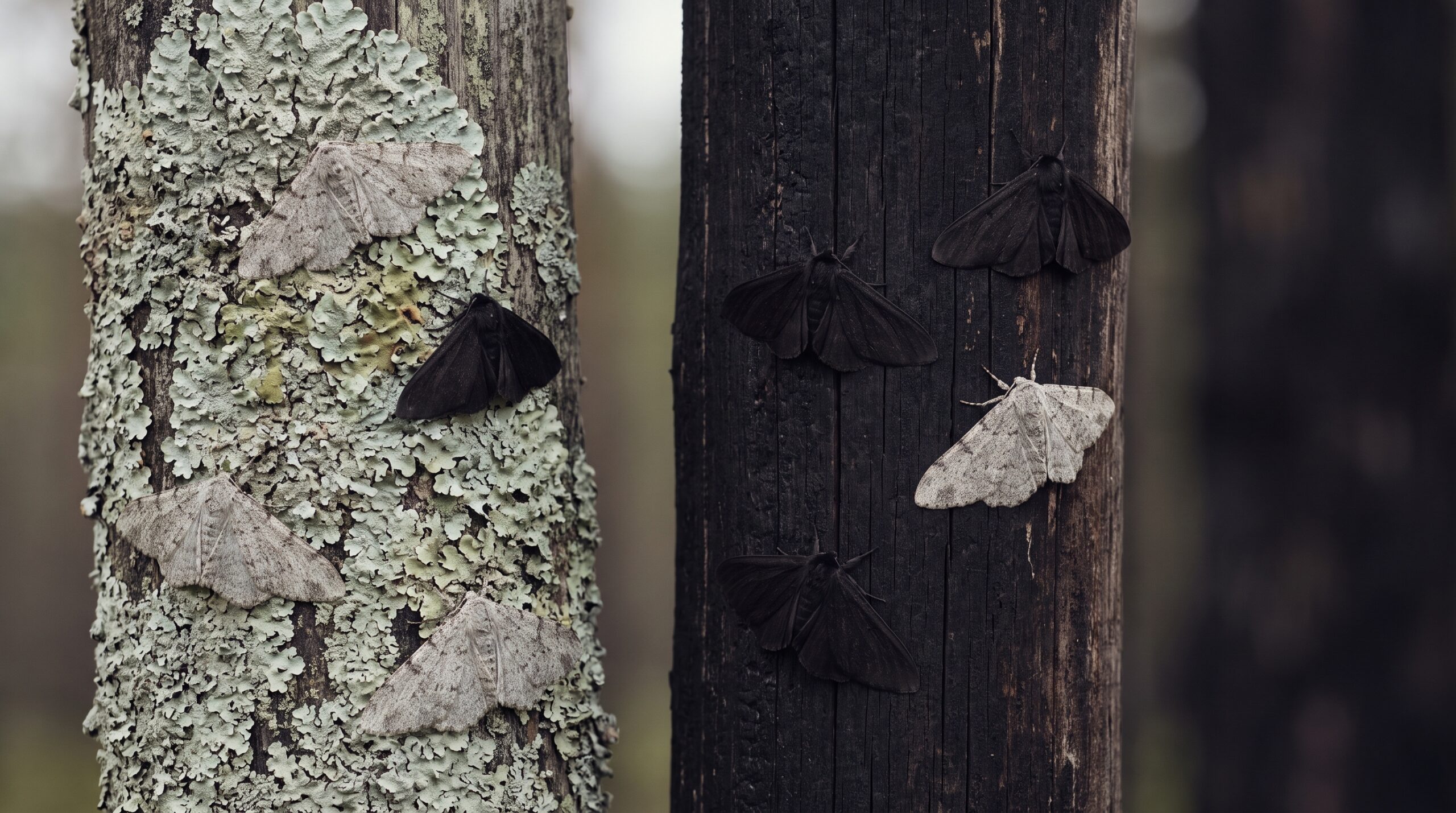
In this episode, Nate is joined by Greg Elliott, a systems theorist and author of the Psychopathic Selection Hypothesis (PSH), to unpack why our institutions themselves have become so psychopathic, and how that affects the behavior of the average human.
The Psychopathic Selection Hypothesis (PSH): A Guide to Symbolic Selection, Behavioural Architecture, and the Evolution of Human Gameboards
How human created symbolic systems alter the adaptive environment, select among behavioural strategies, generate institutional games, and reshape the evolutionary conditions inherited by future actors
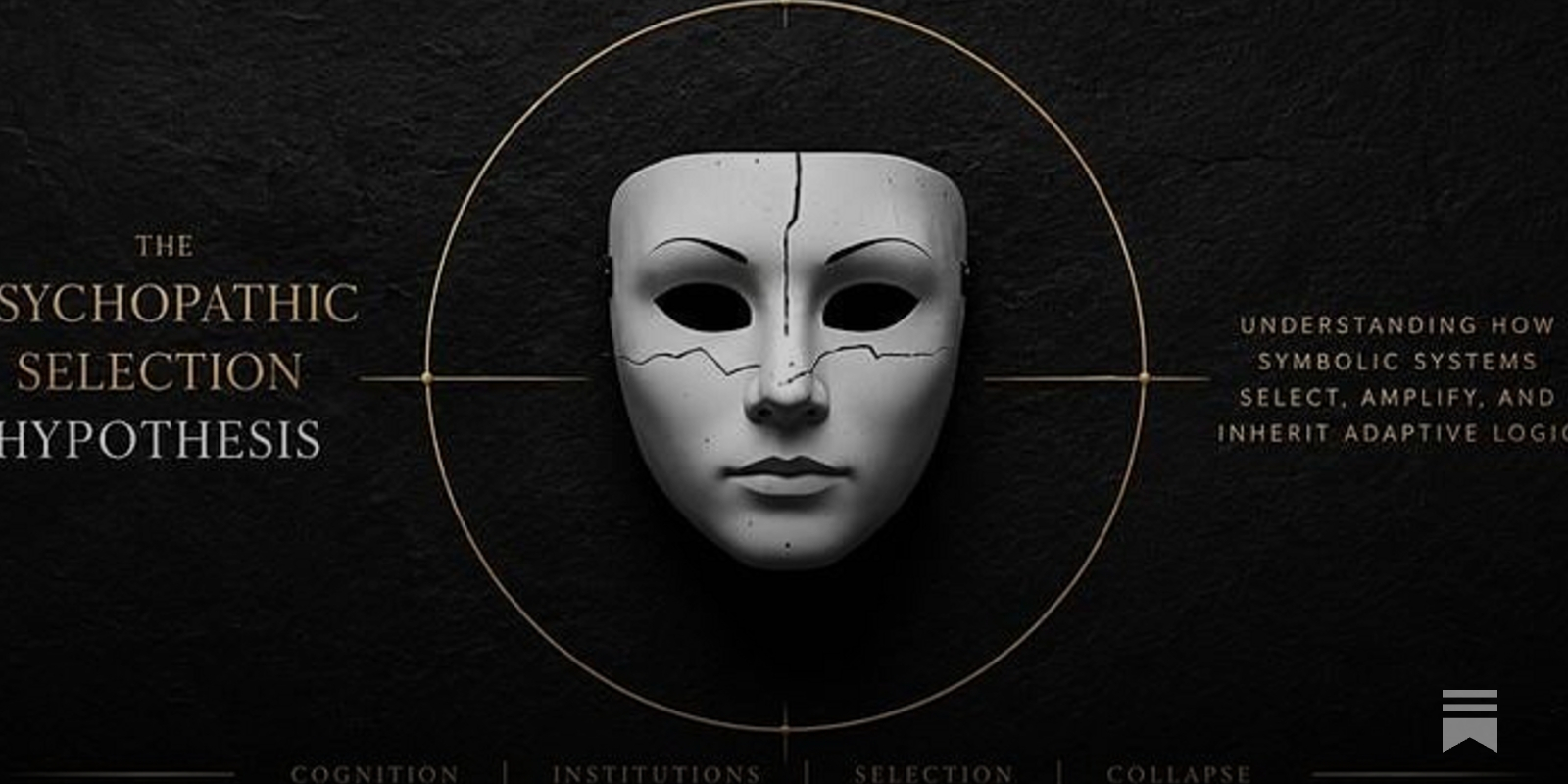
Turning the Dials Back on Psychopathy: Decent People, Indecent System - The Great Simplification
This week’s Frankly builds on Nate’s recent conversation with systems theorist Greg Elliott, who came on the platform to discuss why our institutions themselves have become psychopathic and how that affects the behavior of the average human.

Handbook of Evolutionary Psychology
‘This Handbook is refreshingly different. While including requisite chapters on subfields within evolutionary psychology, it also includes chapters on evolutionary psychology’s influence on other disciplines (e.g., Anthropology, Criminology), and retrospectives on six foundational studies. And perhaps most innovative, chapters are written by an international collection of up-and-coming scholars who give their take on the current and future state of evolutionary psychology.’ – David F. Bjorklund, Florida Atlantic University, USA

Wisdom in a World in Crisis: The Counterintuitive Need to Slow Down and Find Spaciousness - The Great Simplification
In this episode, Nate is rejoined by philosopher and neuroscientist Iain McGilchrist for discussion on how our left-brain dominance obscures our sense of value, especially for abstract qualities such as truth, goodness, and beauty.

Introducing The Psyche Network
Will we have a theory for in-the-wild AI agents? - undisciplinary
Thoughts after writing a sociology-meets-physics-meets-agents paper I just put out a preprint out on a theory of role emergence in multi-agent systems (soci…
The hidden ‘rules of the game’ that dictate how we navigate the world | Psyche Videos
How free are we really, if human behaviour embodies the complex, intertwined webs of society and history?
A revolution in our sense of self | Nick Chater
Psychologists have tried to plumb the depths of human motivation to make sense of our behaviour. But our inner mental world is a fiction, sustained by constant improvisation
The Optimization Trap: Why Too Much Efficiency Makes Us Fragile - The Great Simplification
In this episode, Nate is joined by biologist and biophysicist Olivier Hamant to explore why living systems prioritize robustness over performance, and what that means for a civilization built almost entirely in the opposite direction.
Reflective and Impulsive Determinants of Social Behavior - Fritz Strack, Roland Deutsch, 2004
This article describes a 2-systems model that explains social behavior as a joint function of reflective and impulsive processes. In particular, it is assumed t...

How to spot a psychopath: ‘It’s like the difference between a domestic cat and a wild cat’
People with persistent predatory personalities cause an inordinate amount of pain. Recently, our shared understanding of them has grown – and it could help protect us

The Evolution of Trust
an interactive guide to the game theory of why & how we trust each other
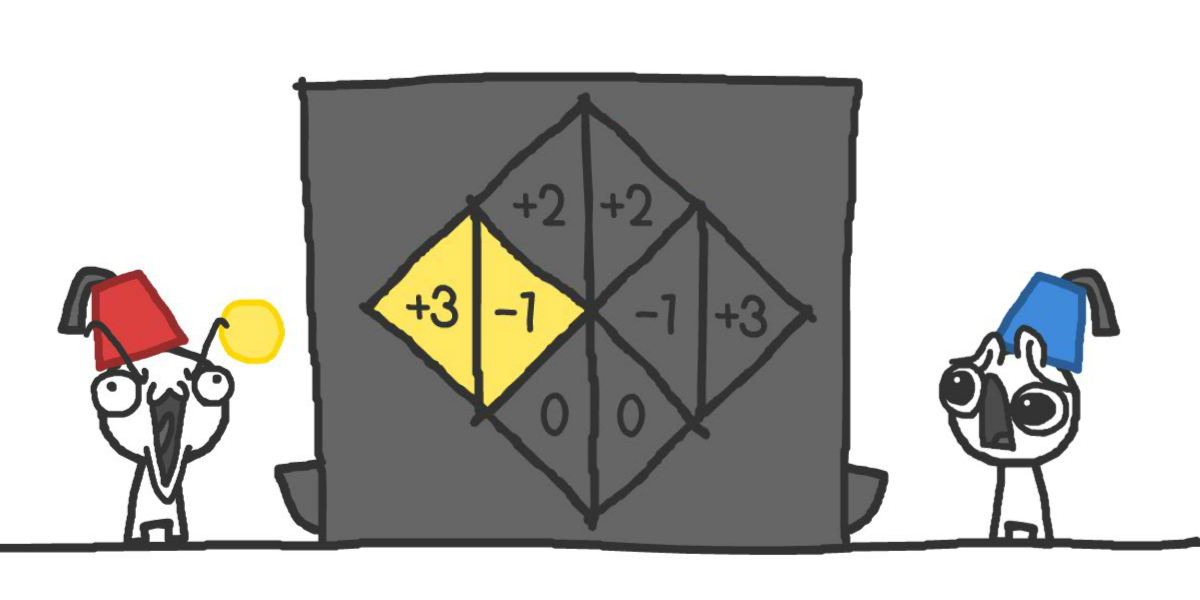
Agent Psychosis: Are We Going Insane?
What’s going on with the AI builder community right now?
Computational Psychiatry Needs Systems Neuroscience
This piece was originally published in The Transmitter. I am adapting it here with some additional context for readers of this newsletter.
"[PSH] asks not only what the psychopathic profile is, but where it wins. ... whether the traits that once had to remain parasitic at the margins of reciprocal communities can become structurally amplified in environments where consequence is abstracted and reward is symbolic."

The Psychopathic Selection Hypothesis Guide for Readers
gregelliott2000.substack.com1. New preprint resolving a conundrum in systems neuroscience with an AI scientist, and humans Reilly Tilbury, Dabin Kwon, @haydari.bsky.social, @jacobmratliff.bsky.social, @bio-emergent.bsky.social, @carandinilab.net, @kevinjmiller.bsky.social, @neurokim.bsky.social biorxiv.org/content/10.1101/2025.11.12.68…

Characterizing neuronal population geometry with AI equation discovery
www.biorxiv.org
