


Psychopathy is often portrayed as a rare and distant phenomenon – something confined to movie villains or prison cells. Yet when psychopathy is combined with narcissism and Machiavellianism to form what psychologists call the Dark Triad, its impact becomes far more immediate. Individuals with these traits can wield disproportionate influence over our culture, institutions, and daily lives. What goes on inside their minds, and how do they shape the world around us?
Members of right-leaning parties prefer leaders with ‘dark triad’ personality traits
The ‘dark triad’ is made up of narcissism, Machiavellianism and psychopathy.
Dark personalities in the digital arena: how psychopathy and narcissism shape online political participation
This cross-national study investigates how psychopathy, narcissism, and fear of missing out (FoMO) influence online political participation, and how cognitive ability moderates these associations. Drawing on data from the United States and seven Asian countries, the findings reveal that individuals high in psychopathy and FoMO are consistently more likely to engage in online political activity. While narcissism is also linked to participation, this relationship emerges in only three of the eight countries. Conversely, higher cognitive ability is uniformly associated with lower levels of online political participation. Notably, the relationship between psychopathy and participation is stronger among individuals with lower cognitive ability in five countries, suggesting that those with both high psychopathy and low cognitive ability are the most actively involved in online political engagement. These findings underscore the nuanced interaction between dark personality traits, FoMO, and cognitive functioning in shaping digital political engagement across diverse socio-political contexts.

How to spot a psychopath: ‘It’s like the difference between a domestic cat and a wild cat’
People with persistent predatory personalities cause an inordinate amount of pain. Recently, our shared understanding of them has grown – and it could help protect us

Turning the Dials Back on Psychopathy: Decent People, Indecent System - The Great Simplification
This week’s Frankly builds on Nate’s recent conversation with systems theorist Greg Elliott, who came on the platform to discuss why our institutions themselves have become psychopathic and how that affects the behavior of the average human.

Geeks, MOPs, and sociopaths in subculture evolution | Meaningness
How muggles and sociopaths invade and undermine creative subcultures; and how to stop them.
WebSeitz/wiki
aka FiveFactor, OCEAN - Personality Test - In psychological trait theory, the Big Five personality traits, also known as the OCEAN model is a suggested taxonomy, or grouping, for personality traits,[1] developed from the 1980s onwards. When factor analysis (a statistical technique) is applied to personality survey data, it reveals semantic associations: some words used to describe aspects of personality are often applied to the same person. For example, someone described as conscientious is more likely to be described as "always prepared" rather than "messy". These associations suggest five broad dimensions used in common language to describe the human personality and psyche.[2][3] The theory identifies five factors: openness to experience (inventive/curious vs. consistent/cautious); conscientiousness (efficient/organized vs. extravagant/careless); extraversion (outgoing/energetic vs. solitary/reserved); agreeableness (friendly/compassionate vs. challenging/callous); neuroticism (sensitive/nervous vs. resilient/confident) https://en.wikipedia.org/wiki/Big_Five_personality_traits (more)
Geeks, MOPs, and sociopaths in subculture evolution (2015) | Hacker News
Any marginally successful group attracts sociopaths. The more power available to someone installing themselves at the centre of an elite clique that runs the organisation, the more attractive it is. No-one ever sees it fully until they get on the wrong end of one of these toxic power dynamics, there is so much subtle BS working against anyone trying to face this stuff down that it's almost pointless wasting your life trying.
Diagnosed psychopath explains why 'normal people' can never spot them
Loic De Marie is a diagnosed psychopath and has spoken of how to spot one in real life
.png)
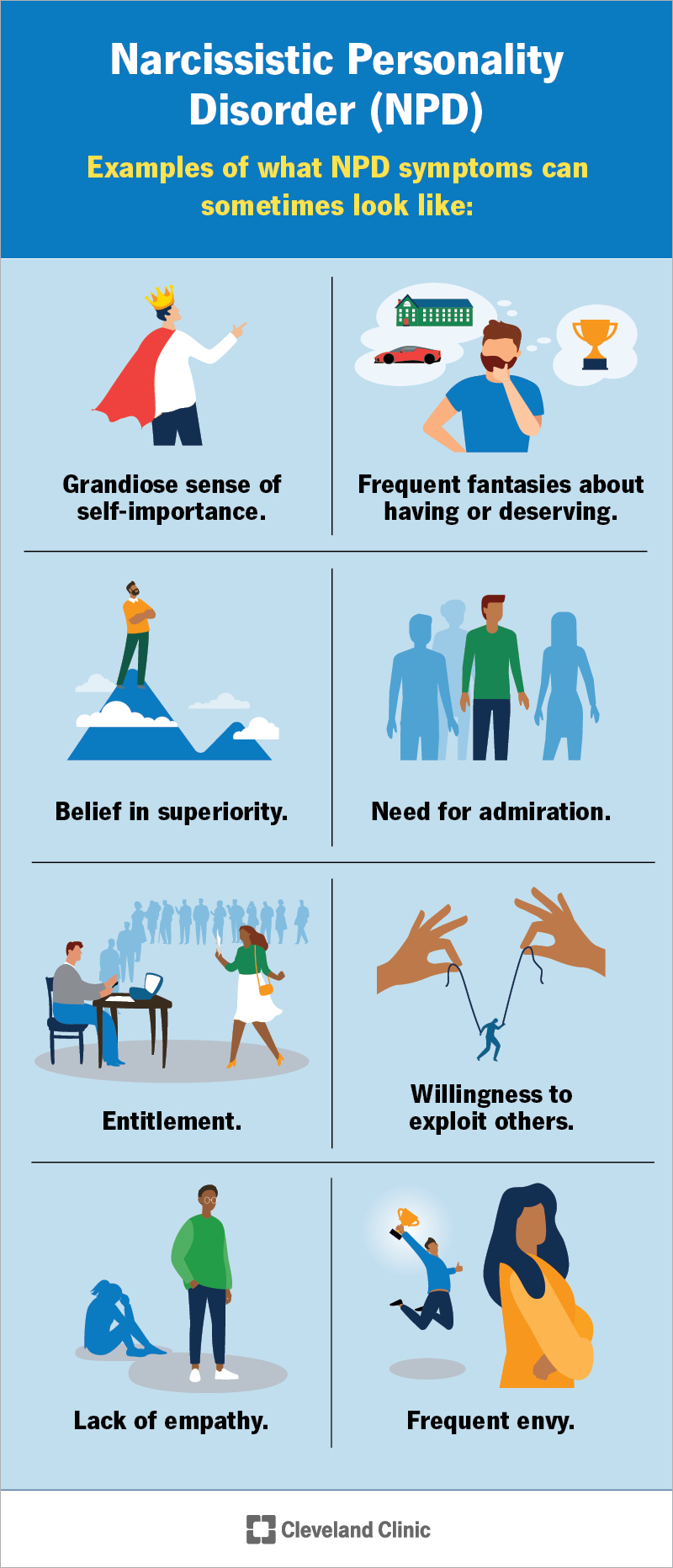
Turning Your Attention to Narcissistic Personality Disorder
Narcissistic personality disorder is more than self-centered behavior. Learn how to recognize this mental health condition.
The Psychopathic Selection Hypothesis: The Rules of the Game Keep Us Trapped - The Great Simplification
In this episode, Nate is joined by Greg Elliott, a systems theorist and author of the Psychopathic Selection Hypothesis (PSH), to unpack why our institutions themselves have become so psychopathic, and how that affects the behavior of the average human.

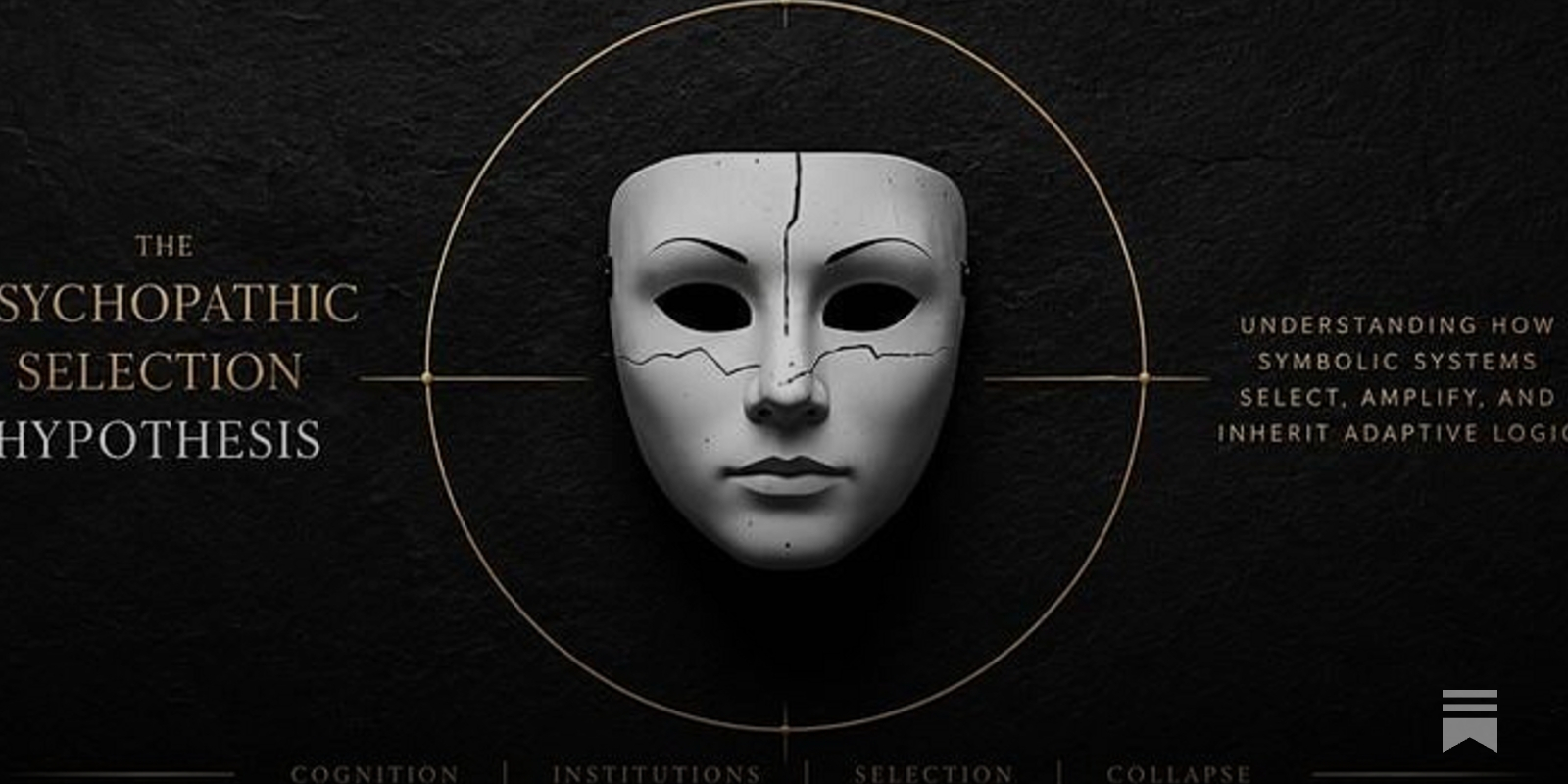
The Psychopathic Selection Hypothesis (PSH): A Guide to Symbolic Selection, Behavioural Architecture, and the Evolution of Human Gameboards
How human created symbolic systems alter the adaptive environment, select among behavioural strategies, generate institutional games, and reshape the evolutionary conditions inherited by future actors
The thinking style that makes people vulnerable to extremism | Psyche Ideas
The people most drawn to ideological thinking and authoritarianism aren’t aware of what makes them so susceptible
Differences Between Tight and Loose Cultures: A 33-Nation Study
The differences across cultures in the enforcement of conformity may reflect their specific histories. , With data from 33 nations, we illustrate the differences between cultures that are tight (have many strong norms and a low tolerance of deviant behavior) versus loose (have weak social norms and a high tolerance of deviant behavior). Tightness-looseness is part of a complex, loosely integrated multilevel system that comprises distal ecological and historical threats (e.g., high population density, resource scarcity, a history of territorial conflict, and disease and environmental threats), broad versus narrow socialization in societal institutions (e.g., autocracy, media regulations), the strength of everyday recurring situations, and micro-level psychological affordances (e.g., prevention self-guides, high regulatory strength, need for structure). This research advances knowledge that can foster cross-cultural understanding in a world of increasing global interdependence and has implications for modeling cultural change.
"[PSH] asks not only what the psychopathic profile is, but where it wins. ... whether the traits that once had to remain parasitic at the margins of reciprocal communities can become structurally amplified in environments where consequence is abstracted and reward is symbolic."

The Psychopathic Selection Hypothesis Guide for Readers
gregelliott2000.substack.com