


A new housing development outside Phoenix is looking towards European cities for inspiration and shutting out the cars. So far residents love it
Reducing car dependence: benefits, strategies, unintended consequences, and future directions of post-car urban transitions
This paper presents the state of the art of post-car urban transitions. It begins with an overview of the impact of automobility on planetary and human well-being. The benefits of post-car cities a...

CityLab - Bloomberg
Bloomberg CityLab reports on the world’s cities, communities, and neighborhoods: How they work, the challenges they face, and the solutions they need.
Re:Permissioning the City — Unlocking cities’ growing underutilised spatial assets for an emergent…
In recent years, various macro-level shifts, including public health crises, demographic changes, and climate risks, have had cascading…

A City for Children — Oakland Public Library
A City for Children — Gutman, Marta, — American cities are constantly being built and rebuilt, resulting in ever-changing skylines and neighborhoods. While the dynamic urban landscapes of New York, Boston, and Chicago have been widely studied, there is much to be gleaned from West Coast cities, especially in California, where the migration boom at the end of the nineteenth century permanently changed the urban fabric of these newly diverse, plural metropolises. In A City for Children Marta Gutman focuses on the use and reuse of everyday buildings in Oakland, California, to make the city a better place for children. She introduces us to the women who were determined to mitigate the burdens placed on working-class families by an indifferent industrial capitalist economy. Often without the financial means to build from scratch, women did not tend to conceive of urban land as a blank slate to be wiped clean for development. Gutman shows how, over and over, women instead turned private houses and even a saloon in Oakland into orphanages, kindergartens, settlement houses, and day care centers, and in the process built the charitable landscape--a network of places that was critical for the betterment of children, families, and public life. The industrial landscape of Oakland, riddled with the effects of social inequality and racial prejudice, is not a neutral backdrop in Gutman's story but an active player. Spanning one hundred years of history, A City for Children provides a compelling model for building urban institutions, and it demonstrates that children, women, charity, and reform, along with incremental construction, renovations, alterations, additions, and repurposed structures, are central to the understanding of modern cities.
Americans’ love affair with big cars is killing them
New analysis shows that the heaviest vehicles kill more people than they save in crashes

Paris said au revoir to cars. Air pollution maps reveal a dramatic change.
Air pollution fell substantially as the city restricted car traffic and made way for parks and bike lanes.

Streets are made for talking: so that's what we did - Bridges For Communities
We’ve been trying something new at Bridges. Popping up on high streets and town centres in Bristol to talk to people about community life and the issues that are impacting […]

Can cities kick ads? Inside the global movement to ban urban billboards
First it was São Paulo, then Chennai. Then Grenoble, Tehran, Paris and now even New York have spawned movements to replace or ban outdoor advertising. Are we entering the age of ad-free cities – or is this just an eye-catching distraction?

Is 'Walk Score' Really Just a 'White Score'? — Streetsblog USA
A new paper argues that the popular real estate tools is driving investment to predominantly white urban neighborhoods, without expanding walkability for anyone else.
👋 Introducing Roundabout: built for neighbors, with neighbors
New_ Public’s app for local communities enters closed beta in five pilot communities

👋 Introducing Roundabout: built for neighbors, with neighbors
New_ Public’s app for local communities enters closed beta in five pilot communities
We’re the mayors of Paris, Milan and Phoenix. The heat crisis has us all facing the same question | Emmanuel Grégoire, Giuseppe Sala and Kate Gallego
Our three cities are learning from each other about how to protect residents. These climate policies are also public health measures

A City in Common: A Framework to Orchestrate Large-scale Citizen Engagement around Urban Issues
As part of the Digital Library's transition to Open Access, new features for researchers are available in the Premium Edition. Click here to learn more.

A City Is Not a Computer: Other Urban Intelligences
<strong>A bold reassessment of "smart cities" that reveals what is lost when we conceive of our urban spaces as computers</strong> Computational models of urbanism—smart cities that use data-driven planning and algorithmic administration—promise to deliver new urban efficiencies and conveniences. Yet these models limit our understanding of what we can know about a city. <i>A City Is Not a Computer</i> reveals how cities encompass myriad forms of local and indigenous intelligences and knowledge institutions, arguing that these resources are a vital supplement and corrective to increasingly prevalent algorithmic models. Shannon Mattern begins by examining the ethical and ontological implications of urban technologies and computational models, discussing how they shape and in many cases profoundly limit our engagement with cities. She looks at the methods and underlying assumptions of data-driven urbanism, and demonstrates how the "city-as-computer" metaphor, which undergirds much of today's urban policy and design, reduces place-based knowledge to information processing. Mattern then imagines how we might sustain institutions and infrastructures that constitute more diverse, open, inclusive urban forms. She shows how the public library functions as a steward of urban intelligence, and describes the scales of upkeep needed to sustain a city's many moving parts, from spinning hard drives to bridge repairs. Incorporating insights from urban studies, data science, and media and information studies, <i>A City Is Not a Computer</i> offers a visionary new approach to urban planning and design.
Ode to the Shanghai Metro - Phoebe Lemon
Wayfinding has many applications, and arguably the most important one is public transportation systems. Granted, there are many different ways to design such a system, and the politics and culture of the environment in which it will be integrated certainly plays a large role. Interestingly, often when we discuss transportation systems on the global scale, individuals are so quick to praise New York or London’s metro systems, Europe’s “high speed” rail system, or how “Uber is the most original new technology cities have seen”. All of these statements are subjective, but somehow they’ve become accepted fact, especially in the West, and I argue that anyone who gives European/American public transport that much praise is blissfully living in a bubble. As an international student who grew up in America and has visited most of its major cities, lived in China for two years, and is now studying in the Middle East, I’ve had the opportunity to use almost every public transportation system to exist. Old fashion taxis, the Maglev, high speed trains, shared bikes, shared mopeds, carpools, the bus, the metro, I have used them all, but nothing quite compares to the way China does public transport.

cars are bad for humans

equity, mental, social, health issues caused by cars and car infra. #fuckcars
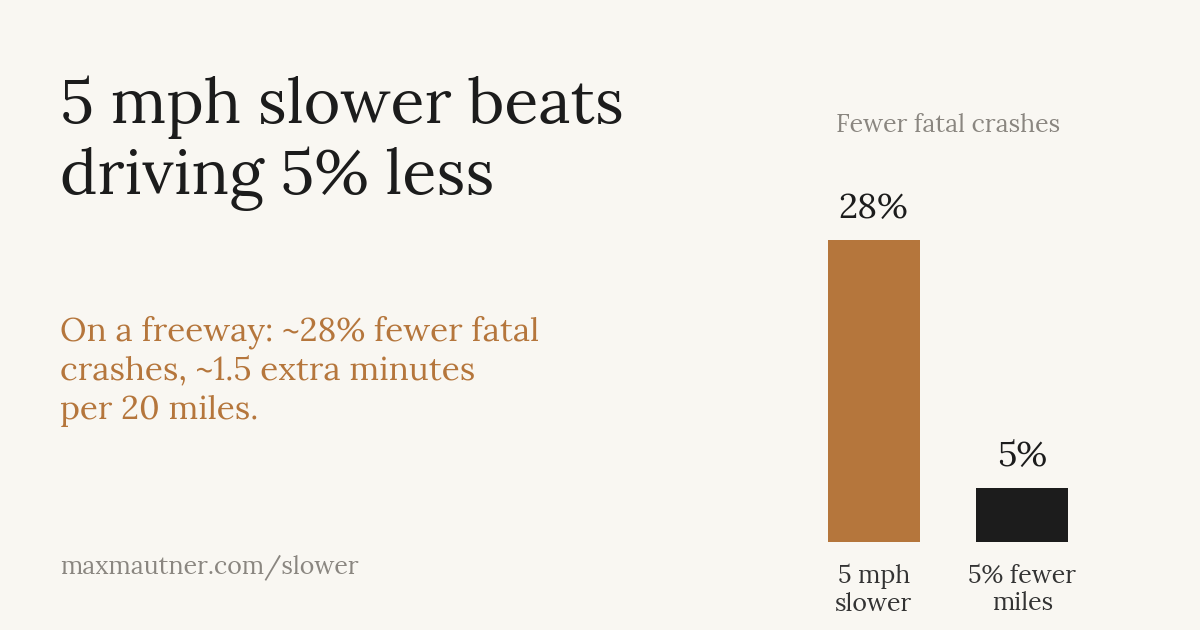
Driving 5 mph slower beats driving 5% less
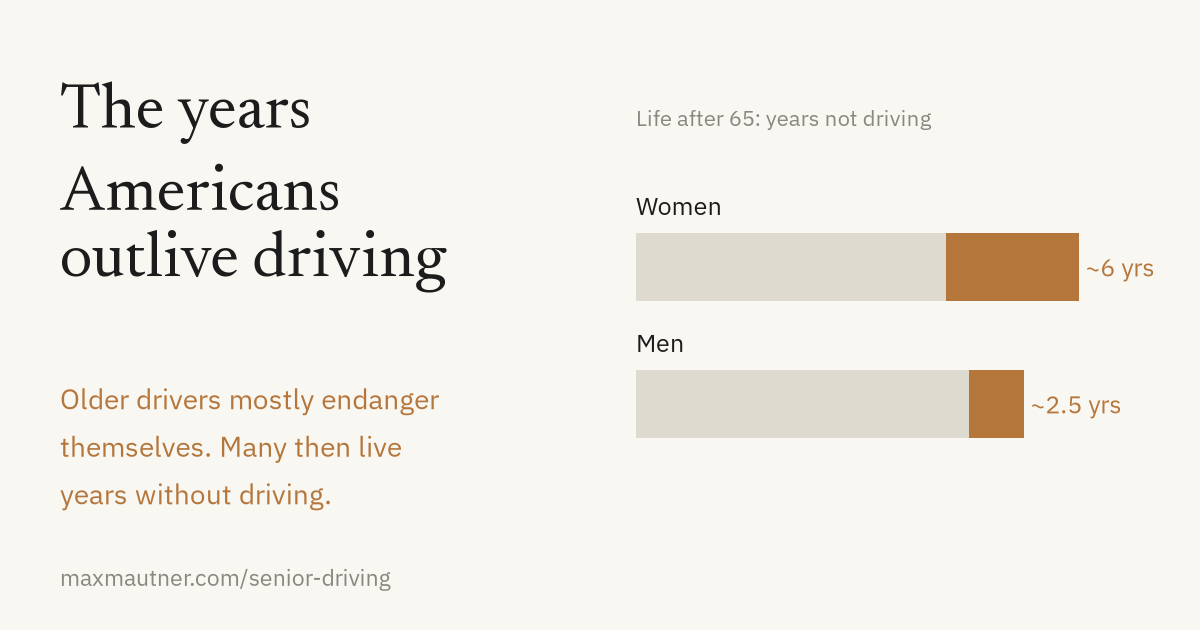
The years Americans outlive driving

Motorists in one of a Montreal’s busiest boroughs support bike lanes
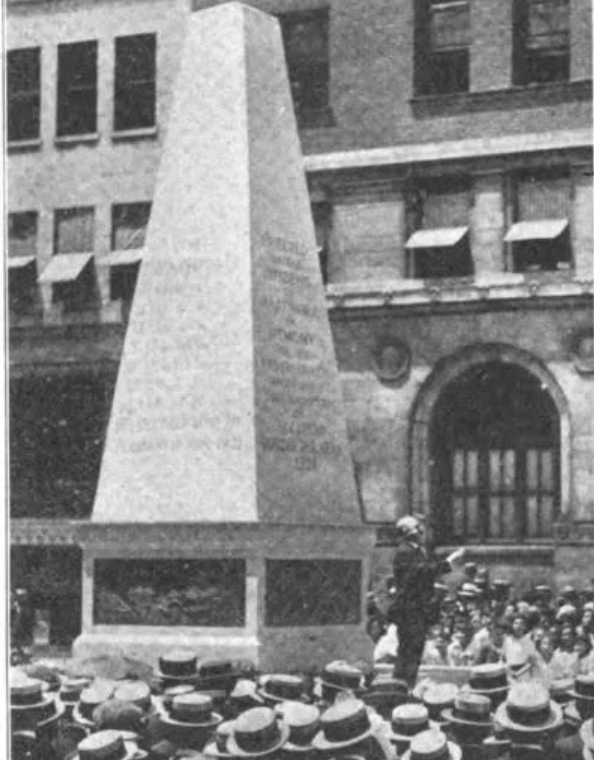
Killing someone with a car costs $1.6 million. California requires drivers to carry $30,000

Paying for driving
Will Canada’s gas tax holiday drive up emissions and help the rich? | The Narwhal