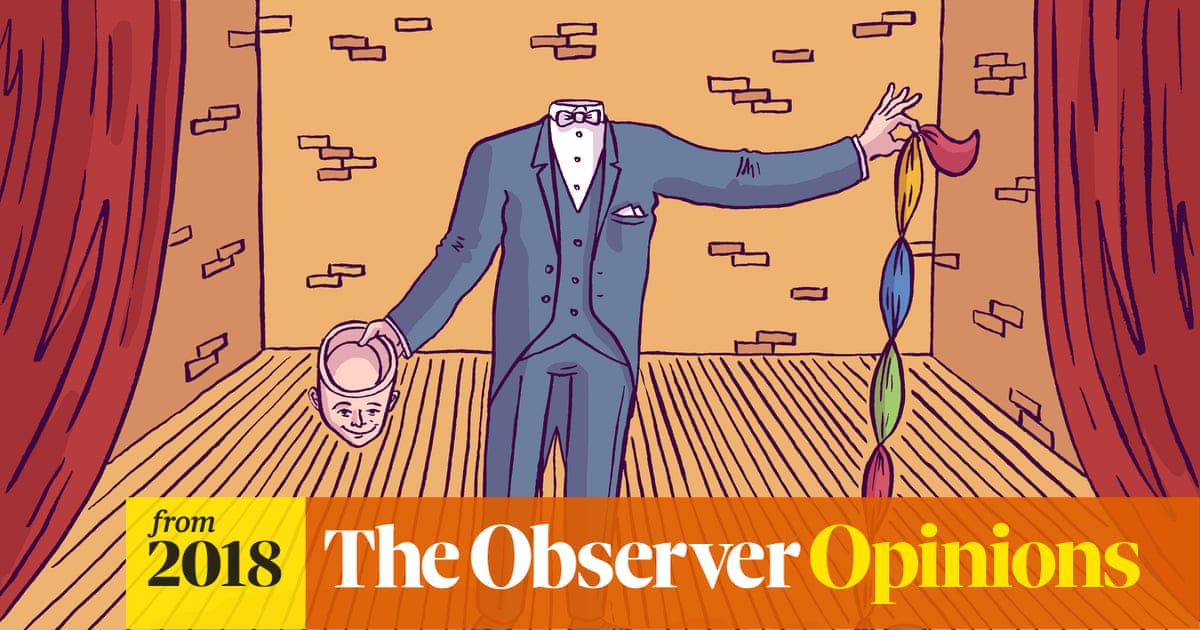
Psychologists have tried to plumb the depths of human motivation to make sense of our behaviour. But our inner mental world is a fiction, sustained by constant improvisation
Michel Bauwens on Twitter / X
This is the deeper motivation that inspires Caitlin's work:< " It is possible for the human organism to liberate itself from its habituated creation of the ego through the process commonly referred to as spiritual enlightenment. It is also possible for humanity as a species to… https://t.co/smsjPAnNFr— Michel Bauwens (@mbauwens) June 18, 2026
The Self-Evidencing Agent: Mind, Existence, and Predictive Processing
How the concept of self-evidencing offers a philosophical principle for understanding mind and behavior, consciousness, value, wisdom, and meaning.What is
The Care of the Self within a Biopolitical Paradigm: Integrating Cognitive Psychology to resist Subjectification
Contemporary theories of resistance to biopolitical subjectification often reify unfreedom by lacking a plausible model of agency. This thesis resolves this by establishing an ontological foundation for the agent as fundamentally autopoietic and semiotic, drawing on contemporary cognitive science. It then proposes a new foundation for resistance by synthesizing Michel Foucault’s later work on the care of the self with the 4P/5E model of embodied cognition. I show how this interdisciplinary approach establishes Foucault’s ethical techniques as a systematic ecology of practices for cultivating a free, self-determining agent and by reframing resistance as a practical, embodied ethics of self-formation, it inherently fosters two vital skills: the gain of self-knowledge and self-mastery.
The Power of Habit: Why We Do What We Do in Life and Business by Charles Duhigg
A young woman walks into a laboratory. Over the past two years, she has transformed almost every ...
When AI builds itself
Our progress toward recursive self-improvement, and its implications.

Evald Ilyenkov and the enactive approach
There is a growing interest in Evald Ilyenkov’s work and its significance for contemporary debates. This interest spans several disciplines. One key thread in Ilyenkov’s ideas concerns a perspective on the relation between biology and psychology. In rejecting crude reductionism and individualism, Ilyenkov put forward a view of mind and personhood as emerging from activity and social practice. In his rejection of brain-bound notions of the mind, Ilyenkov’s ideas bear interesting resonances with current work in 4E cognition. One particularly interesting resonance that has occasionally been noticed are the connections with the enactive approach to life and mind. However, beyond some hints at interesting convergences, there is to date no detailed comparison between the two views. The present article attempts to address this gap, examining both complementarities and possible tensions between the two approaches. Rejecting cognitive views detached from environmental and social processes, the enactive approach, as exemplified by De Jaegher and Di Paolo’s concept of participatory sense-making, emphasises the dynamic constitution of cognition through embodied and situated activities. The article draws parallels between Ilyenkov’s emphasis on historically and culturally situated activity, notably labour, and the enactive understanding of human bodies as dynamically constituted in human activity. The article explores the Ilyenkovian and enactive perspectives on the dialectics of ideality, challenging traditional dualistic views and proposing that the ideal emerges as metastable patterns in the ongoing interactions between world, practices, norms, and bodies. The article concludes by suggesting future research directions for the enactive approach, particularly in areas emphasised by Ilyenkov, such as labour and the mediation of material/cultural artefacts.

How Artificial Intelligence Constrains the Human Experience
AbstractArtificial intelligence (AI) and related technologies are transforming many consumption activities, powering breakthroughs that expand the human experience by enhancing human capabilities, performance, and creativity. While this explains the consumer enthusiasm and rapid adoption of these technologies, AI systems can also have the opposite effect: reducing and constraining the range of experiences that are available to consumers. This article examines the mechanisms through which AI can constrain the human experience, considering individual, interpersonal, and societal processes. Our analysis uncovers a complex interplay between the advantages of AI and its inadvertent negative repercussions, which potentially restrict human autonomy, self-identity, relational dynamics, and social behavior. In this article, we propose three different mechanisms at the core of these constraining forces: parametric reductionism, agency transference, and regulated expression. Our exploration of these mechanisms highlights the risks connected to system design and points to questions and implications for future researchers and policymakers.

Are we offloading too much of our thinking to AI?
Reflections on autonomy and the value of thinking for ourselves
Dec 2020 -- Jelle Bruineberg -- Embodied cognition and the attention crisis
Our AI Philosophy | Typefully
Social media runs on an implicit contract: I write something, you follow me, you read it, and you trust it came from a human mind. AI writing is curr…

AI: A Guide for Thinking Humans | Melanie Mitchell | Substack
I write about interesting new developments in AI. Click to read AI: A Guide for Thinking Humans, by Melanie Mitchell, a Substack publication with tens of thousands of subscribers.
Large language memories: Psychosis and antisocial media
Using the fields of memory studies and digital humanities, this article argues that there has been a shift from more collective and social memory to more personalised and individual memory. This shift, it is argued here, can be conceptualised through the psychoanalytic concept of ‘psychosis’. While the causes of the changes in our patterns of memory have been located in capitalist and neoliberal principles, the effects of the changes in our memory habits might be found in psychosis. From falling in love with machinic AI replicas to indulging in conspiracy theories to acting as if we are social media influencers or backing ourselves to win out in impossible job markets, we are inclined towards personal fantasy, often at the expense of participating in social life. But why do we do this? Why is it easier to believe a farfetched conspiracy theory or wild personal dream than it is to participate socially and collectively in the world we live in? Part of the reason, at least, is found in our increasing habitual reliance on new and emergent technologies. Often presented to us as a brand-new form of Artificial Intelligence, these generative tools are the latest update to a longer pattern in our digital world: the trend of developing ‘relationships’ with algorithms that, to larger and smaller degrees, we come to rely on for habits of cognition and recognition. By affecting our patterns of memory, these technologies produce a kind of isolation that lends itself to individual and fantastical – rather than shared and realist – thinking.

Motivation | The Paper Pilot
The Paper Pilot's digital garden of thoughts on philosophy, politics, and sociology
Movements of the Mind: A Theory of Attention, Intention and Action
Abstract. Movements of the Mind explains what it is to be an agent. Focusing on mental agency, the book’s eponymous topic, it investigates an agent’s doing
Guy Who Sucks At Being A Person Sees Huge Potential In AI
SAN MATEO, CA—After spending the past three decades of his life being totally unable and unwilling to engage in any meaningful way with the world around him, James Parker, a local guy who sucks at being a person, told reporters Thursday that he saw huge potential in AI. “While it’s still in its early phase, artificial intelligence will one day accomplish things that humans could have never even dreamed of doing,” said Parker, who, by all accounts, has never stretched himself to do something he found difficult; has never created anything truly original; and, deep down, has absolutely zero understanding of what makes things good, enjoyable, or rewarding. “Just yesterday, I asked an AI program to write an entire sci-fi novel for me, and [as someone who will die an empty shell of a man who wasted his life doing nothing for the world and, perhaps, should never have been born] I was super impressed. Soon, humans won’t need to do anything at all! Awesome.” At press time, Parker added that as someone whose contributions to society would almost certainly be measured cumulatively as a net loss, he also saw great potential in the future of the metaverse.