


We point to self-care as we skip out on activities – but routinely staying home poses its own risk to our mental health
Homebound: The Long-Term Rise in Time Spent at Home Among U.S. Adults
The changes in daily life induced by the COVID-19 pandemic brought renewed attention to longstanding concerns about social isolation in the United States. Despite the links between the physical setting for individuals' daily lives and their connections with family, friends, and the various institutions of collective life, trends in where American adults spend their time have been largely overlooked as researchers have focused on how and with whom they spend their time. This article analyzes data from the American Time Use Survey over a timeframe spanning nineteen years and argues that the changes in Americans' daily routines induced by the COVID era should be seen as an acceleration of a longer-term trend: the rise of time spent at home. Results show that from 2003 to 2022, average time spent at home among American adults has risen by one hour and 39 minutes in a typical day. Time at home has risen for every subset of the population and for virtually all activities. Preliminary analysis indicates that time at home is associated with lower levels of happiness and less meaning, suggesting the need for enhanced empirical attention to this major shift in the setting of American life.

Homebound: The Long-Term Rise in Time Spent at Home Among U.S. Adults
The changes in daily life induced by the COVID-19 pandemic brought renewed attention to longstanding concerns about social isolation in the United States. Despite the links between the physical setting for individuals' daily lives and their connections with family, friends, and the various institutions of collective life, trends in where American adults spend their time have been largely overlooked as researchers have focused on how and with whom they spend their time. This article analyzes data from the American Time Use Survey over a timeframe spanning nineteen years and argues that the changes in Americans' daily routines induced by the COVID era should be seen as an acceleration of a longer-term trend: the rise of time spent at home. Results show that from 2003 to 2022, average time spent at home among American adults has risen by one hour and 39 minutes in a typical day. Time at home has risen for every subset of the population and for virtually all activities. Preliminary analysis indicates that time at home is associated with lower levels of happiness and less meaning, suggesting the need for enhanced empirical attention to this major shift in the setting of American life.
What do we know about how to support mental health and wellbeing during the COVID-19 pandemic from past infectious disease epidemics? - DEP
Chronically Ill People Spend a Lot of Time at Home — This Is How They Make It Comfortable
\"We’re always attempting... to be around other people in a way that’s more comfortable for them. And home for me is the place where I don’t have to do any of that.\"
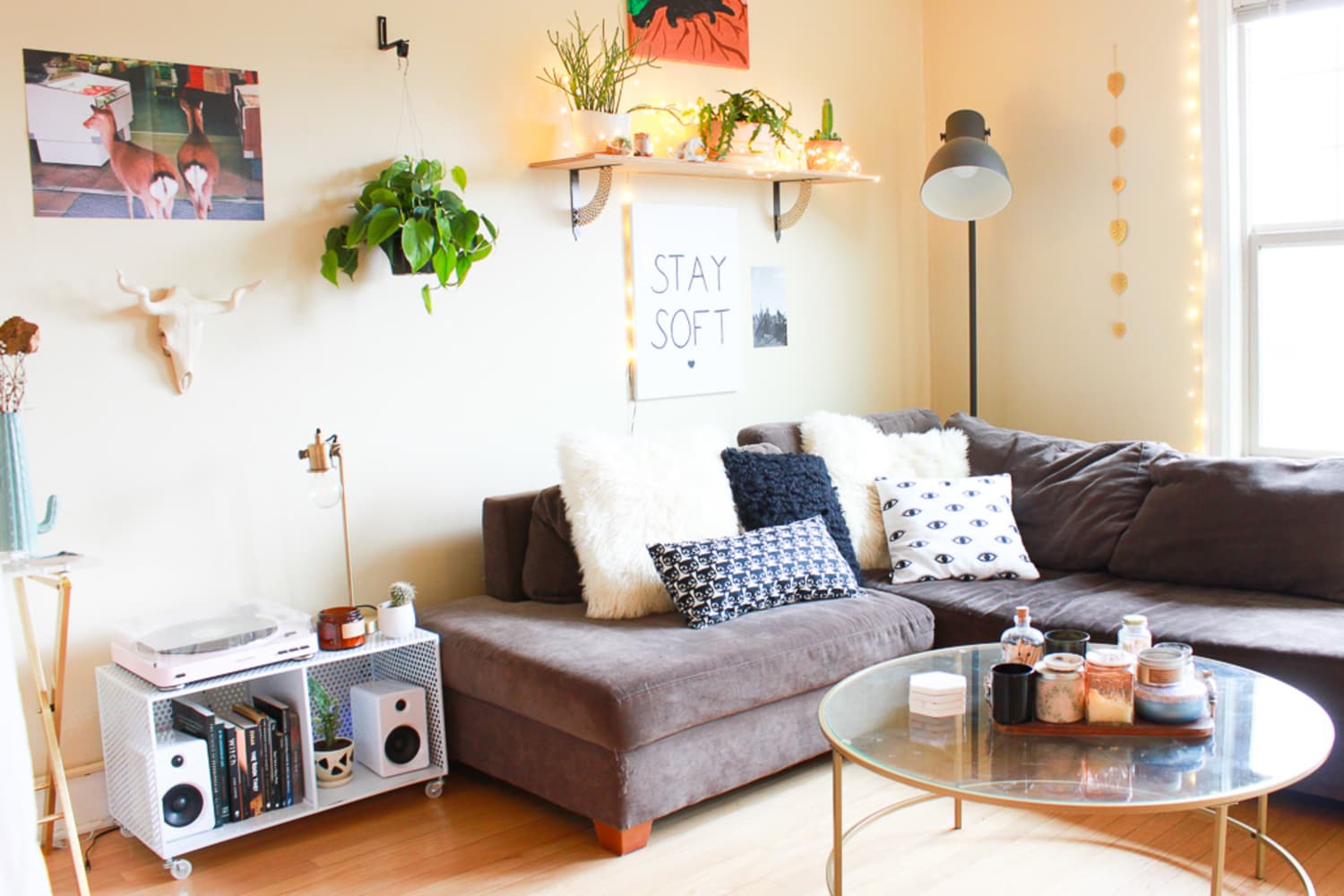
Long emergencies: Covid, climate, homelessness
At first, U.S. society treated the Covid-19 pandemic as an emergency requiring collective solutions. Now we pretend it’s over and treat staying healthy as an individual matter. I live in San Francisco and hang out in progressive spaces that were some of the last holdouts in urging and giving out masks. Now, even though the new Covid surge is making more of my friends sick than ever, masks are a rare sight. Anywhere outside SF, they’re unheard of. Collective health is out; rugged individualism is in. If you’re immunocompromised: sorry, but everyone’s tired of being inconvenienced just for the small matter of your survival. We’re living in the “You do you” era.
Researchers Confront an Epidemic of Loneliness (Published 2016)
Social isolation is linked to physical illness and to functional and cognitive decline. Programs to reach out to the elderly are growing, particularly in Britain.

Death of the private self: how fifteen years of Facebook changed the human condition
In 2004, the social network site was set up to connect people. But now, with lives increasingly played out online, have we forgotten how to be alone?
Being in a crowd doesn’t make you part of a mindless mob | Psyche Ideas
It’s often assumed people lose their minds in a crowd. Research on riots, festivals and sports tells a more uplifting story

It's Been A Bad Week For Strong Female Characters
I think I've finally discovered what caused my mysterious, unknown apocalypse. I believe the illness known as "con flu" — in which one sick person at a

What if we stopped treating social care like a service? A small village community in Yorkshire showed me another way
A visit to my friend in a remote Yorkshire village led me into a three-month immersion in one of Britain’s most remarkable forms of social care.
Why Is Everyone Getting Sick? Behind the Global Rise in RSV, Flu, Measles
It's not your imagination: At least 13 communicable diseases are surging past pre-pandemic levels

Life at Home
Whether you need organizing advice or want inspiration for holiday parties, we'll help you make your life at home happy and healthy.

Why Being Alone Is Hazardous to Your Health
It’s been well established that social isolation is a serious health risk, particularly for seniors. A 2010 study showed that too much alone time can be
Impact of the COVID-19 pandemic on social media
Social media became an important platform for interaction during the COVID-19 pandemic, coinciding with the onset of social distancing. According to a study conducted by Facebook's analytics department, messaging rates rose by over 50% during this period. Individuals confined to their homes utilized social media not only to maintain social connections but also as a source of entertainment to alleviate boredom. Concerns arose regarding the overreliance on social media for primary social interactions, particularly given the constraints imposed by the pandemic.

You Are No Longer Invited to Dinner
We’re witnessing the death of hosting in America. The share of adults who say they regularly have friends over has declined 70 percent since 1975
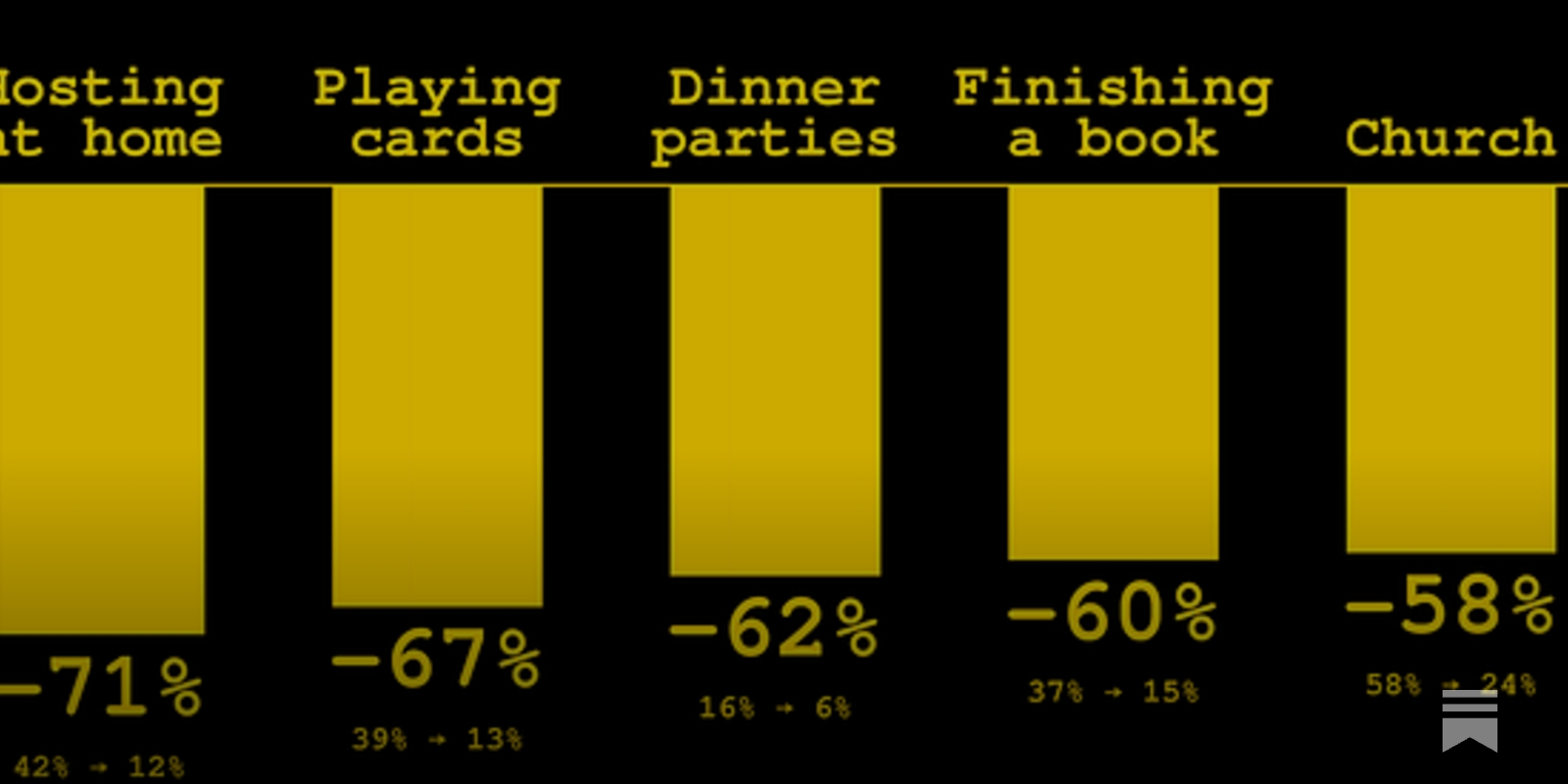
You Are No Longer Invited to Dinner
We’re witnessing the death of hosting in America. The share of adults who say they regularly have friends over has declined 70 percent since 1975