

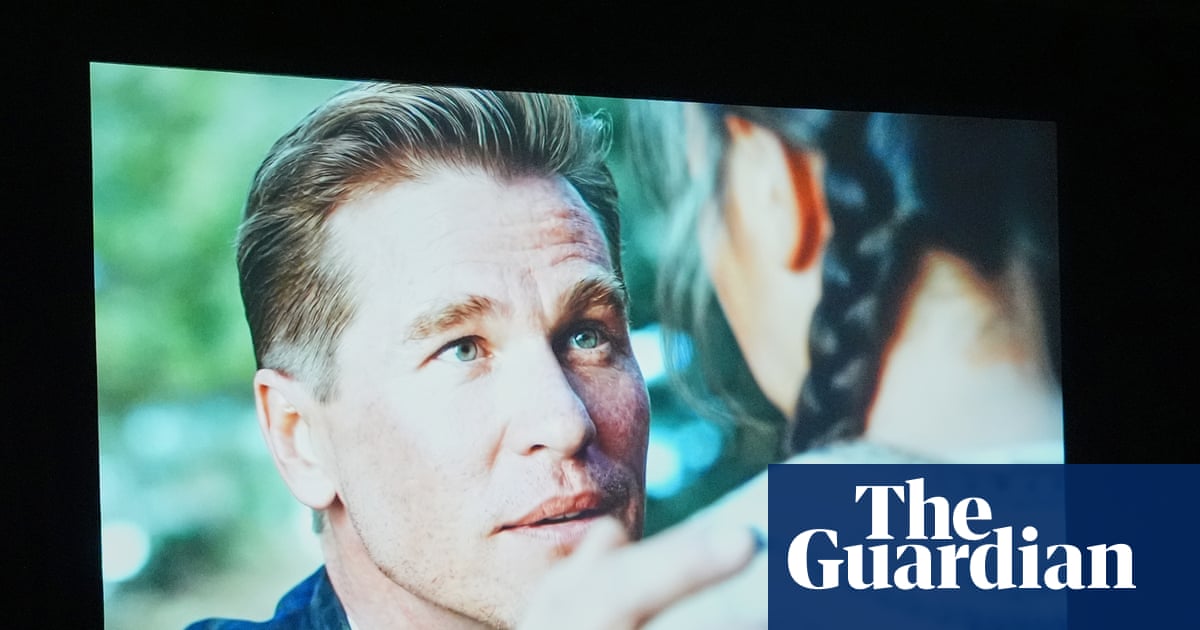


Footage of As Deep As the Grave screened in the US, featuring an authorised visual deepfake of the actor who died in 2025
Refugees and Searchers Go to the Movies – First of the Month
Spielberg lets the screen go black for about five seconds. The communal experience of film-going then becomes a shared nightmare. With the screen unlit, the emergency lights in the theater are the only source of illumination. If you jump (as I did), you fear for a moment that the movie has stopped—the reel fallen off its plate, the fantasy interrupted by unfunny, drop-dead reality. “Are we still alive?” whispered by Farrier’s daughter Rachel (Dakota Fanning) is an inquiry that invokes our own doubts about our safety, our capacity to dream, our possible awakening to dire reality. It recalls how many people felt after 9/11. Are we dreaming? Are we still alive? Bringing everyday experience and existential contemplation together so forcefully, Spielberg joins the ranks of the most audacious avant-garde filmmakers: He turns the popcorn movie experience into a consideration of the abyss.
Will the Taylor Swift AI deepfakes finally make governments take action? | CBC Arts
Reporters Sam Cole and Melissa Heikkilä join Elamin to explain why this story has hit a nerve with those in Hollywood and Washington.


Cloud Atlas Extended Trailer #1 (2012) - Tom Hanks, Halle Berry, Wachowski Movie HD
Unmasking Synthetic Realities in Generative AI: A Comprehensive...
The rapid advancement of Generative Artificial Intelligence has fueled deepfake proliferation-synthetic media encompassing fully generated content and subtly edited authentic material-posing...

Deep Future - AI scenario planning
Deep Research for scenario planning. Stress-test your strategy against thousands of possible futures with a realtime AI scenario generation engine.
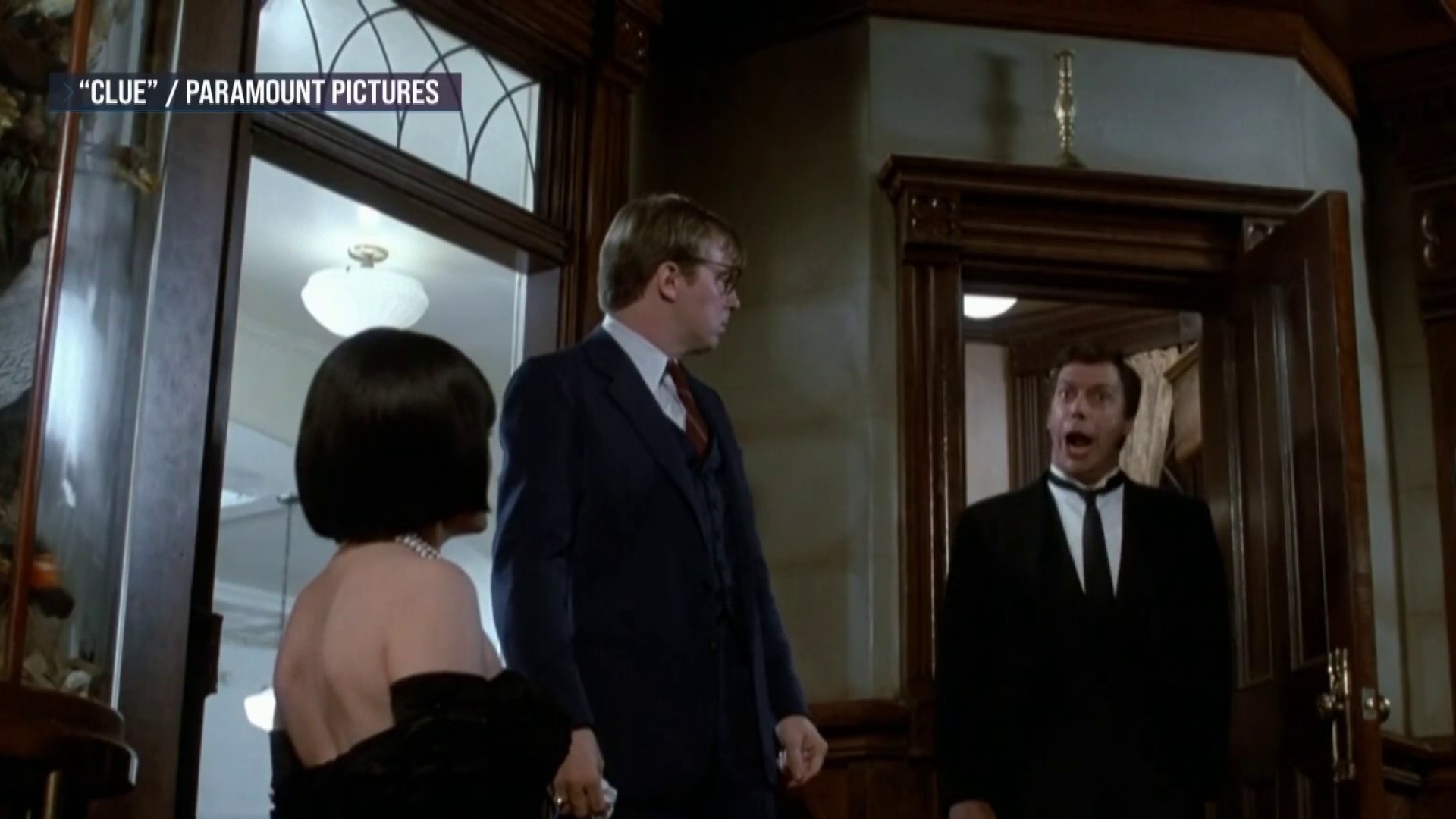
Tim Curry, star of ‘Rocky Horror Picture Show,’ dies at 80
Tim Curry, the actor who turned an iconic performance into a decades-long career, has died. Known for his flamboyant characters, he was a gifted performer on stage and screen. NBC News’ Chloe Melas looks back at his storied career.
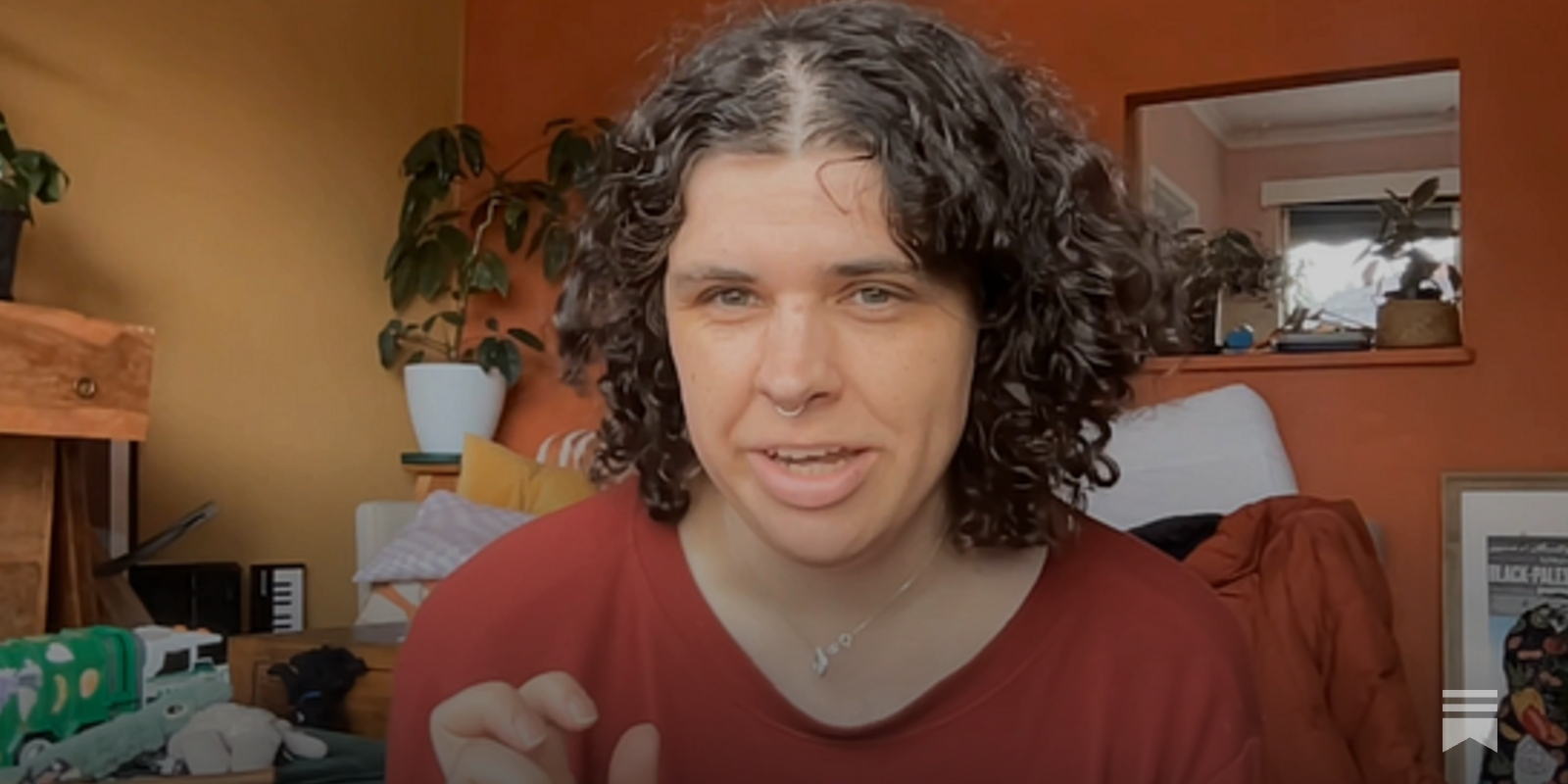
Premium: The Hater's Guide to OpenAI
Soundtrack: The Dillinger Escape Plan — Setting Fire To Sleeping Giants In what The New Yorker’s Andrew Marantz and Ronan Farrow called a “tense call” after his brief ouster from OpenAI in 2023, Sam Altman seemed unable to reckon with a “pattern of deception” across his time at the company:
Is OpenAI dead yet?
Tracking the demise of OpenAI. Is it dead yet? Check here to find out.

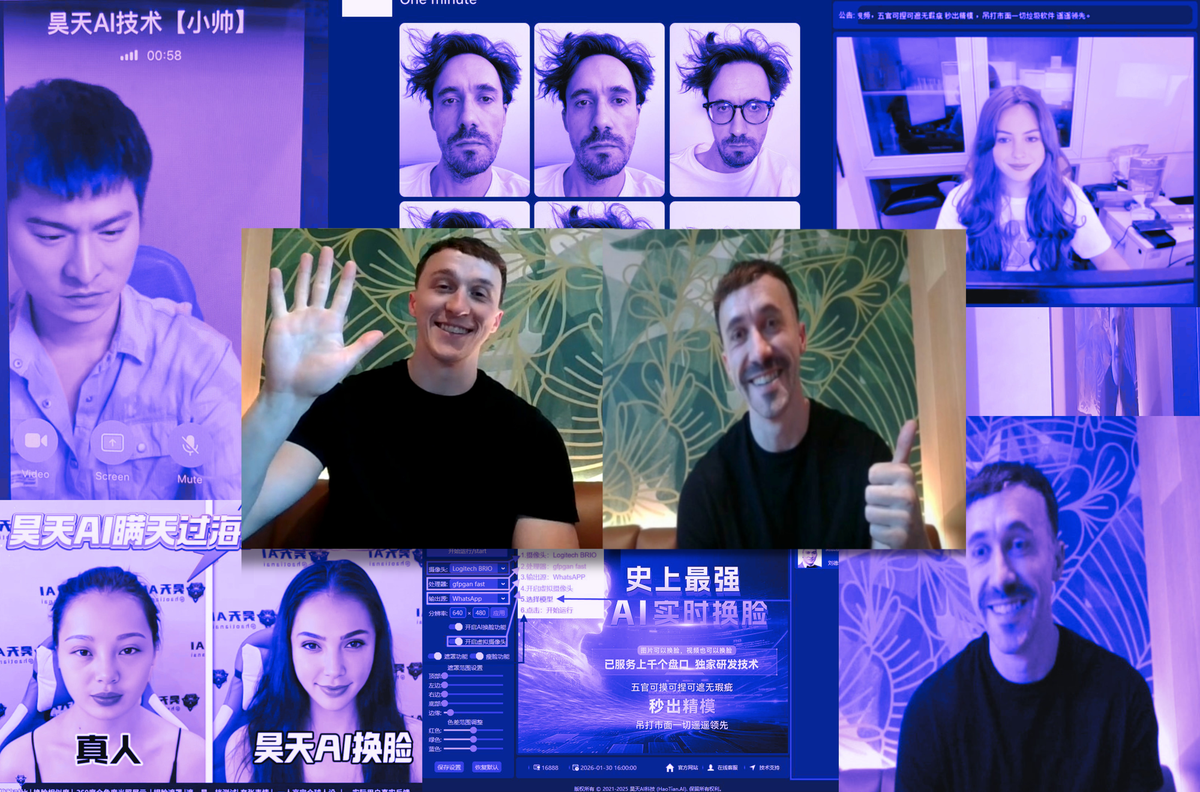
‘HELLO BOSS’: Inside the Chinese Realtime Deepfake Software Powering Scams Around the World
404 Media has obtained a copy of ‘Haotian AI’, a popular piece of realtime deepfake software marketed to scammers. It can turn a fraudster's face into anyone else's on WhatsApp, Zoom, and Teams.
Hypernormalisation | Full Documentary | Adam Curtis
DR Tulu: An open, end-to-end training recipe for long-form deep research | Ai2
We introduce Deep Research Tulu (DR Tulu), an open post-training recipe and framework for long-form deep research agents.

Don't Use Deep Research (Until You Watch This) | Gemini, OpenAI, and Perplexity Deep Research
The Deepfake Defense—Exploring the Limits of the Law and Ethical Norms in Protecting Legal Proceedings from Lying Lawyers
Thousands of audiovisual images documented the insurrectionists who stormed the United States Capitol on January 6, 2021. Authorities subsequently collected those images and charged some for their criminal conduct. Given the overwhelming audiovisual evidence implicating the insurrectionists, it should be impossible to assert a plausible defense claiming that those unmistakably depicted in the images were not present. Right? Wrong. As the defense in the federal criminal trial of January 6th insurrectionist leader Guy Reffitt illustrated, the emergence of “deepfakes” has changed the landscape of plausible defenses to crimes. Reffitt led the attack on the Capital. Videos and other visual images showed him at the head of the crowd advancing on the Capitol’s West Terrace. He was arrested and charged with multiple crimes. And although the evidence, including audiovisual images, against Reffitt, was clear and overwhelming, his lawyer undermined it, arguing to the jury that the evidence against Reffitt was a “deepfake” – an audiovisual recording created using Artificial Intelligence technology that allows anyone with a smartphone to believably map one person’s movements and words onto the image of another person. Unfortunately, the law does not provide a clear response to Reffitt’s lawyer’s reliance on deepfakes as a defense. <br><br>But this much is clear—the “deepfake defense” is a new challenge to our legal system’s adversarial process and truth-seeking function. Because the norms of professional ethics require lawyers to advocate zealously, deepfakes invite lawyers to raise objections and arguments to evidence to exploit juror bias and skepticism about what is real. Thus, lawyers may plant the seeds of doubt in jurors’ minds to question the authenticity of all digital audio and visual images, even those counsel knows to be genuine.<br><br>Currently, no rule of procedure, ethics, or legal precedent directly addresses the presentation of the “deepfake defense” in court. The existing standards provide scant guidance because they were developed before the advent of deepfake technology. As a result, they do not solve the concern of how to deter lawyers from exploiting it. Although in the last several years, legal scholarship and the popular news media have addressed certain facets of deepfakes, there has been no in-depth commentary on the “deepfake defense.” This article is the first to explore the deepfake defense, locating it within the historical and current framework of lawyers’ efforts to fabricate evidence and the laws and the practice norms that exist to curb that conduct. It proposes a reconsideration of the ethical rules governing candor, fairness, and the limits of zealous advocacy and urges a re-examination of the court’s role in sanctioning such conduct. Thus, this article offers novel proposals to guide the way forward for lawyers and courts as they traverse this new technological landscape.
DEATH OF THE TADI WEB
Deepfake detection by human crowds, machines, and machine-informed crowds
Significance The recent emergence of deepfake videos raises theoretical and practical questions. Are humans or the leading machine learning model more capable of detecting algorithmic visual manipulations of videos? How should content moderation systems be designed to detect and flag video-based misinformation? We present data showing that ordinary humans perform in the range of the leading machine learning model on a large set of minimal context videos. While we find that a system integrating human and model predictions is more accurate than either humans or the model alone, we show inaccurate model predictions often lead humans to incorrectly update their responses. Finally, we demonstrate that specialized face processing and the ability to consider context may specially equip humans for deepfake detection. , The recent emergence of machine-manipulated media raises an important societal question: How can we know whether a video that we watch is real or fake? In two online studies with 15,016 participants, we present authentic videos and deepfakes and ask participants to identify which is which. We compare the performance of ordinary human observers with the leading computer vision deepfake detection model and find them similarly accurate, while making different kinds of mistakes. Together, participants with access to the model’s prediction are more accurate than either alone, but inaccurate model predictions often decrease participants’ accuracy. To probe the relative strengths and weaknesses of humans and machines as detectors of deepfakes, we examine human and machine performance across video-level features, and we evaluate the impact of preregistered randomized interventions on deepfake detection. We find that manipulations designed to disrupt visual processing of faces hinder human participants’ performance while mostly not affecting the model’s performance, suggesting a role for specialized cognitive capacities in explaining human deepfake detection performance.

Deepfake detection by human crowds, machines, and machine-informed crowds
Significance The recent emergence of deepfake videos raises theoretical and practical questions. Are humans or the leading machine learning model more capable of detecting algorithmic visual manipulations of videos? How should content moderation systems be designed to detect and flag video-based misinformation? We present data showing that ordinary humans perform in the range of the leading machine learning model on a large set of minimal context videos. While we find that a system integrating human and model predictions is more accurate than either humans or the model alone, we show inaccurate model predictions often lead humans to incorrectly update their responses. Finally, we demonstrate that specialized face processing and the ability to consider context may specially equip humans for deepfake detection. , The recent emergence of machine-manipulated media raises an important societal question: How can we know whether a video that we watch is real or fake? In two online studies with 15,016 participants, we present authentic videos and deepfakes and ask participants to identify which is which. We compare the performance of ordinary human observers with the leading computer vision deepfake detection model and find them similarly accurate, while making different kinds of mistakes. Together, participants with access to the model’s prediction are more accurate than either alone, but inaccurate model predictions often decrease participants’ accuracy. To probe the relative strengths and weaknesses of humans and machines as detectors of deepfakes, we examine human and machine performance across video-level features, and we evaluate the impact of preregistered randomized interventions on deepfake detection. We find that manipulations designed to disrupt visual processing of faces hinder human participants’ performance while mostly not affecting the model’s performance, suggesting a role for specialized cognitive capacities in explaining human deepfake detection performance.
