


The Long Read: The ability of statistics to accurately represent the world is declining. In its wake, a new age of big data controlled by private companies is taking over – and putting democracy in peril
Living in Data: A Citizen's Guide to a Better Information Future (Paperback)
Jer Thorp’s analysis of the word “data” in 10,325 New York Times stories written between 1984 and 2018 shows a distinct trend: among the words most closely associated with “data,” we find not only its classic companions “information” and “digital,” but also a variety of new neighbors—from “scandal” and “misinformation” to “ethics,” “friends,” and “play.”To live in data in the twenty-first century

Data, Democracy and Dirty Tricks
China’s plan to organize its society relies on ‘big data’ to rate everyone
The Communist Party wants to harness vast troves of online data to score people and companies on their behavior.

The Limits of Data
Policymakers want to make decisions based on clear data, but important factors are lost when we rely solely on data. A philosopher writes:
Big Data’s Radical Potential
Today, big data is used to boost profits and spy on civilians. But what if it was harnessed for the social good?

Digital Socialism?
What opportunities does the new feedback infrastructure of data capitalism offer for non-market forms of social coordination? Hayek and the Calculation Debate revisited in the age of big data.
The Data-Center Debate Is Divorced From the Facts
All those scary numbers aren’t what they seem.
Who needs democracy when you have data?
Here’s how China rules using data, AI, and internet surveillance.

Data Feminism
Today, data science is a form of power. It has been used to expose injustice, improve health outcomes, and topple governments. But it has also been used to d...
A fact-based worldview for all | Gapminder
We live in a globalized world, not only in terms of trade and migration. More people than ever care about global development. But most people have severe misconceptions about contemporary global development. We know, because we have tested people’s knowledge. One of the main reasons for this is that students don’t learn to understand the world based on statistics and facts. Instead, we have a dramatic worldview formed by outdated school books and sensationalist news-stories. People intuitively believe that most things are getting worse. The dramatic worldview leads to irrational decisions by individuals, nonprofits, governments and business. For the first time in human history reliable statistics exist. There’s data for almost every aspect of global development. The data shows a very different picture: a world where most things improve; a world that is not divided; and a world where the fast population growth will soon be over. The world has never been less bad. But that doesn’t mean it’s perfect.
Data, Democracy and Dirty Tricks
Watch all of Channel 4 News' investigations into both Cambridge Analytica - the British data firm linked to Trump's win - and the Brexit campaign.
SimPolitics
For more than six decades, the public has been promised that computers will revolutionize politics, both nationally and internationally. In SimPolitics, Fenw...

The dark side of big data
Everybody (1, 2, 3) is talking about big data and the chances that are not to be missed. So it would be fatal to miss this opportunity, for instance, by impo...
We Need A New Kind Of Data Rights
Associational data rights would empower communities to reclaim power from Big Tech

Social Cooling - Big Data's long term side-effect
If data is the new oil, what's the new global warming? Social Cooling asks the question: is our faith in big data slowly making us more well behaved.. but less human?
Data Leverage: A Framework for Empowering the Public in its Relationship with Technology Companies
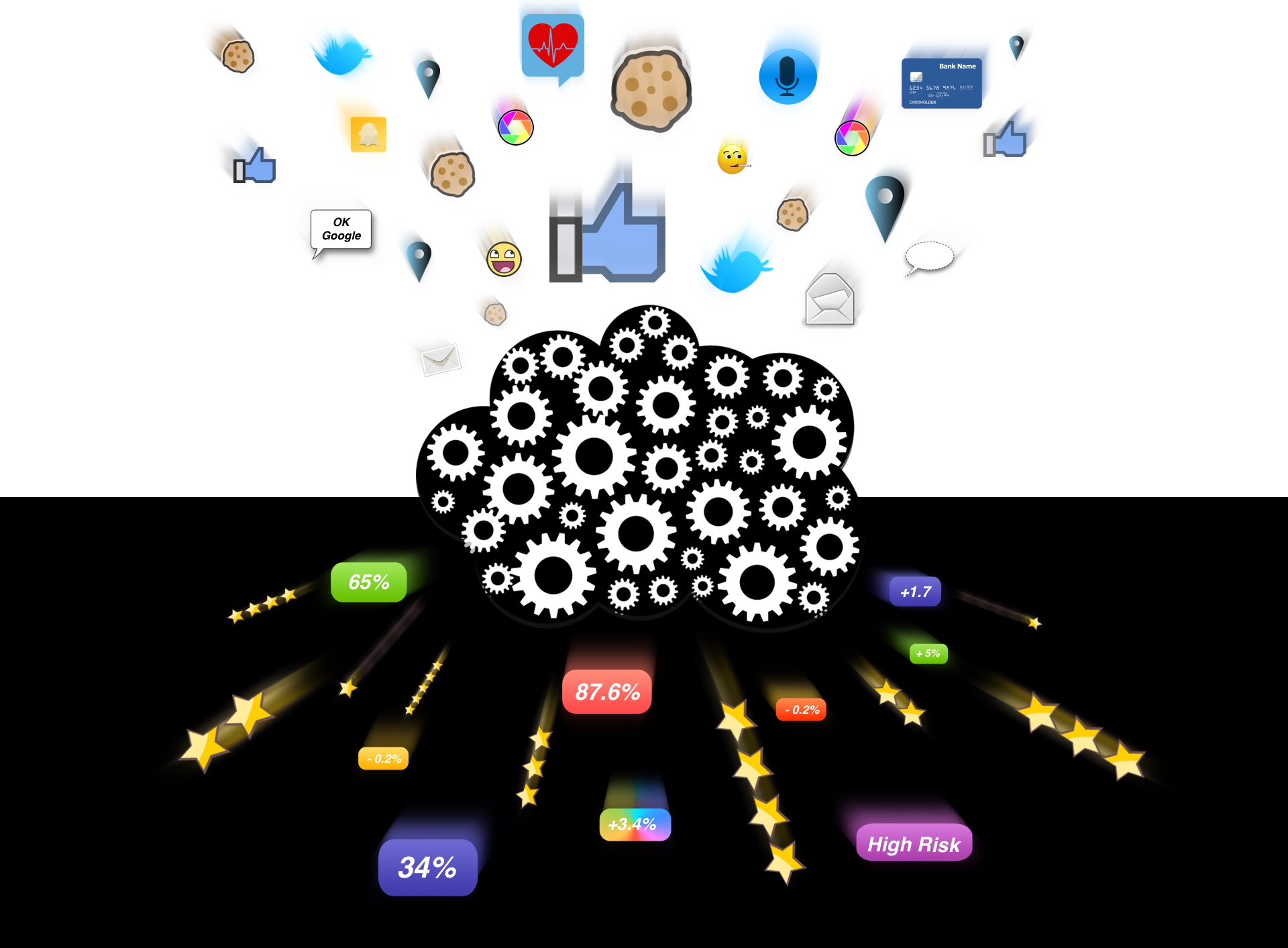
Many powerful computing technologies rely on implicit and explicit data contributions from the public. In this paper, we synthesize emerging research that seeks to better understand and help people action this data leverage. Drawing on prior work in areas including machine learning, human-computer interaction, and fairness and accountability in computing, we present a framework for understanding data leverage that highlights new opportunities to change technology company behavior related to privacy, economic inequality, content moderation and other areas of societal concern.