

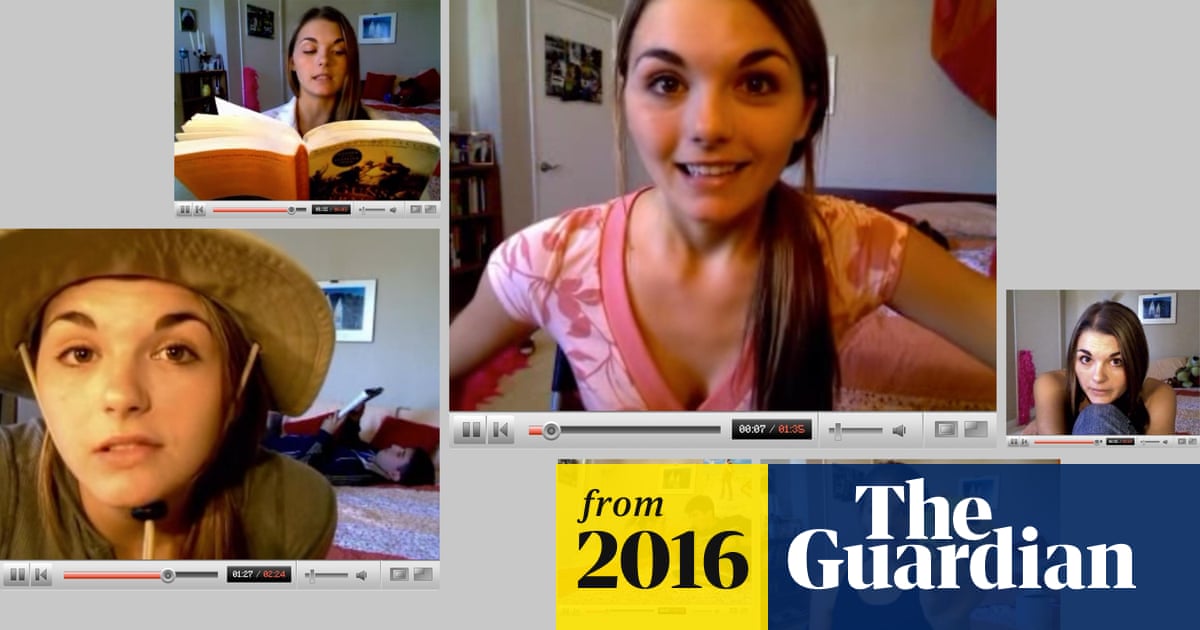
Bree was a funny, friendly 16-year-old video blogger with a strange family. But all was not what it seemed. Ten years on, we revisit YouTube’s first viral hoax
The year we wanted the internet to be smaller
Why tiny, weird online communities made a comeback in 2017

Blog | Babesky
In 1994 as a toddler I saw my first computer. A guy that was friends with my dad had one.…
How the Blog Broke the Web
I first got online in 1993, back when the Web had a capital letter — three, in fact — and long before irony stretched its legs and unbuttoned its flan

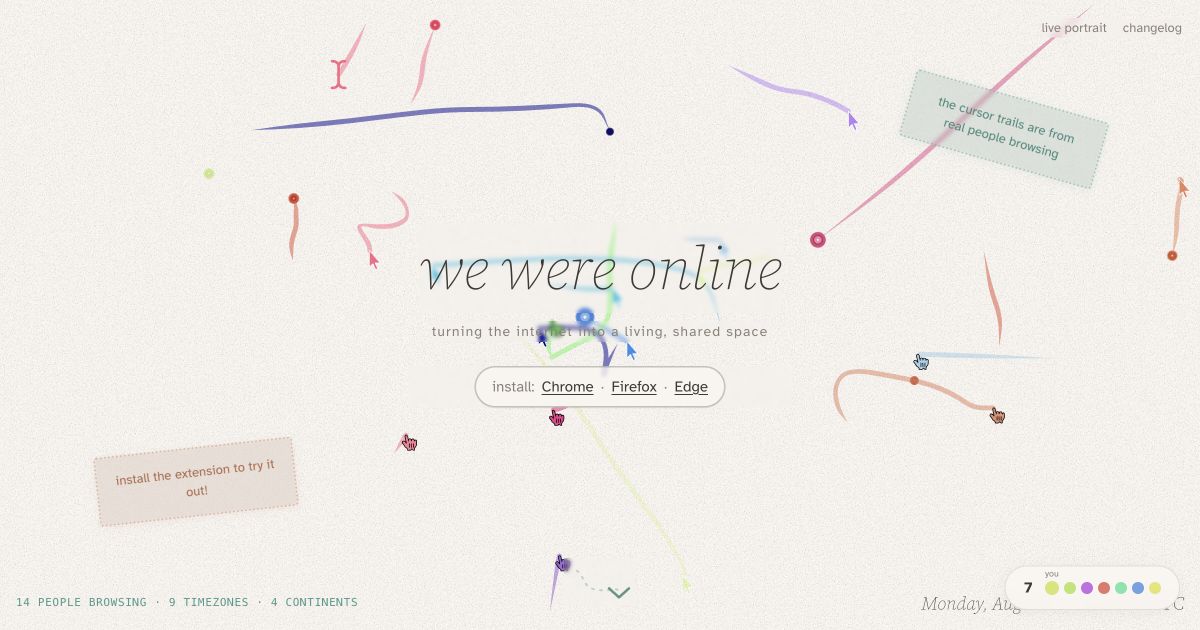
we were online
Turn the internet into a living, shared space with real-time traces of people browsing.

The Feed Is Fake
That “viral” song, movie, influencer, and celebrity drama you scrolled by recently was likely the result of a stealth marketing campaign.
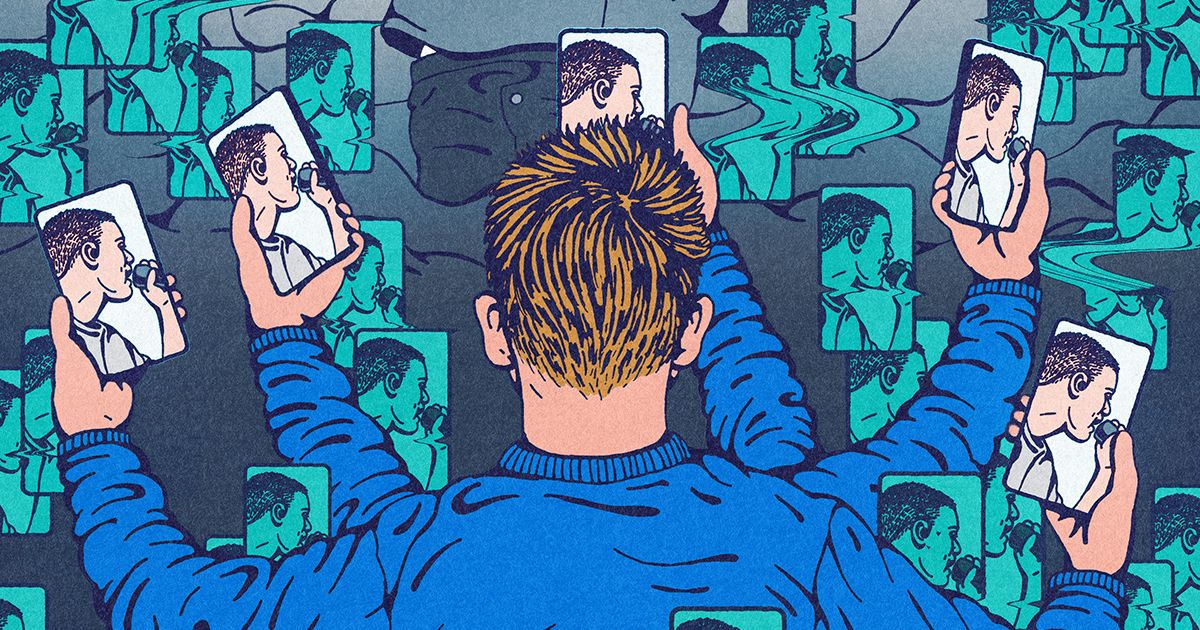
Men, algorithms and how YouTube shapes media consumption
ISD's new research project explores the topics and content YouTube’s algorithm recommends to young male users.
The story of this blog so far: 'AI', the death of web dev, and feeling like an outsider
Writing at the end of the world, from Hveragerði, Iceland
howard rheingold's | the virtual community
Those words have become a family code for the way my virtual community has infiltrated our real world. My seven-year-old daughter knows that her father congregates with a family of invisible friends who seem to gather in his computer. Sometimes he talks to them, even if nobody else can see them. And she knows that these invisible friends sometimes show up in the flesh, materializing from the next block or the other side of the planet.
ben guo 🏇 on Twitter / X
i gave this talk last night at @southpkcommons about why the personal computing revolution never happened, and what we can do about it. pumped about the feedback afterwards: "it's giving early tumblr", "you guys are like punk apple", "i want more early internet mixtape vibes" pic.twitter.com/0Lwz3CaWBX— ben guo 🏇 (@0thernet) November 6, 2025
Conspiracy Brokers: Understanding the Monetization of YouTube Conspiracy Theories
DOI: https://doi.org/10.1145/3485447.3512142 WWW '22: Proceedings of the ACM Web Conference 2022, Virtual Event, Lyon, France, April 2022
Shifts in U.S. Social Media Use, 2020–2024: Decline, Fragmentation, and Enduring Polarization
The social media ecosystem appears to be in flux. Twitter’s rebranding to X has come to symbolize a broader reorganization of online publics – political reshuffling, user attrition, and uncertainty over the role of legacy platforms. Simultaneously, the shift from text-based, networked feeds toward algorithmically curated, short-form video has accelerated, with TikTok setting the pace for the wider ecosystem [18, 14, 16]. At the same time, everyday communication increasingly migrates from large, open networks to semi-private spaces such as group chats and messaging apps. Commentators describe a digital public sphere in transition: smaller, more fragmented, less dominated by traditional social networking sites, and rise of more broadcast-oriented forms of media – with some even suggesting that we are seeing the beginning of the end of the social media era.
Kagi Small Web
Discover the small web - personal blogs, independent YouTube channels, and webcomics from genuine humans on the internet.

Today some of the most innovative creators & podcasters are launching social websites that will bring millions of their fans to the social web: verge.surf.social decoder.surf.social versionhistory.surf.social vergecast.surf.social wired.surf.social 404media.surf.social poweruser.surf.social
good heavens, she's BLOGGING now?? i've been playing around with migrating to independent, open-source social networks for a while now. the tech is really maturing! but the space is still awkward to discuss. i talk about this issue here, and how it applies across matrix, activitypub, and ATproto.

communicating open social networks to normies
spacegirl.pckt.blog
