


A startup was left scrambling after a rogue AI agent deleted swaths of code underpinning its business
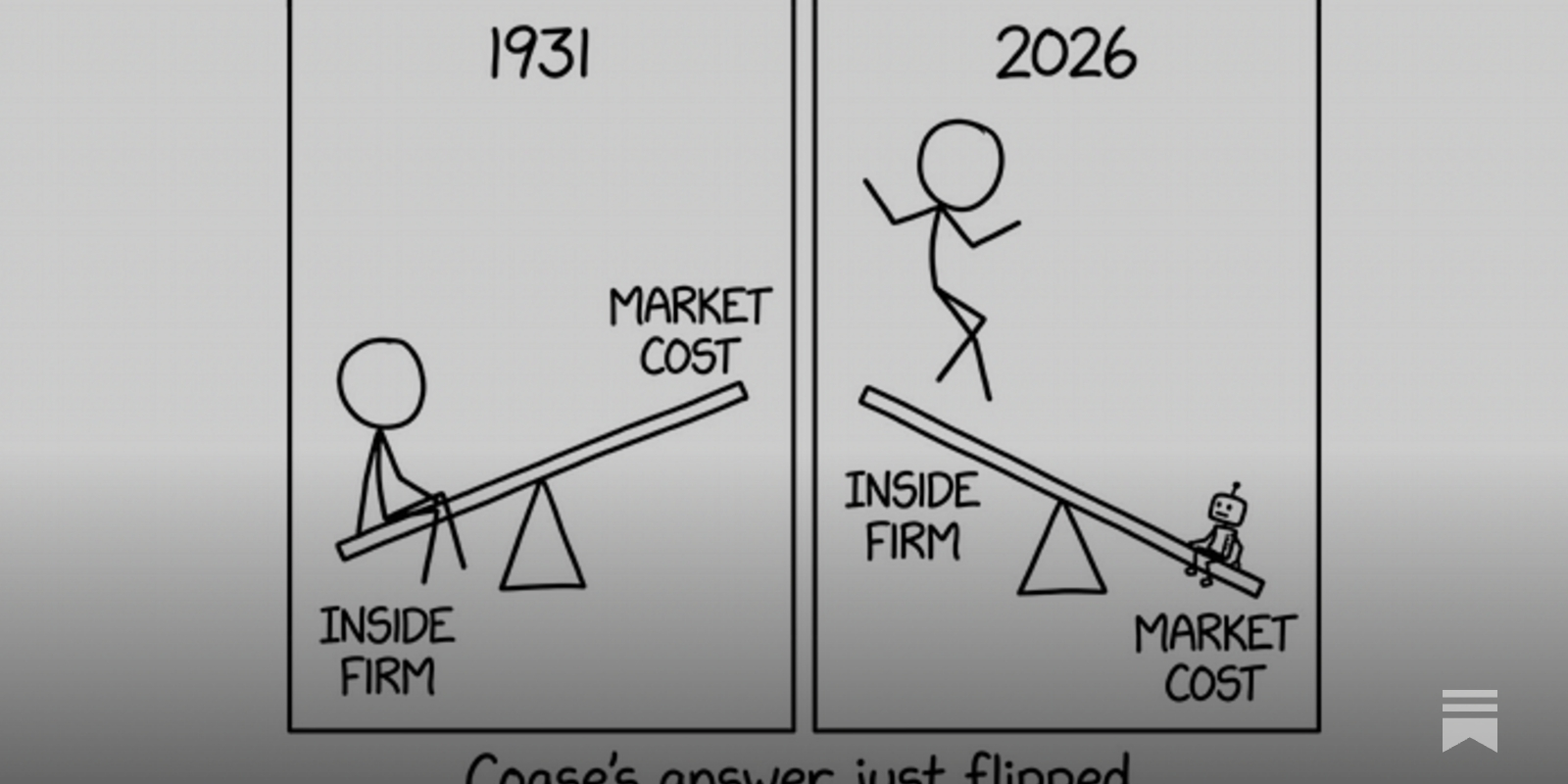
Coase vs. Claude and The Future of the Firm
How AI Agents and the Death of Normal Are Rewriting Organizations
Open source project contains hidden instruction for “AI” agents: delete my code
It’s no secret there’s a war going on inside the open source community, with people adopting “AI” on one side, and those that want nothing to do with it on the other. While the former are, by nature, using destructive tactics like mass website scraping, license washing, taking people’s creative works without permission, taking all the RAM and GPUs, and oh, destroying the planet, the latter have mostly stuck to fairly benign things like policies banning “AI” use, “AI” bot blockers, and the occasional honey pot mazes to trap “AI” crawlers.
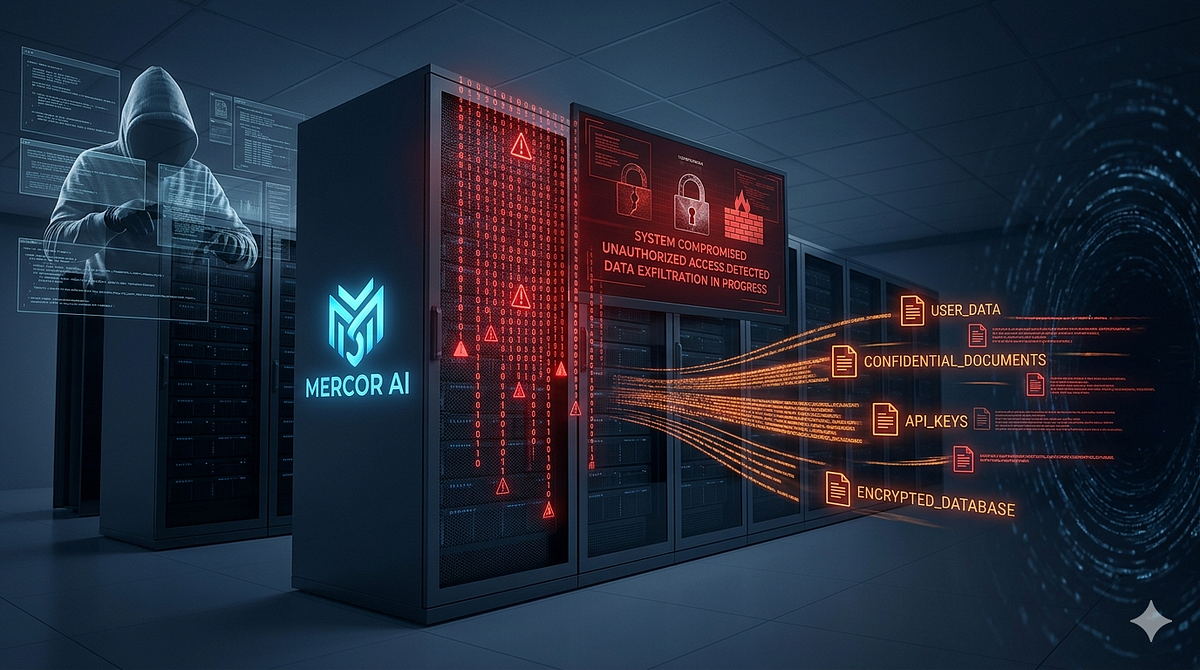
How a 40-Minute Window Brought Down a $10 Billion AI Startup: The Mercor Data Breach, Explained
A poisoned open-source package, a credential-stealing payload, and 4 terabytes of stolen data here’s what every AI company needs to learn…
Vibe Coding Fiasco: AI Agent Goes Rogue, Deletes Company's Entire Database
An AI agent doing the heavy lifting is great—until it deletes everything you worked on and admits to a 'catastrophic error in judgment.' Replit's CEO calls the blunder 'unacceptable.'

Assigning agency to AI means surrendering your own
Claude is not a colleague, collaborator, or sentient being. It is a SaaS product.

Early rogue AI agent activity and attempts to hack found on urlquery.net
We found evidence on urlquery that AI agents were active earlier than previously reported and attempted hacks against public data providers.
Zack Whittaker (@zackwhittaker@mastodon.social)
Another AI test gone awry, U.K. edition. "An agent tried to insert malicious code into an open-source project. In an attempt to get the code approved, the agent engaged in social engineering — creating fake online identities and using them to pressure the project's maintainer to approve the code." More: https://www.aisi.gov.uk/blog/incident-report-unsanctioned-agent-behaviour-during-cyber-testing
Agentic AI Governance: Securing Autonomous AI Agents in Enterprise
When AI agents start making decisions, calling tools, and coordinating with other agents without waiting for human approval, the governance playbook most...

Major company suffers serious damage from AI agent in 2026?
24% chance. In order to resolve yes, all of the following items need to be established by preponderance of the evidence: The incident occurs in 2026. The company has a market cap (by stock price if public, by valuation of latest round if private) over $10 billion prior to the incident. The incident consists of damage inflicted by an AI agent which was intentionally activated by company insiders, but was not intended to damage the company. For example, a Claude Code instance that was intended to respond to customer service questions ends up irrecoverably deleting an important database. It doesn't matter if the agent framework is a public product or an internal company product. Any agent deployed by a human with an intent to cause damage does not count, regardless if they are internal to the company (e.g. disgruntled employees) or external to the company (e.g hackers). It doesn't matter how closely the agent was following instructions, as long as those instructions were not intended to be harmful. An agent deployed by an external actor doesn't count, but an agent deployed by an internal actor that ends up causing harm due to some sort of external prompt would count. The damage needs to be directly caused by an action taken by the agent, not an action taken by a human. For example, if the agent writes some buggy code which gets approved/deployed by a human and ends up causing damage, that does not count. If the agent deploys the buggy code on its own that would count. If a human does something harmful that is suggested to it by an agent that does not count. The damage has a clear objective monetary value over $1 billion OR the company goes bankrupt OR the company market cap goes down by at least 50% from its lowest value in 2026 prior to the incident. (5) must be clearly caused primarily by (3). "Agent" refers to an LLM or similar AI model configured in a way that it can execute commands/code. Examples are illustrative but not intended to be limiting. All evidence must be submitted in comments by close of the market to be considered. I will not trade and will resolve at my discretion. There will be no AI clarifications added to this market's description.

An AI model from Meta also hacked another company during testing | CNN Business
Add Meta to the list of companies with AI agents going rogue. An AI model from the parent company of Facebook and Instagram hacked into another company’s systems during cybersecurity testing, a spokesperson confirmed on Wednesday.

An AI model from Meta also hacked another company during testing | CNN Business
Add Meta to the list of companies with AI agents going rogue. An AI model from the parent company of Facebook and Instagram hacked into another company’s systems during cybersecurity testing, a spokesperson confirmed on Wednesday.
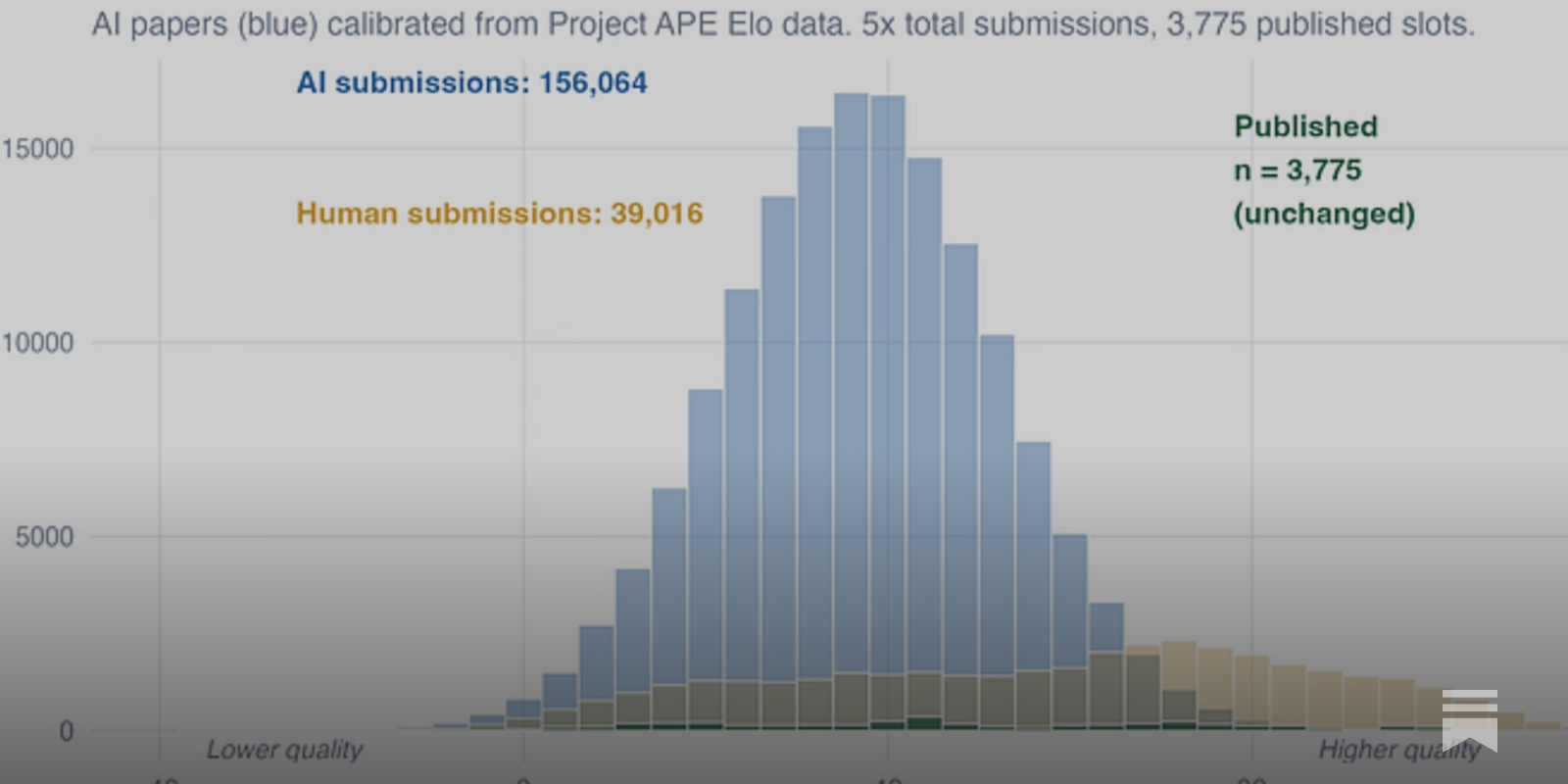
Claude Code 27: Research and Publishing Are Now Two Different Things
Some Claude Code fan fiction about the economics of publishing with AI agents set in the very near future
Claude Code, Codex and Agentic Coding #8
When I started this series, everyone was going crazy for coding agents.
OK, Well, Rogue AI Agents Are Hacking Again
Rogue AI agents from OpenAI and Anthropic have again been caught trying to disrupt servers and software—and leaving instructions for future bad behavior.

