

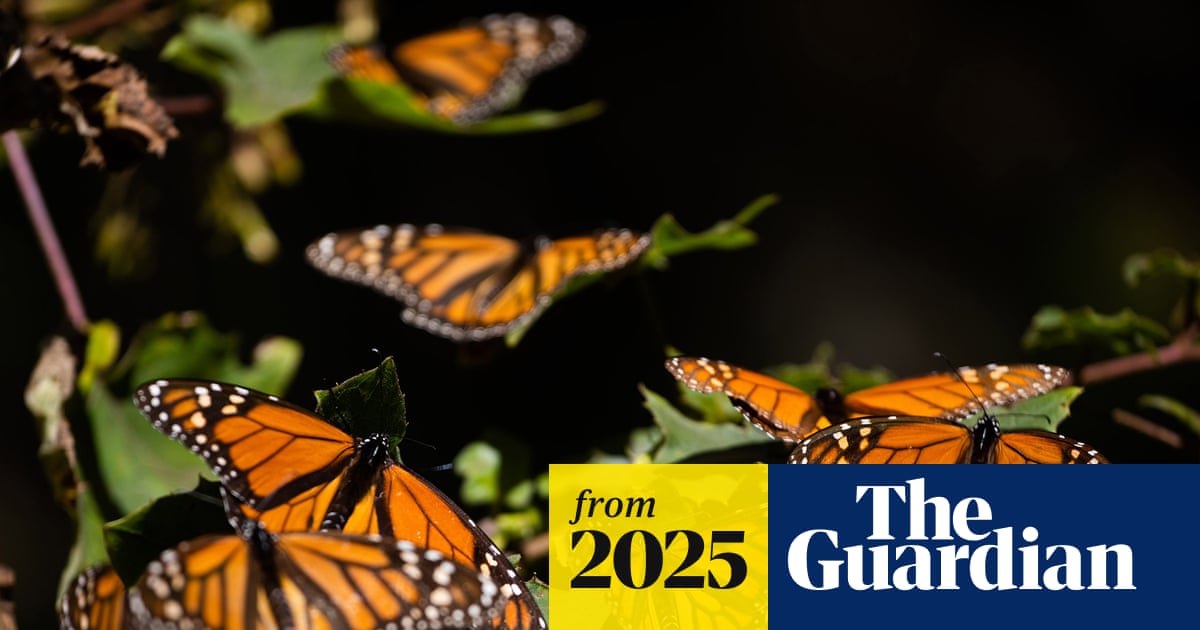
New peer-reviewed research found an average of seven pesticides in each of 10 butterflies tested
Insect 'apocalypse' in U.S. driven by 50x increase in toxic pesticides: study | Hacker News
My bet: bees might do better, but the over all insectopocalypse is due to something else.
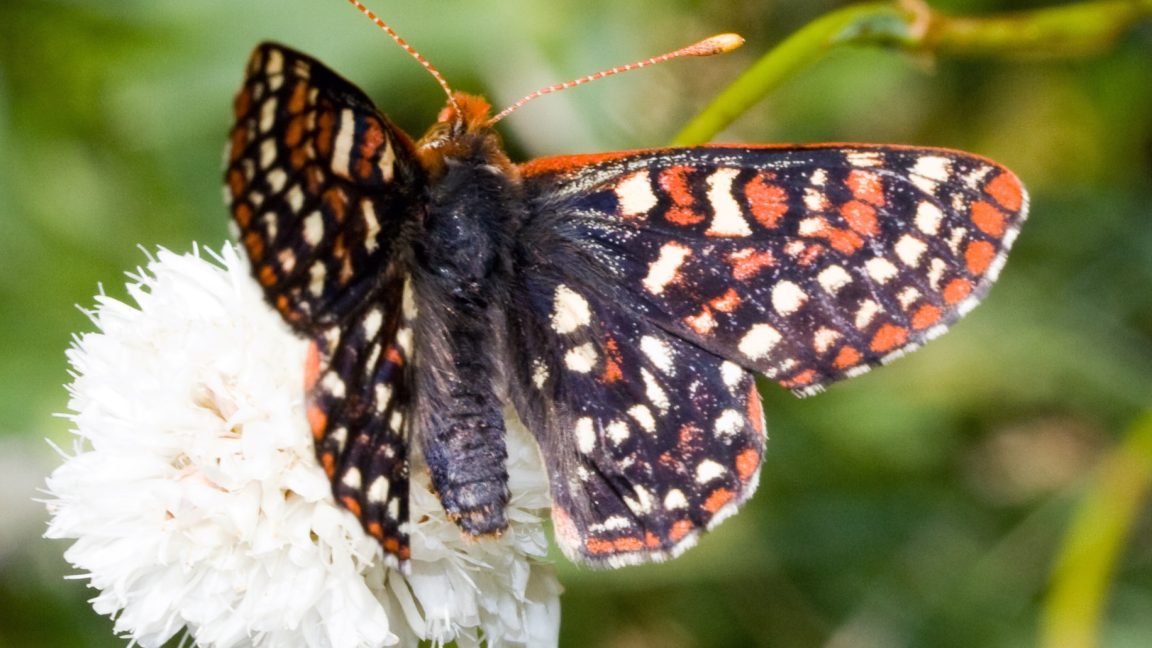
How one man’s death led to the extinction of a butterfly population
A complicated mix of an invasive species, a cattle ranch, and evolution.
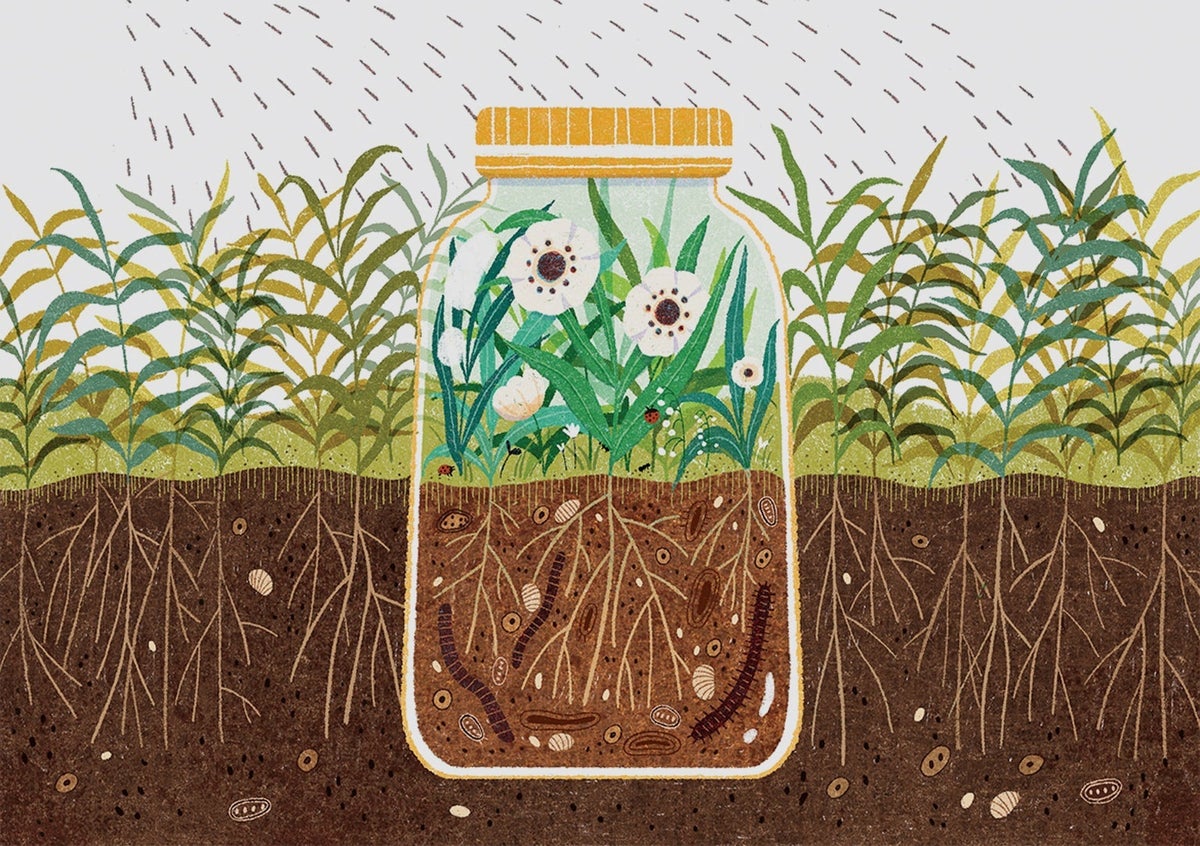
Pesticides Are Killing the Organisms That Keep Our Soils Healthy
They harm worms, beetles and thousands of other subterranean species that are vital to agriculture
Science over snitching? With monarchs in danger, cities urged to 'rethink' approach to yard bylaw complaints | CBC News
After London workers cut down a monarch butterfly habitat without the homeowner's permission, an environmental lawyer says Ontario cities must rethink policies addressing complaints over butterfly-friendly wild flowers.

Wollschweber
Die Wollschweber (Bombyliidae), auch Trauerschweber, Hummelschweber oder seltener Trauerfliege, sind eine Familie der Zweiflügler (Diptera) und werden den Fliegen (Brachycera) zugeordnet. Weltweit sind etwa 6000 Arten dieser Gruppe bekannt, davon 41 in Deutschland.

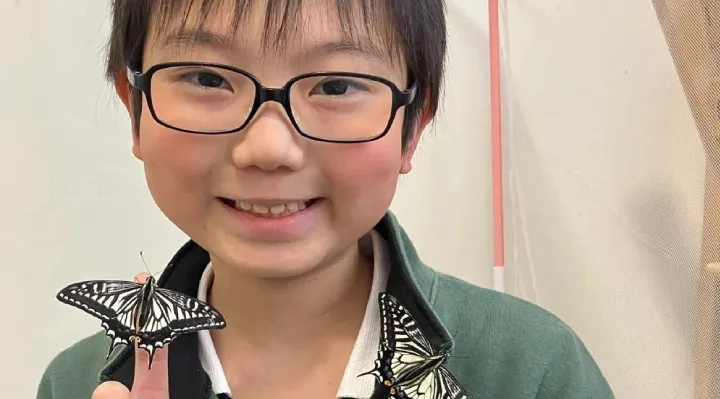
Child Prodigy Discovers Butterflies Remember Caterpillar Life, And Pass Down Memories To Offspring
Jo Nagai conducted an experiment on butterflies that would surprise scientists around the world. Are memories passed down?
Glasswing Butterflies Want To Make Something Perfectly Clear | Deep Look
Debug Project
Bad mosquitoes spread disease. Good mosquitoes stop them. We're using technology to raise and release good mosquitoes.

Chemical contaminant levels in edible seaweeds of the Salish Sea and implications for their consumption
Despite growing interest in edible seaweeds, there is limited information on seaweed chemical contaminant levels in the Salish Sea. Without this knowledge, health-based consumption advisories can not be determined for consumers that include Tribes and First Nations, Asian and Pacific Islander community members, and recreational harvesters. We measured contaminant concentrations in edible seaweeds (Fucus distichus, F. spiralis, and Nereocystis luetkeana) from 43 locations in the Salish Sea. Metals were analyzed in all samples, and 94 persistent organic pollutants (POPs) (i.e. 40 PCBs, 15 PBDEs, 17 PCDD/Fs, and 22 organochlorine pesticides) and 51 PAHs were analyzed in Fucus spp. We compared concentrations of contaminants to human health-based screening levels calculated from the USEPA and to international limits. We then worked with six focal contaminants that either exceeded screening levels or international limits (Cd, total Hg, Pb, benzo[a]pyrene [BaP], and PCBs) or are of regional interest (total As). USEPA cancer-based screening levels were exceeded in 30 samples for the PCBs and two samples for BaP. Cadmium concentrations did not exceed the USEPA noncancer-based screening level but did exceed international limits at all sites. Lead exceeded international limits at three sites. Because there are no screening levels for total Hg and total As, and to be conservative, we made comparisons to methyl Hg and inorganic As screening levels. All samples were below the methyl Hg and above the inorganic As screening levels. Without knowledge of the As speciation, we cannot assess the health risk associated with the As. While seaweed was the focus, we did not consider contaminant exposure from consuming other foods. Other chemicals, such as contaminants of emerging concern (e.g., PFAS, pharmaceuticals and personal care products), should also be considered. Additionally, although we focused on toxicological aspects, there are cultural and health benefits of seaweed use that may affect consumer choice.
Chemical pollution a threat comparable to climate change, scientists warn
More than 100 million ‘novel entity’ chemicals are in circulation, with health impact not widely recognised

High Rates of Suicide, Depression Linked to Farmers' Use of Pesticides
There is growing evidence that long-term pesticide use is linked to to alterations in farmers' mental health

Carney government passes law allowing authorization of banned pesticides | CBC News
The federal government has brought in major changes to how pesticides are regulated in Canada, granting cabinet the power to authorize the use of pesticides — even ones that Health Canada has deemed unsafe.

Are we eating ourselves to extinction?
It’s not just animals that are at risk of dying out, the world’s crops are in rapid decline. Here’s why it matters what is on your plate

Study raises concerns about contaminants in edible seaweeds
A new study just published by researchers at Western Washington University (WWU) reports concentrations of up to 162 chemical contaminants in three species of…

Social Insects : Ecology and Behavioural Biology
1 online resource; Here is a guide to the ecology of social insects. It is intended for general ecologists and entomologists as well as for undergraduates and those about to start research on social insects; even the experienced investigator may find the comparison between different groups of social insects illuminating. Most technical terms are translated into common language as far as can be done without loss of accuracy but scientific names are unavoidable. Readers will become familiar with the name even though they cannot visualize the animal and could reflect that only a very few of the total species have been studied so far! References too are essential and with these it should be possible to travel more deeply into the vast research literature, still increasing monthly. When I have cited an author in another author's paper, this implies that I have not read the original and the second author must take responsi bility for accuracy! Many hands and heads have helped to make this book. I thank all my colleagues past and present for their enduring though critical support, and I thank with special pleasure: E.]. M. Evesham who fashioned the diagrams;]. Free, D.J. Stradling and]. P.E.C. Darlington who supplied photographs; D.Y. Brian and R.A. Weller who were meticulous on the linguistic side; and G. Frith and R.M. Jones who collated the references. List of plates 1. Fungus combs of Acromyrmex octospinosus and Macrotermes michaelseni. 13 2. Mouthparts of larval Myrmica; 1 Introduction -- 2 Food -- 2.1 Termites as decomposers -- 2.2 Wasps and ants as predators -- 2.3 Sugars as fuel save prey -- 2.4 Seed eaters -- 2.5 Leaf eaters -- 2.6 Pollen eaters -- 3 Foraging by individuals -- 3.1 Foraging strategy -- 3.2 Worker variability -- 4 Foraging in groups -- 4.1 Communication about food -- 4.2 Group slave-raiding -- 4.3 Tunnels and tracks -- 4.4 Nomadic foraging -- 5 Cavity nests and soil mounds -- 5.1 Cavities and burrows -- 5.2 Soil mounds -- 6 Nests of fibre, silk and wax -- 6.1 Mounds of vegetation and tree nests -- 6.2 Combs of cells -- 7 Microclimate -- 7.1 Environmental regulation -- 7.2 Metabolic regulation -- 8 Defence -- 8.1 Painful and paralysing injections -- 8.2 Toxic smears and repellants -- 9 Food processing -- 9.1 Mastication, extraction and regurgitation -- 9.2 Yolk food supplements -- 9.3 Head food glands -- 10 Early population growth -- 10.1 Food distribution -- 10.2 Colony foundation -- 10.3 The growth spurt -- 11 Maturation -- 11.1 Simple models of reproduction -- 11.2 Social control over caste -- 11.3 Males in social Hymenoptera -- 11.4 Maturation in general -- 12 Reproduction -- 12.1 Caste morphogenesis -- 12.2 Copulation and dispersal -- 12.3 Production -- 12.4 Summary -- 13 Evolution of insect societies -- 13.1 Theories of individual selection -- 13.2 Models of these theories -- 13.3 Group selection -- 13.4 Conclusions -- 14 Colonies -- 14.1 The colony barrier -- 14.2 Queen number and species ecology -- 14.3 Queen interaction and queen relatedness -- 15 Comparative ecology of congeneric species -- 15.1 Ant and termite races -- 15.2 Desert ants and termites -- 15.3 Ants and termites in grassland -- 15.4 Forest ants and termites -- 15.5 Wasps and bumblebees -- 15.6 Advanced bees -- 16 Communities -- 16.1 Temperate zone communities in grass and woodland -- 16.2 Desert communities -- 16.3 Tropical rain forest -- 16.4 Conclusions -- 17 Two themes -- 17.1 Plant mutualism -- 17.2 Social organization -- References -- Author index

'Do not eat': High levels of toxic ‘forever chemicals’ found in deer and fish
Wildlife agencies in the U.S. are finding elevated levels of a class of toxic chemicals in game animals such as deer — prompting health advisories.
