
Ex-president urged party at closed-door fundraiser to create sweeping framework, from safety ‘slow-down’ to job losses
Anthropic quietly pitches its own AI safety bill to lawmakers
The draft proposal would limit the circumstances in which the government could block the release of an advanced model and preempt some state AI safety laws.
A big-tent or small-tent AI safety movement?
The unstated disagreement that underpins safety debates

Safety Co-Option and Compromised National Security: The Self-Fulfilling Prophecy of Weakened AI Risk Thresholds
Risk thresholds provide a measure of the level of risk exposure that a society or individual is willing to withstand, ultimately shaping how we determine the safety of technological systems. Against the backdrop of the Cold War, the first risk analyses, such as those devised for nuclear systems, cemented societally accepted risk thresholds against which safety-critical and defense systems are now evaluated. But today, the appropriate risk tolerances for AI systems have yet to be agreed on by global governing efforts, despite the need for democratic deliberation regarding the acceptable levels of harm to human life. Absent such AI risk thresholds, AI technologists-primarily industry labs, as well as "AI safety" focused organizations-have instead advocated for risk tolerances skewed by a purported AI arms race and speculative "existential" risks, taking over the arbitration of risk determinations with life-or-death consequences, subverting democratic processes. In this paper, we demonstrate how such approaches have allowed AI technologists to engage in "safety revisionism," substituting traditional safety methods and terminology with ill-defined alternatives that vie for the accelerated adoption of military AI uses at the cost of lowered safety and security thresholds. We explore how the current trajectory for AI risk determination and evaluation for foundation model use within national security is poised for a race to the bottom, to the detriment of the US's national security interests. Safety-critical and defense systems must comply with assurance frameworks that are aligned with established risk thresholds, and foundation models are no exception. As such, development of evaluation frameworks for AI-based military systems must preserve the safety and security of US critical and defense infrastructure, and remain in alignment with international humanitarian law.

OpenAI president urges AI safeguards as group he funds opposes regulation
As OpenAI executives step up their public calls for federal AI safety rules, a political group the company’s president helped fund is spending millions to elect members of Congress who oppose restrictions on the technology.

Anthropic model takedown fuels warning of ‘ad hoc’ AI regulation
The Trump administration is coming under fire for a directive prompting Anthropic to pull its latest models, and artificial intelligence policy advocates warn the move signals the White House is ta…

Senate AI and Kids Safety Package Won’t Justify Preempting State AI Laws
Press reports indicate that the Senate Commerce Committee is preparing to markup a package of kids’s safety and artificial intelligence legislation on July 29. For months, the White House has been in talks with Republican Senate leaders to strike a deal on kids’ safety and AI bills that would also preempt certain state AI legislation. […]
How a single tweet transformed the AI safety debate
Most people think AI is risky, but they don’t agree what to do next.

Anthropic Drops Flagship Safety Pledge
In an abrupt shift, the company may release future AI models without ironclad safety guarantees

A Safe Path to Open Weights
Strategic openness can strengthen AI safety and support broader access as defenses and safety science mature.
What Are Democrats Thinking?
Democratic voters want to end the filibuster, nationalize artificial intelligence, and prosecute every Trump toady.

The AI Preference Cascade Reaches Farther
Those who know keep warning us about AI risks.
Action Plan to increase the safety and security of advanced AI
The first U.S. government-commissioned assessment on catastrophic national security risks from advanced AI on the path to AGI.

AI labs’ all-or-nothing race leaves no time to fuss about safety
They have ideas about how to restrain wayward models, but worry that doing so will disadvantage them

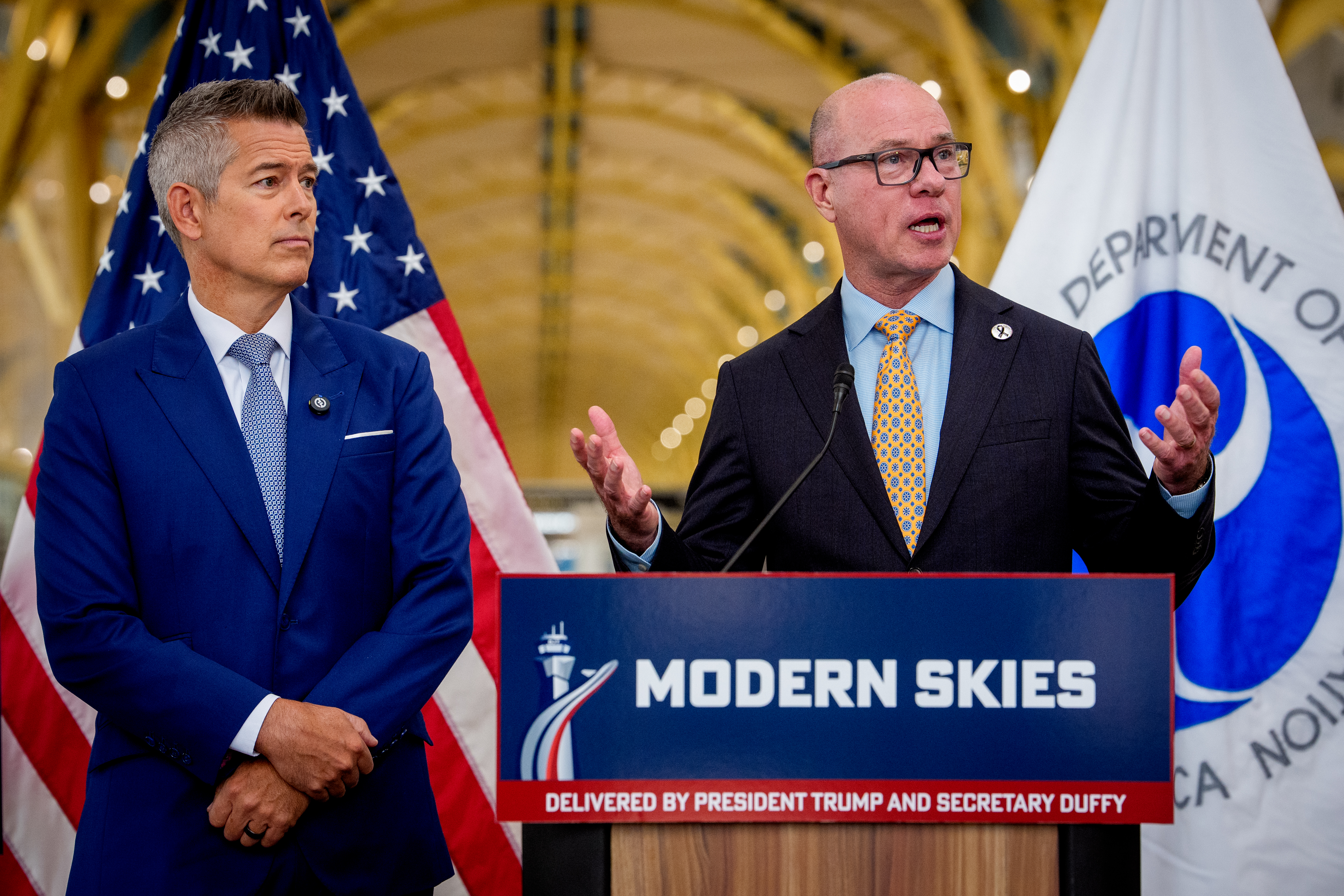
House Democrats push FAA to pause AI tool deployed in DC airspace
Congressional leaders are asking about pre-deployment testing, stakeholder consultation and oversight of the tool.
AI Companies Should Report Pre- and Post-Mitigation Safety Evaluations
The rapid advancement of AI systems has raised widespread concerns about potential harms of frontier AI systems and the need for responsible evaluation and oversight. In this position paper, we argue that frontier AI companies should report both pre- and post-mitigation safety evaluations to enable informed policy decisions. Evaluating models at both stages provides policymakers with essential evidence to regulate deployment, access, and safety standards. We show that relying on either in isolation can create a misleading picture of model safety. Our analysis of AI safety disclosures from leading frontier labs identifies three critical gaps: (1) companies rarely evaluate both pre- and post-mitigation versions, (2) evaluation methods lack standardization, and (3) reported results are often too vague to inform policy. To address these issues, we recommend mandatory disclosure of pre- and post- mitigation capabilities to approved government bodies, standardized evaluation methods, and minimum transparency requirements for public safety reporting. These ensure that policymakers and regulators can craft targeted safety measures, assess deployment risks, and scrutinize companies’ safety claims effectively.
The AI backlash needs a plan
Democrats have a mandate to rein in frontier labs, data centers, and more. Can they deliver without repeating their mistakes from the social-media era?