
Difficulty starting and getting overwhelmed by tasks are a few signs of it. We asked experts for tips on mitigating the effects
Can someone explain executive dysfunction to me?
Did therapy help with your executive function issues?
Individual Differences in Executive Functions Are Almost Entirely Genetic in Origin
Recent psychological and neuropsychological research suggests that executive functions — the cognitive control processes that regulate thought and action — are multifaceted and that different types of executive functions are correlated but separable. The present multivariate twin study of three executive functions (inhibiting dominant responses, updating working memory representations, and shifting between task sets), measured as latent variables, examined why people vary in these executive control abilities and why these abilities are correlated but separable from a behavioral genetic perspective. Results indicated that executive functions are correlated because they are influenced by a highly heritable (99%) common factor that goes beyond general intelligence or perceptual speed, and they are separable because of additional genetic influences unique to particular executive functions. This combination of general and specific genetic influences places executive functions among the most heritable psychological traits. These results highlight the potential of genetic approaches for uncovering the biological underpinnings of executive functions and suggest a need for examining multiple types of executive functions to distinguish different levels of genetic influences.

Perplexed by what my Therapist told me what to do to battle my executive dysfunction. Does she kinda have a point?
Perplexed by what my Therapist told me what to do to battle my executive dysfunction. Does she kinda have a point?

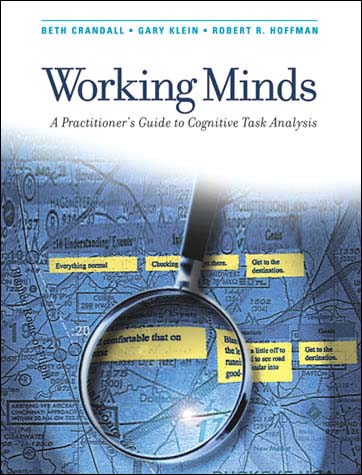
Working Minds: A Practitioner's Guide to Cognitive Task Analysis
How to collect data about cognitive processes and events, how to analyze CTA findings, and how to communicate them effectively: a handbook for managers, tr
Generative artificial intelligence reliance and executive function attenuation: Behavioral evidence of cognitive offload in high-use adults.
When Using AI Leads to “Brain Fry”
As firms increasingly incentivize employees to build and oversee complex teams of agents—for example, by measuring and rewarding token consumption as a proxy for performance—people are finding themselves pushed to their cognitive limits. Participants in a recent study described a “buzzing” feeling or a mental fog with difficulty focusing, slower decision-making, and headaches. The authors call this phenomenon “AI brain fry,” defined as mental fatigue from excessive use or oversight of AI tools beyond one’s cognitive capacity. This AI-associated mental strain carries significant costs in the form of increased employee errors, decision fatigue, and intention to quit. The findings also show how AI-driven workflows can be designed to diminish burnout and point toward specific manager, team, and organizational practices to avoid mental fatigue even as AI work intensifies.

Heavy multitaskers have reduced memory
People who frequently engage with multiple types of media at once performed worse on simple memory tasks, according to the last decade of research. However, it’s still too soon to determine cause and effect, says psychology Professor Anthony Wagner.

Managing intrusive thoughts | Lifeline
Dealing with overwhelming and distressing thoughts can be difficult, but knowing how to handle them can make a big difference to how you feel. Learn why you might be experiencing intrusive thoughts and strategies that can help you manage them.
Why you feel busy all the time (when you’re actually not)
Overwhelmed? It can seem like we’re busier than ever, but that’s not quite true, says Oliver Burkeman.

3 Cognitive Habits of People Who Get Things Done
High-achieving workers have these things in common.

Less stress, more productivity: why working fewer hours is better for you and your employer
There’s always too much work to be done on software projects, too many features to implement, too many bugs to fix. Some days you’re just not going through the backlog fast enough, you’re not producing enough code, and it’s taking too long to fix a seemingly-impossible bug. And to make things worse you’re wasting time in pointless meetings instead of getting work done. Once it gets bad enough you can find yourself always scrambling, working overtime just to keep up. Pretty soon it’s just expected, and you need to be available to answer emails at all hours even when there are no emergencies. You’re tired and burnt out and there’s still just as much work as before. The real solution is not working even harder or even longer, but rather the complete opposite: working fewer hours.
How Millennials Became The Burnout Generation
I couldn’t figure out why small, straightforward tasks on my to-do list felt so impossible. The answer is both more complex and far simpler than I expected.