

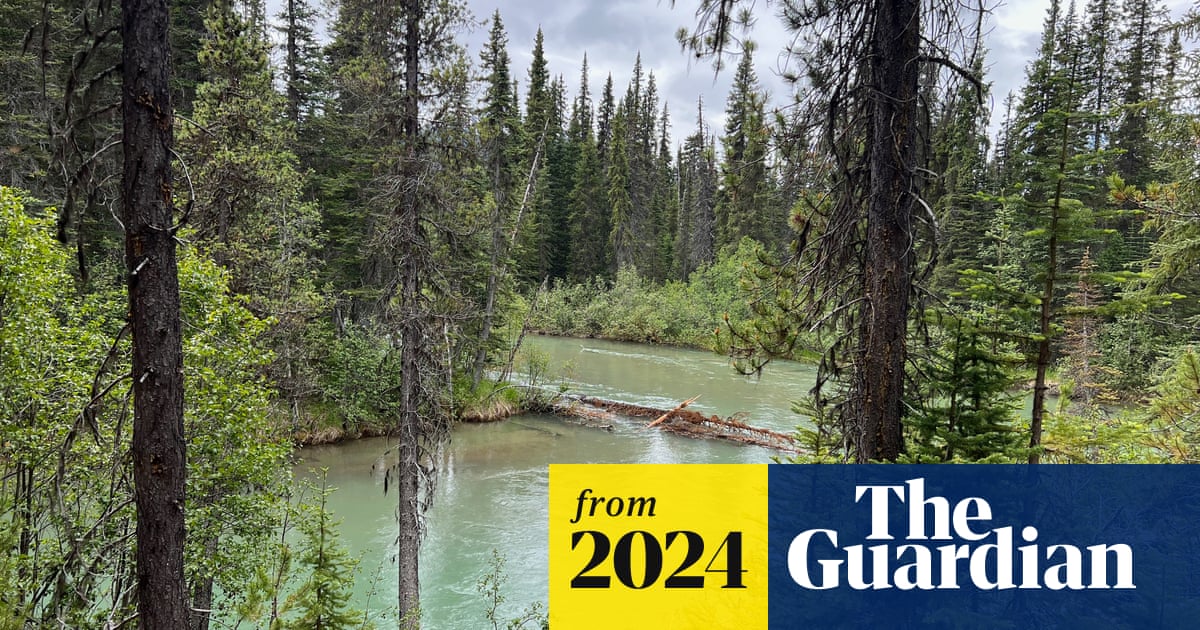
The Wet’suwet’en Nation never signed treaties with the Canadian or provincial governments, yet their land was leased to timber companies
‘It is all about listening and sharing’: Indigenous solutions to the carbon divide
Deforestation rates are much lower on Indigenous land – and there is growing recognition that first peoples have vital role to play
On whose land?
I am once again asking Canadian journalists to ask the most basic-ass question of on whose land will these be built? How is it that every other major industry must consider Indigenous rights but with tech it's like meh.

Download the Full Report — Passing the Message Stick
We pay respect to our Elders and acknowledge the Traditional Owners who’ve cared for country since time immemorial. Sovereignty over this land was never ceded - it always was, and always will be, Aboriginal land.
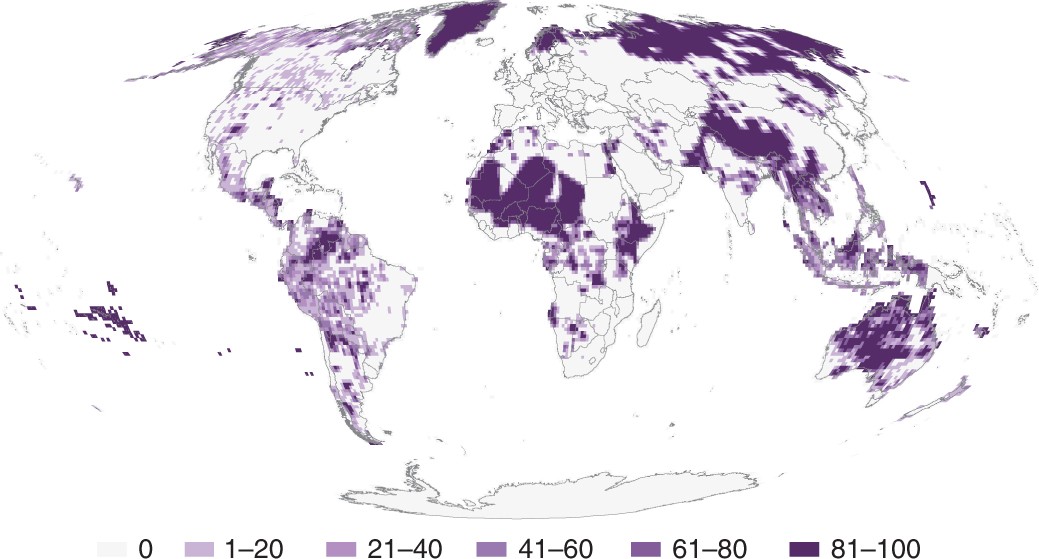
A spatial overview of the global importance of Indigenous lands for conservation
Understanding the scale, location and nature conservation values of the lands over which Indigenous Peoples exercise traditional rights is central to implementation of several global conservation and climate agreements. However, spatial information on Indigenous lands has never been aggregated globally. Here, using publicly available geospatial resources, we show that Indigenous Peoples manage or have tenure rights over at least ~38 million km2 in 87 countries or politically distinct areas on all inhabited continents. This represents over a quarter of the world’s land surface, and intersects about 40% of all terrestrial protected areas and ecologically intact landscapes (for example, boreal and tropical primary forests, savannas and marshes). Our results add to growing evidence that recognizing Indigenous Peoples’ rights to land, benefit sharing and institutions is essential to meeting local and global conservation goals. The geospatial analysis presented here indicates that collaborative partnerships involving conservation practitioners, Indigenous Peoples and governments would yield significant benefits for conservation of ecologically valuable landscapes, ecosystems and genes for future generations.
One Nation makes election promise to revive Victoria's timber sector
One Nation has promised to resume native timber logging in Victoria if it wins the state election, but the party would not say if it has costed the policy.
First Nations – Victorian Socialists
Australia is built on the dispossession of Aboriginal and Torres Strait Islander people. Treaty should deliver material change – not just symbolic recognition.
Quebec town recognizes trees as living beings with rights | CBC News
A small town west of Montreal has decided to officially recognize trees as living beings with rights of their own, in what an environmental organization describes as a first in Quebec and Canada.

Importance of Indigenous Peoples’ lands for the conservation of Intact Forest Landscapes
Intact Forest Landscapes ( IFL s) are critical strongholds for the environmental services that they provide, not least for their role in climate protection. On the basis of information about the distributions of IFL s and Indigenous Peoples’ lands, we examined the importance of these areas for conserving the world's remaining intact forests. We determined that at least 36% of IFL s are within Indigenous Peoples’ lands, making these areas crucial to the mitigation action needed to avoid catastrophic climate change. We also provide evidence that IFL loss rates have been considerably lower on Indigenous Peoples’ lands than on other lands, although these forests are still vulnerable to clearing and other threats. World governments must recognize Indigenous Peoples’ rights, including land tenure rights, to ensure that Indigenous Peoples play active roles in decision‐making processes that affect IFL s on their lands. Such recognition is critical given the urgent need to reduce deforestation rates in the face of escalating climate change and global biodiversity loss.

Indigenous Cooperatives in Canada: The Complex Relationship between Cooperatives, Community Economic Development, Colonization, and Culture
This paper describes the intersection of the cooperative movement and Indigenous communities in Canada. The paper brings a lens of nation and race to an analysi

First Nations and Treaty - Platform | The Australian Greens
In Victoria, we’re so fortunate to live in a place with the longest continuous culture in the world.

An underwater mystery on Canada's coast
Tens of thousands of wooden stakes poking up from British Columbia's shoreline have smashed a long-held stereotype of Canada's First Nation people.

Unceded
Unceded - Understanding British Columbia’s Colonial Past and Why It Matters Now; Unceded reveals the BC government’s history of injustice toward First Nations, providing the context for understanding modern treaty negotiations.
Protect our Living Legends - Woodland Trust
Many of our oldest and most special trees are not legally protected. Urge Government to change the law and prevent further tragedy.
The Narwhal (@thenarwhal.ca)
Our pod of investigative journalists dives deep to tell stories about the natural world in Canada you can’t find anywhere else. Sign up for our newsletter: http://thenarwhal.ca/newsletter

Native Land Pod
Election clouds future of historic First Peoples treaty - First Nations News
By ALLANAH SCIBERRAS Hailed as "two worlds" coming together to forge deeper understanding, the signing of Victoria's nation-first treaty marked a historic
