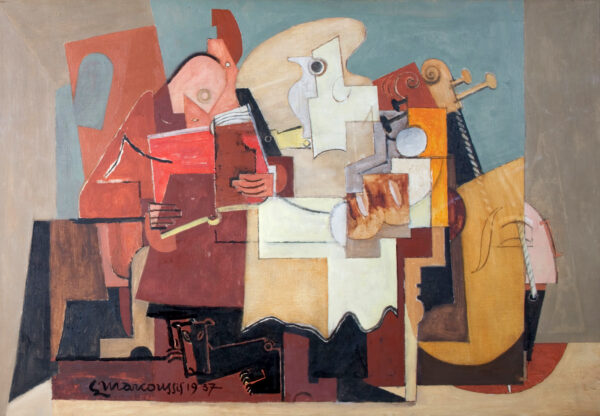
The crisis of literacy and the humanities predates smartphones and AI, argues Davies, who traces its origins to a transformation in how society understands language and learning. From the 1980s…
The End of Reading Is Here
Optimists once believed that universal literacy was inevitable. Now it seems that the age of reading might be a short anomaly in human history.
The History of Literacy Is the History of Class
Technology changes us—and it is currently changing us for the worse.

Literature fans should welcome AI as a fellow wordsmith | Aeon Essays
Strong resistance to AI among writers is understandable. But it obscures what we share with the machines: language itself

Towards Critical Artificial Intelligence Literacies
Critical Artificial Intelligence Literacies (CAILs) is the collection of ways of thinking about and relating to so-called artificial intelligence (AI) that rejects dominant frames presented by the technology industry, by naive computationalism, and by dehumanising ideologies. Instead, CAILs centre human cognition and uphold the integrity of academic research and education. We present a selection of CAILs across research and education, which we analyse into the following non-orthogonal dimensions: conceptual clarity, critical thinking, decoloniality, respecting expertise, and slow science. Finally, we note how we see the present with and without a wider adoption of CAILs — a fundamental aspect is the assertion that AI cannot be allowed to drive change, even positive change, in education or research. Instead cultivation of and adherence to shared values and goals must guide us. Ultimately, CAILs minimally ask us to contemplate how we as academics can stop AI companies from wielding so much power.
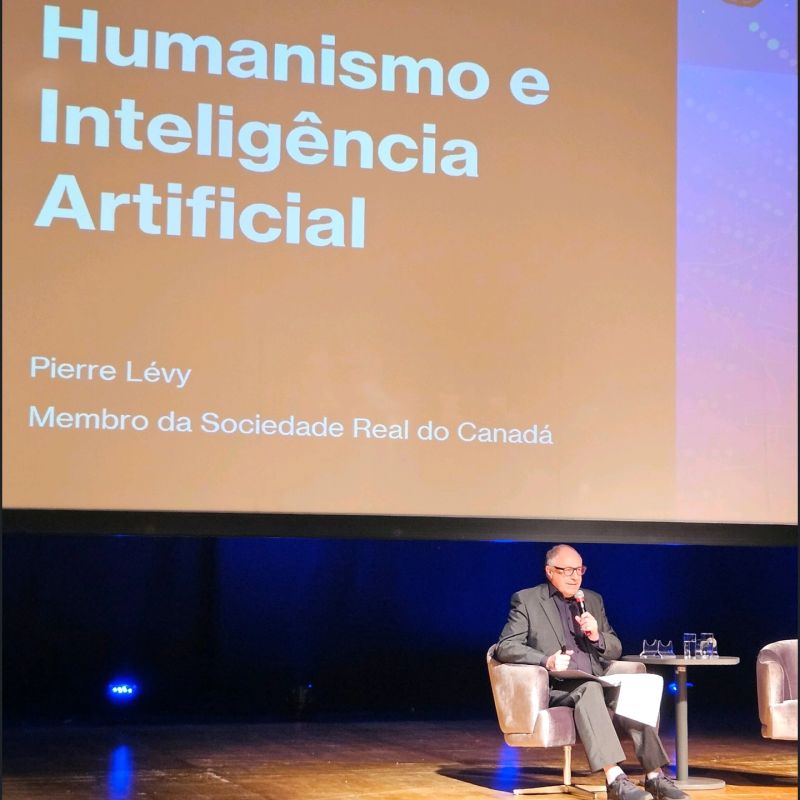
Humanism and artificial intelligence
If humanism was born with the alphabet in a literate environment and was reborn with the printing press, what becomes of it when digital technology becomes the dominant symbolic technology?
The History of AI and the Future of Human Knowing
The Scaling Era: An Oral History of AI, 2019–2025
An inside view of the AI revolution, from the people an…

AI as Social Technology: Astor Lecture by Professor Henry Farrell
AI as Social Technology: Astor Lecture by Professor Henry Farrell
Changing Minds: Computers, Learning, and Literacy
An impassioned guide to how computers can fundamentally change how we learn and think.Andrea diSessa's career as a scholar, technologist, and teacher has b
The Thoughts The Civilized Keep
The hype around a new AI language generator reveals the sterility of mainstream thinking on AI today — and indeed on how we think about thinking itself.

Gramsci's Nightmare: AI, Platform Power and the Automation of Cultural Hegemony - Ethan Zuckerman
Large language models lock values into place, making it hard to challenge the cultural hegemony of a particular form of western culture

I knew my writing students were using AI. Their confessions led to a powerful teaching moment | Micah Nathan
The problem wasn’t just the perfectly polished, yet mediocre prose. It’s what’s lost when we surrender the struggle to translate thought into words
Academia: What Was "Digital Literacy"?
Short Shelf Lives Make For Bad Curricular Planning