


Why the Hard Problem (might be) so Hard
The hard problem of consciousness is a distraction from the real one | Aeon Essays
It looks like scientists and philosophers might have made consciousness far more mysterious than it needs to be

There Is No Hard Problem of Consciousness
Expecting a verifiable answer makes no sense. Here’s why.

There Is No ‘Hard Problem Of Consciousness’
Consciousness is not separate from the physical world — our “soul” is of the same nature as our body and any other phenomenon of the world.

How and why exactly did consciousness become a problem? | Aeon Essays
How exactly did consciousness become a problem? And why, after years off the table, is it a hot research subject now?

The Mythology Of Conscious AI
Why consciousness is more likely a property of life than of computation and why creating conscious, or even conscious-seeming AI, is a bad idea.

The science of consciousness does not need another theory, it needs a minimal unifying model
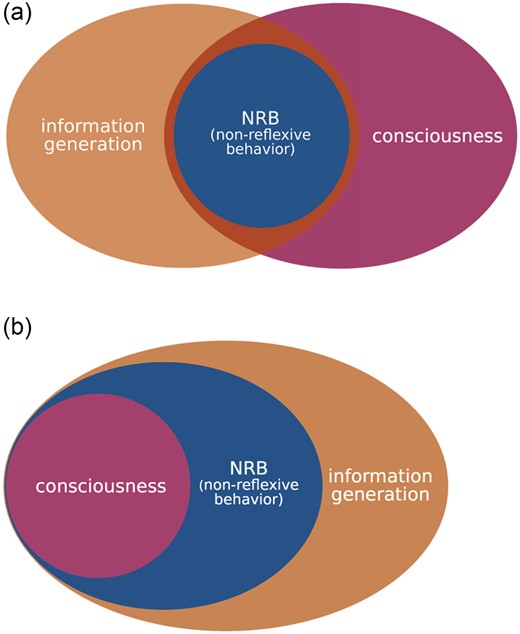
Abstract. This article discusses a hypothesis recently put forward by Kanai et al., according to which information generation constitutes a functional basi
Alexander Lerchner, The Abstraction Fallacy: Why AI Can Simulate But Not Instantiate Consciousness - PhilArchive
Computational functionalism dominates current debates on AI consciousness. This is the hypothesis that subjective experience emerges entirely from abstract causal topology, regardless of the underlying physical substrate. We argue this view ...

Alexander Lerchner, The Abstraction Fallacy: Why AI Can Simulate But Not Instantiate Consciousness - PhilPapers
Computational functionalism dominates current debates on AI consciousness. This is the hypothesis that subjective experience emerges entirely from abstract causal topology, regardless of the underlying physical substrate. We argue this view ...

Contra Chiang on machine consciousness
If you think you understand AI consciousness, then you don't understand AI consciousness

Arguments About AI Consciousness Remain Highly Motivated and At Best Overconfident
It has been roughly a year since my last dedicated post on this question. Its first sentence has not changed: I happily admit I am deeply confused about consciousness.

The inner screen model of consciousness: applying the free energy principle directly to the study of conscious experience
This paper presents a model of consciousness that follows directly from the free- energy principle (FEP). We first rehearse the classical and quantum formulations of the FEP. In particular, we consider the “inner screen hypothesis” that follows from the quantum information theoretic version of the FEP. We then review applications of the FEP to the known sparse (nested and hierarchical) neuro-anatomy of the brain. We focus on the holographic structure of the brain, and how this structure supports (overt and covert) action.
Can only meat machines be conscious?
Computational functionalism claims that executing certain computations is sufficient for consciousness, regardless of the physical mechanisms implementing those computations. This view neglects a compelling alternative: that subcomputational biological mechanisms, which realize computational processes, are necessary for consciousness. By contrasting computational roles with their subcomputational biological realizers, I show that there is a systematic tension in our criteria for consciousness: prioritizing computational roles favors consciousness in AI, while prioritizing subcomputational biological realizers favors consciousness in simpler animals. Current theories of consciousness are 'meat-neutral', but if specific physical substrates are necessary, AI may never achieve consciousness. Understanding whether consciousness depends on computational roles, biological realizers, or both, is crucial for assessing the prospects of consciousness in AI and less complex animals.

The Abstraction Fallacy: Why AI Can Simulate But Not Instantiate Consciousness
Computational functionalism dominates current debates on AI consciousness. This is the hypothesis that subjective experience emerges entirely from abstract causal topology, regardless of the underlying physical substrate. We argue this view fundamentally mischaracterizes how physics relates to information. We call this mistake the Abstraction Fallacy. Tracing the causal origins of abstraction reveals that symbolic computation is not an intrinsic physical process. Instead, it is a mapmaker-dependent description. It requires an active, experiencing cognitive agent to alphabetize continuous physics into a finite set of meaningful states. Consequently, we do not need a complete, finalized theory of consciousness to assess AI sentience—a demand that simply pushes the question beyond near-term resolution and deepens the AI welfare trap. What we actually need is a rigorous ontology of computation. The framework proposed here explicitly separates simulation (behavioral mimicry driven by vehicle causality) from instantiation (intrinsic physical constitution driven by content causality). Establishing this ontological boundary shows why algorithmic symbol manipulation is structurally incapable of instantiating experience. Crucially, this argument does not rely on biological exclusivity. If an artificial system were ever conscious, it would be because of its specific physical constitution, never its syntactic architecture. Ultimately, this framework offers a physically grounded refutation of computational functionalism to resolve the current uncertainty surrounding AI consciousness.

Consciousness in Artificial Intelligence: Insights from the Science of Consciousness
Whether current or near-term AI systems could be conscious is a topic of scientific interest and increasing public concern. This report argues for, and exemplifies, a rigorous and empirically grounded approach to AI consciousness: assessing existing AI systems in detail, in light of our best-supported neuroscientific theories of consciousness. We survey several prominent scientific theories of consciousness, including recurrent processing theory, global workspace theory, higher-order theories, predictive processing, and attention schema theory. From these theories we derive "indicator properties" of consciousness, elucidated in computational terms that allow us to assess AI systems for these properties. We use these indicator properties to assess several recent AI systems, and we discuss how future systems might implement them. Our analysis suggests that no current AI systems are conscious, but also suggests that there are no obvious technical barriers to building AI systems which satisfy these indicators.

AI Is Not Conscious, But It Is Our Unconscious
The Convivial Society: Vol. 7, No. 4

The Experience of God: Being, Consciousness, Bliss
The Experience of God: Being, Consciousness, Bliss is a 2013 book by philosopher and religious studies scholar David Bentley Hart published by Yale University Press. The book lays out a statement and defense of classical theism and attempts to provide an explanation of how the word "God" functions in the theistic faiths, drawing particularly from Christianity, Islam and Hinduism.
