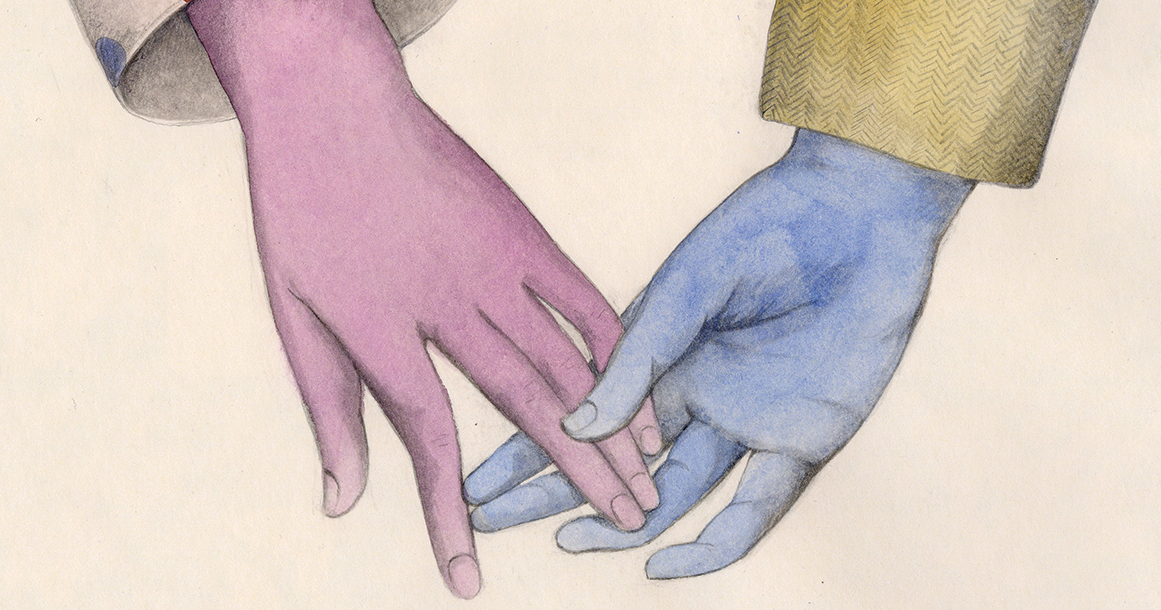
On sympathy, reciprocity, and satisfying the fulness of our nature.
The Central Paradox of Love: Esther Perel on Reconciling the Closeness Needed for Intimacy with the Psychological Distance That Fuels Desire
“Love rests on two pillars: surrender and autonomy. Our need for togetherness exists alongside our need for separateness. One does not exist without the other.”
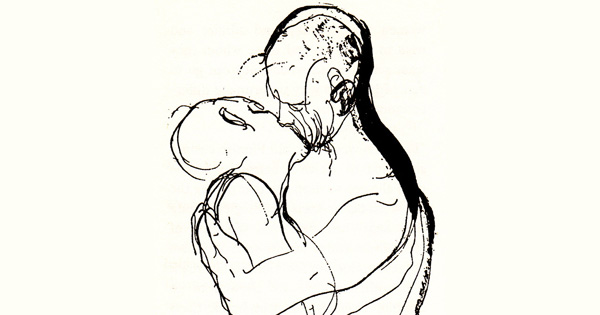


Why We Fall in Love: The Paradoxical Psychology of Romance and Why Frustration Is Necessary for Satisfaction
“All love stories are frustration stories… To fall in love is to be reminded of a frustration that you didn’t know you had.”
The Science of Love: How Positivity Resonance Shapes the Way We Connect
The neurobiology of how the warmest emotion expands your sense of self and blurs the boundaries by you and not-you.
Storyworth - Everyone has a story worth sharing
Preserve your most meaningful moments and memories in a beautiful keepsake book. Or give the experience to a loved one and discover stories you never knew.

Marjorie Liu: Making a Monstress
<p>The author on writing for Marvel, race and invisibility, and the radicality of romance novels.</p>

The empathy paradox
There’s an image of empathy we all know that is beautiful: the fullness of completely understanding someone else, the symbolic walk in shoes that are not one’s own. The knowledge that someone else can share a pain so acute that would otherwise seem unbearably solitary. It’s an image inherent to empathy’s definition, an image many believe in wholeheartedly. Several studies conducted by Stanford researchers alone suggest people are motivated to feel empathy, that empathy is highly associated with social desirability, that it is as beneficial as it is admired.
W.H. AUDEN reads "The More Loving One"
Mutual Aid: A Factor of Evolution
Mutual Aid: A Factor of Evolution is a 1902 collection of anthropological essays by Russian naturalist and anarchist philosopher Peter Kropotkin. The essays, initially published in the English periodical The Nineteenth Century between 1890 and 1896, explore the role of mutually beneficial cooperation and reciprocity in the animal kingdom and human societies both past and present. It is an argument against theories of social Darwinism that emphasize competition and survival of the fittest, and against the romantic depictions by writers such as Jean-Jacques Rousseau, who thought that cooperation was motivated by universal love. Instead, Kropotkin argues that mutual aid has pragmatic advantages for the survival of human and animal communities and, along with the conscience, has been promoted through natural selection.

The Cooperative Account of the Rise of Virtues
This chapter presents an account of how virtues evolve. The primary challenge any such account must address is why different societies regard different traits as virtues and why these views change over time. The account developed here builds on the theory of Morality as Cooperation, which identifies seven core types of cooperation that correspond to seven universally valued virtues—filial piety, loyalty, fair-mindedness, courage, deference, justice, and respect for property. The chapter argues that virtues are stable character traits that dispose individuals to perform cooperative actions in response to recurrent social interaction problems. Different societies at different times face different problems of cooperation, which leads to different virtues. The chapter concludes with humility as a test case for this account of the evolution of virtues.

The Cloud of Unknowing
The Cloud of Unknowing is an anonymous work of Christian mysticism written in Middle English in the latter half of the 14th century. The text is written as guide from a teacher to a student, with the message that God cannot be understood via reason or intellect, but only through love: “By love may He be gotten and holden, but never through thought.” To achieve this goal, the text recommends cultivation of two mental states: “The cloud of forgetting”, and “the cloud of unknowing”.

On Enchanted Flatland: Iain McGilchrist & the Problem of Romantic Liberalism
A follow-up to my contribution to Rosy Cross: Question of Right & Truth of Christianity
We've Lost the Spaces That Foster Friendship
We keep offering individual fixes for loneliness while ignoring the disappearance of the spaces where adults once built real relationships.

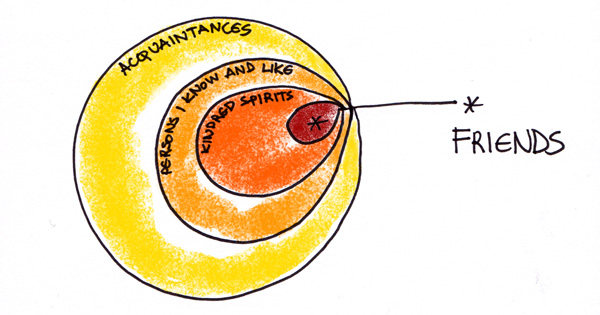
Reclaiming Friendship: A Visual Taxonomy of Platonic Relationships to Counter the Commodification of the Word “Friend”
Exploring the concentric circles of human connection through the lens of our ideal and real selves.