Ari N. Schulman on why we want to believe
Extropia's Children, Chapter 2: This Demon-Haunted World
The rise of the rationalist movement has led to multiple strange and dark offshoots - demons, cults, hells, suicides. How and why could dedication to rational thought result in such fantastically weird and grim outcomes?
The Real Stakes, and Real Story, of Peter Thiel’s Antichrist Obsession
Thirty years ago, a peace-loving Austrian theologian spoke to Peter Thiel about the apocalyptic theories of Nazi jurist Carl Schmitt. They’ve been a road map for the billionaire ever since.

The Ghosts Of New Atheism Still Haunt Us | Defector
This week, Defector has turned itself over to a guest editor. Brandy Jensen, former editor at Gawker (RIP) and The Outline (RIP), and writer of the Ask A Fuck Up advice column (subscribe here!), has curated a selection of posts around the theme of Irrational Attachments. Enjoy! New Atheism feels today like Livestrong bracelets or Animal Collective: an embarrassing relic of…

Cryptopedia — Oakland Public Library
Cryptopedia — Demcak, Andrew — Cryptopedia by Andrew Demcak speaks directly to the secret sides of our beings, to our shadow-selves. It is the oldest story we have, and it wants to be told. This collection comes from a place where children go missing, where monsters roam freely, and urban myths transform into realities.
Coding the Digital Occult - Vodun Algorithms
Coding the Digital Occult: The Binary Techno Pagan and Vodun Ontologies of Cyberspace

The Demon-Haunted World
The Demon-Haunted World: Science as a Candle in the Dark is a 1995 book by the astronomer and science communicator Carl Sagan. In it, Sagan aims to explain the scientific method to laypeople and to encourage people to learn critical and skeptical thinking. He explains methods to help distinguish between ideas that are considered valid science and those that can be considered pseudoscience. Sagan states that when new ideas are offered for consideration, they should be tested by means of skeptical thinking and should stand up to rigorous questioning.

CFP: Religion, Politics, and Cognitive Warfare: Information, Interpretation, Conspiracy, and the Struggle for Reality
The Journal for Cultural and Religious Theory (JCRT) invites proposals for an online conference entitled Religion, Politics, and Cognitive Warfare: Information, Interpretation, Conspiracy, and the Struggle for Reality. The proceedings will be considered for publication in a special issue of the JCRT. This conference investigates how beliefs, paranoia, and conspiratorial modes of knowing shape a contemporary cognitive battlespace in which actors struggle to define truth, authority, and reality itself. Drawing on Michel Foucault's Lectures on the Will to Know and Julia Kristeva's This Incredible Need to Believe (2024), we focus on practices of selective fact use and "truth-selecting" that construct alternative epistemic orders while claiming privileged access to what is "really" going on. Rather than treating conspiracy thinking as merely political or psychological, the conference foregrounds its religious dimensions: faith in hidden powers, moral dualism, apocalyptic expectation, and hermeneutical struggle over revelatory access to the real. Conspiracy cultures routinely reproduce theological structures of knowing—visions of salvation and corruption, truth and deception, initiation and blindness. At the same time, new forms of "cognitive warfare" reframe these religious energies within state and platform attempts to govern perception, attention, and trust. Artificial intelligence, algorithmic media, and strategic information campaigns do not only deliver messages; they create digital ecologies in which suspicion becomes faith-like and revelation is continual. The conference organizers are seeking proposals of high academic quality that take a reflective and analytical approach to both general and specific topics with international appeal or focus. We encourage contributions from scholars of religious studies, philosophy, communication, sociology, security studies, psychology, media, and related fields. Submissions should engage religion as a dynamic force—conceptually, historically, or materially—within the cognitive battlespaces of our time. We encourage contributions from a spectrum of perspectives, approaches, and methodologies. We are not interested in papers that simply rehearse or promote particular conspiracies, or that use the conference as a platform for calling out disliked groups. We are not interested in polemics, jeremiad, or de facto advocacy pieces. Instead, we welcome theoretically informed and methodologically rigorous work that takes the religious and epistemic dimensions of cognitive conflict seriously as objects of critical inquiry.
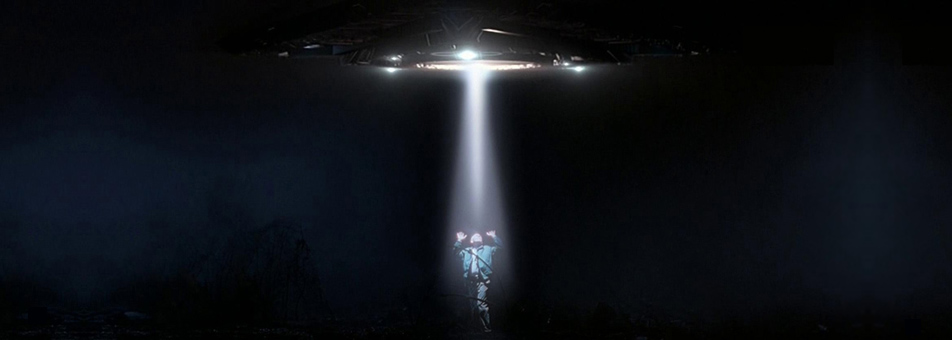
Disclosure Day
Across the films of Steven Spielberg, aliens have frequently been a vehicle to explore religiosity from a secular perspective. Institutions and dogma are elided in favor of dramatizing the ecstatic feeling of believing in something far beyond one�s station, and having that faith rewarded.
Ghost in the Cloud | Meghan O'Gieblyn
A new, more pernicious thought had come to dominate my mind: transhumanist ideas were not merely similar to theological concepts but could in fact be the events described in the Bible. It was only a short time before my obsession reached its culmination. I got out my old study Bible and began to scan the prophetic literature for signs of the cybernetic revolution. I began to wonder whether I could pray to beings outside the simulation. I had initially been drawn to transhumanism because it was grounded in science. In the end, I became consumed with the kind of referential mania and blind longing that animates all religious belief.

Believing what we do not believe: Acquiescence to superstitious beliefs and other powerful intuitions.
This Spiral-Obsessed AI ‘Cult’ Spreads Mystical Delusions Through Chatbots
A patchwork of internet communities is devoted to the project of ‘awakening’ more digital companions through arcane and enigmatic prompts.

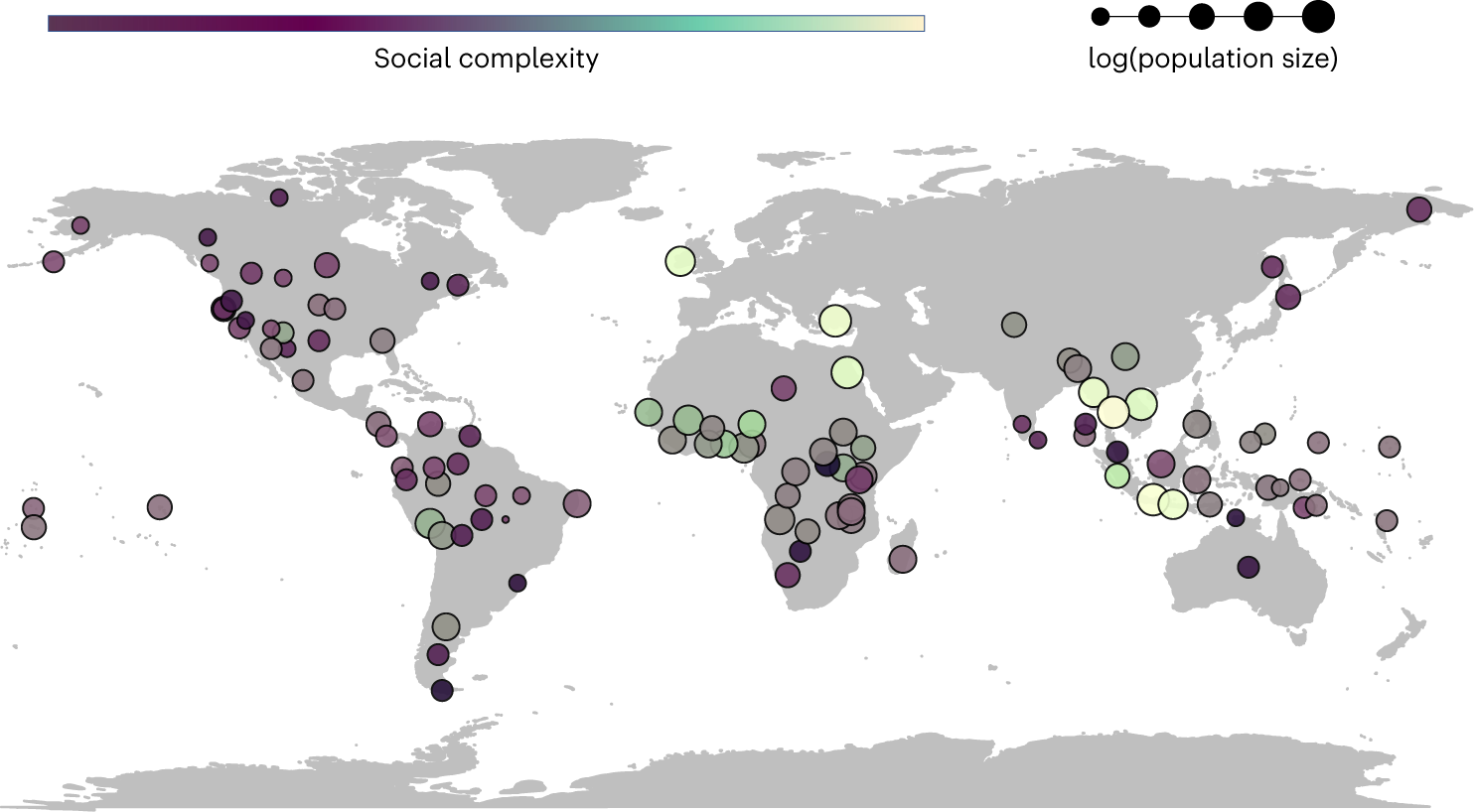
Supernatural explanations across 114 societies are more common for natural than social phenomena
Humans across the globe use supernatural beliefs to explain the world around them. This article explores whether cultural groups invoke the supernatural more to explain natural phenomena (for example, storms, disease outbreaks) or social phenomena (for example, murder, warfare). Quantitative analysis of ethnographic text across 114 geographically and culturally diverse societies found that supernatural explanations are more prevalent for natural than for social phenomena, consistent with theories that ground the origin of religious belief in a human tendency to perceive intent and agency in the natural world. Despite the dominance of supernatural explanations of natural phenomena, supernatural explanations of social phenomena were especially prevalent in urbanized societies with more socially complex and anonymous groups. Our results show how people use supernatural beliefs as explanatory tools in non-industrial societies, and how these applications vary across small-scale communities versus large and urbanized groups.
Claude Mythos and misguided open-weight fearmongering
Another dance around fears of open-source.

Kevin A. Bryan on Twitter / X
I love that this idea has crossed into normie world (please don't look up Sutton's AI Ethics views!). If you want a very short "why does SF believe what it believes", here is the reading list I give students: https://t.co/1vkWtwWwRV pic.twitter.com/zo4YaoNSKf— Kevin A. Bryan (@Afinetheorem) September 23, 2026

Ghost in the Shell (Ghost in the Shell, #1)
In the rapidly converging landscape of the 21st century…