

New Jersey court says defendant must be able to challenge evidence
Your Relative's DNA Could Turn You Into a Suspect
Using DNA for criminal investigations is great—until it turns an innocent person into a suspect.

Genealogy websites identify rape suspect who eluded police for 40 years
Match came after finding relatives' DNA on commercial service, news reports say.

A Researcher Needed Three Hours to Identify Me From My DNA
My case highlights the threat to privacy from genetic databases.

How an accused drug dealer revealed JSO's facial recognition network
Earlier this year, an accused crack cocaine dealer wanted to know how he was identified as a suspect in an undercover drug sting on the Northside. Facing a criminal trial, he deposed the detectives o…

Automated Justice: Issues, Benefits and Risks in the Use of Artificial Intelligence and Its Algorithms in Access to Justice and Law Enforcement
The use of artificial intelligenceArtificial Intelligence (AI) (AI) in the field of law has generated many hopes. Some have seen it as a way of relieving courts’ congestion, facilitating investigations, and making sentences for certain offences more consistent—and therefore fairer. But while it is true that the work of investigators and judges can be facilitated by these tools, particularly in terms of finding evidenceEvidence during the investigative process, or preparing legal summaries, the panorama of current uses is far from rosy, as it often clashes with the reality of field usage and raises serious questions regarding human rightsHuman rights. This chapter will use the RobodebtRobodebt Case to explore some of the problems with introducing automationAutomation into legal systems with little human oversight. AI—especially if it is poorly designed—has biases in its data and learning pathways which need to be corrected. The infrastructures that carry these tools may fail, introducing novel bias. All these elements are poorly understood by the legal world and can lead to misuse. In this context, there is a need to identify both the users of AIArtificial Intelligence (AI) in the area of law and the uses made of it, as well as a need for transparencyTransparency, the rules and contours of which have yet to be established.
Evidence for Justice Lab - Justice and AI Tracker
Evidence for Justice Lab - Justice and AI Tracker
Evidence for Justice Lab - Justice and AI Tracker
Man sues Florida cops over arrest spurred by "93% match" in facial recognition
Lawsuit: "Police let an error-prone AI system stand in for an investigation."
Syracuse University Intervenes to Block Subpoena of Police Records — ProPublica
The university, whose 1980s rape crisis figured prominently in a ProPublica article, committed to support survivors at “every step of the process.” Now it’s in court to stop police from sharing many records with a student who was assaulted in 1987.

A Court Reporter Submitted AI-Generated Errors in Official Court Transcript, Judge Says
A judge in Indiana warns a court reporter that it's their job to proofread their work, after catching errors likely made by AI transcription services.

Ancestry.com can use your DNA to target ads - CITP Blog
With the reduction in costs of genotyping technology, genetic genealogy has become accessible to more people. Various websites such as Ancestry.com offer genetic genealogy services. Users of these services are mailed an envelope with a DNA collection kit, in which users deposit their saliva. The users then mail their kits back to the service and […]
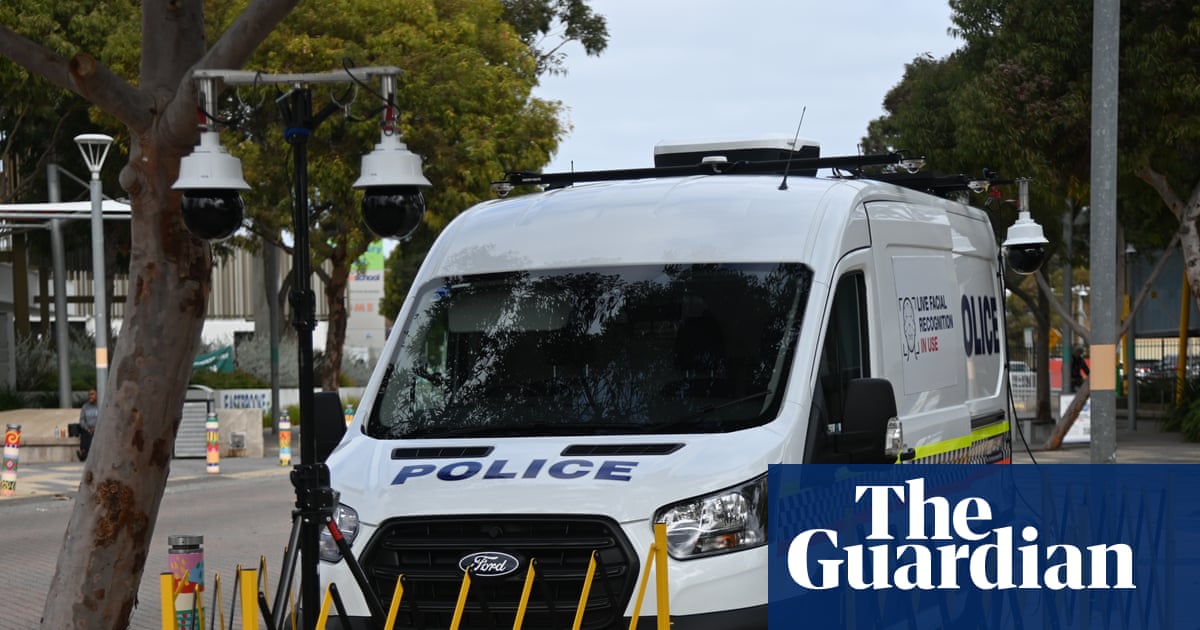
Police use facial recognition to scan one million faces in WA trial leading to 122 arrests
Deployments of surveillance vans over five months resulted in nine false alerts and led officers to engage with 146 registered sex offenders
Pro Se Plaintiff Caught Hiding Prompt Injections In Court Filings; Responds By Hiding More
There have now been dozens of stories of bad lawyers using AI results in filings, most of which show up in the form of fake case citations. That’s old hat at this point. But how about prompt …

Lots of scepticism about codes of ethics in this piece but surely the work of sleuthing needs to be grounded in some kind of observable, ethical process. Otherwise it's just as opaque and unscientific as the stuff it's investigating.

Dalmeet Singh Chawla
Research sleuths are starting to organize, but the field, and the people, remain idiosyncratic — my latest for @cenmag.bsky.social: cen.acs.org/research-integrity/scientific… @mcintold.bsky.social, @reeserichardson.bsky.social, @elisabethbik.bsky.social, @sholtodavid.bsky.social, @eugenie-reich.bsky.social
