


: Wi-Fi spy with my little eye that same guy I saw at another hotspot
Ordinary WiFi can now identify people with near perfect accuracy
Scientists in Germany have demonstrated a startling new form of surveillance: identifying people using nothing more than ordinary WiFi signals. By analyzing how radio waves bounce around a room, researchers can effectively “see” and recognize individuals — even if they are not carrying a device and even if their phone is turned off.

The spies in your home: How WiFi companies monitor your private life | Proton
Data harvesters are reaching into virtually every part of your digital life through the little-known surveillance hardware industry.

Browser Fingerprinting: An Introduction and the Challenges Ahead | Tor Project
In the past few years, a technique called browser fingerprinting has received a lot of attention because of the risks it can pose to privacy. What is it? How is it used? What is Tor Browser doing against it? In this blog post, I’m here to answer these questions.

Browser Fingerprinting: An Introduction and the Challenges Ahead | Tor Project
In the past few years, a technique called browser fingerprinting has received a lot of attention because of the risks it can pose to privacy. What is it? How is it used? What is Tor Browser doing against it? In this blog post, I’m here to answer these questions.
How to Track the People Tracking YOU
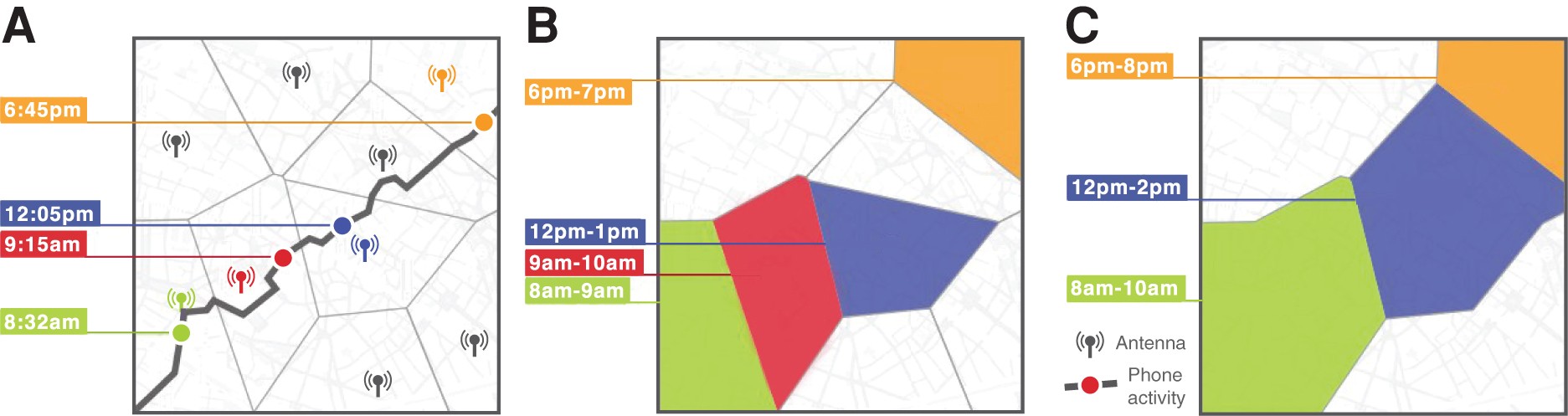
Unique in the Crowd: The privacy bounds of human mobility
We study fifteen months of human mobility data for one and a half million individuals and find that human mobility traces are highly unique. In fact, in a dataset where the location of an individual is specified hourly and with a spatial resolution equal to that given by the carrier's antennas, four spatio-temporal points are enough to uniquely identify 95% of the individuals. We coarsen the data spatially and temporally to find a formula for the uniqueness of human mobility traces given their resolution and the available outside information. This formula shows that the uniqueness of mobility traces decays approximately as the 1/10 power of their resolution. Hence, even coarse datasets provide little anonymity. These findings represent fundamental constraints to an individual's privacy and have important implications for the design of frameworks and institutions dedicated to protect the privacy of individuals.

bsky.app | WhoTracks.Me
Explore the tracking landscape of bsky.app on WhoTracks.Me, revealing the most common trackers like Sentry and their impact on privacy

Wi-Fi Aware | Apple Developer Documentation
Securely pair and connect to external devices over peer-to-peer Wi-Fi.

DIY stalker boxes spy on Wi-Fi users cheaply and with maximum creep value
CreepyDOL follows you around town, vacuums up wireless digital crumbs.

Hackers Had A Live Feed Of Every ID This Verification Company Scanned. For Over A Year.
From the very beginning of this recent obsession with identifying everyone online (yes, they like to call it “age” verification, but it always ends up as identity verification), we̵…

Spy agencies, PM's adviser defend airport Wi-FI data collection | CBC News
The head of Canada's communications surveillance agency defended its use of metadata Monday and argued a test using Canadian passengers' data — revealed by CBC News last week — didn't run in real-time and wasn't an actual operation.

Am I Unique ?
Check if your browser has a unique fingerprint, how identifiable you are on the Internet
My Fingerprint- Am I Unique ?
Check if your browser has a unique fingerprint, how identifiable you are on the Internet
My Fingerprint- Am I Unique ?
Check if your browser has a unique fingerprint, how identifiable you are on the Internet