

Seeds of Science is an organization dedicated to promoting creativity and diversity of thought in science. Founded in September, 2021 by Dr. Dario Krpan (the London School of Economics), Sergey Samsonau (formerly of New York University), and Roger's Bacon (pseudonymous blogger), our first project
“Open Source” Seeds Loosen Big Ag’s Grip on Farmers – World Sensorium / Conservancy
A handful of companies own the patents on virtually every seed planted in the US. Now, a new crop of unowned seeds is bringing biodiversity back to farming.
Emergence: A unifying theme for 21st century science
By David Pines, Co-Founder in Residence, Santa Fe Institute

America’s Seed Fund – NSF SBIR/STTR | NSF SBIR
America’s Seed Fund powered by the National Science Foundation (NSF SBIR/STTR) supports startups with research and development funding to create technologies.
Frontiers in Open Science
ASAPbio - Accelerating Science And Publication In Biology
A scientist-driven nonprofit accelerating discovery by promoting innovation and transparency in life science communication through preprints and open peer review.

From Grants to Portfolios: Index Logic for Science
How science can learn from capital markets to coordinate diversity, measure progress, and turn discovery into a public portfolio.
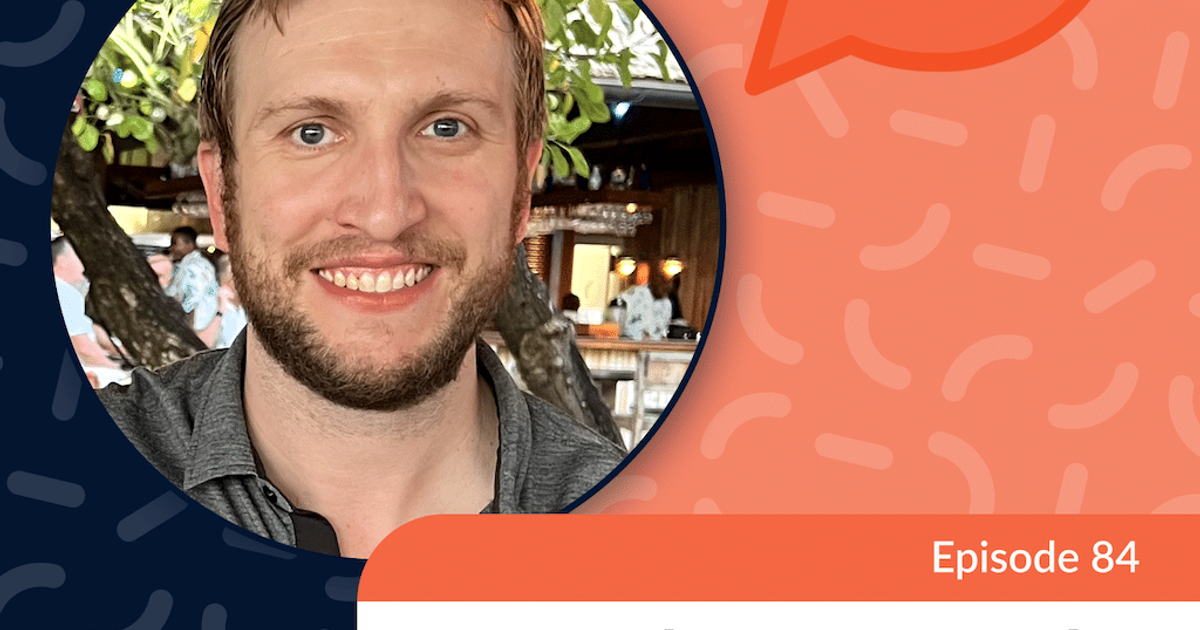
#84 Gardening Platforms and the Future of Open Ecosystems with Alex Komoroske | Boundaryless
In our first episode this season, we dive into the world of open platforms and the future of organizing. With his thought-provoking presentation of “Gardening Platforms”, our guest Alex Komoroske, helps create a shift in mind-set towards a more achievable and sustainable approach in creating impactful technology solutions. We explore his key learnings from leading product at Google Chrome, and how he continues to implement these in his own journey today. Talking on questions of morality, control, and designing for the nefarious users, there’s so much Alex offers in this podcast, and we hope you take from it, as much as we did.
Plan S
Plan S is an initiative for open-access science publishing launched in 2018[1][2] by "cOAlition S",[3] a consortium of national research agencies and funders from twelve European countries. The plan requires scientists and researchers who benefit from state-funded research organisations and institutions to publish their work in open repositories or in journals that are available to all by 2021.[4] The "S" stands for "shock".[5]
A Vision of Metascience
How does the culture of science change and improve? Many people have identified shortcomings in core social processes of science, such as peer review, how grants are awarded, how people are selected to become scientists, and so on. Yet despite often compelling criticisms, strong barriers inhibit widespread change in such social processes. The result is near stasis, and apathy about the prospects for improvement. People sometimes start new research institutions intended to do things differently; unfortunately such institutions are often changed more by the existing ecosystem than they change it. In this essay we sketch a vision of how the social processes of science may be rapidly improved. In this vision, metascience plays a key role: it deepens our understanding of which social processes best support discovery; that understanding can then help drive change. We introduce the notion of a metascience entrepreneur, a person seeking to achieve a scalable improvement in the social processes of science. We argue that: (1) metascience is an imaginative design practice, exploring an enormous design space for social processes; (2) that exploration aims to find new social processes which unlock latent potential for discovery; (3) decentralized change must be possible, so outsiders with superior ideas can't be blocked by established power centers; (4) ideally, change would align with what is best for science and for humanity, not merely what is fashionable, politically popular, or media-friendly; (5) the net result would be a far more structurally diverse set of environments for doing science; and (6) this would enable crucial types of work difficult or impossible within existing environments. For this vision to succeed metascience must develop and intertwine three elements: an imaginative design practice, an entrepreneurial discipline, and a research field. Overall, it is a vision in which metascience is an engine of improvement for the social processes and ultimately the culture of science.
Discourse Graphs and the Future of Science | Protocol Labs Research
Interview between Tom Kalil, Chief Innovation Officer of Schmidt Futures, Dr. Evan Miyazono, Research Team Lead at Protocol Labs, and Dr. Matt Akamatsu, Assistant Professor of Biology at the University of Washington.
The website of @atproto.science needs the same treatment as @atmosphereconf.org got, namely the ability to log in with atproto. To ‘Join the ATScience Community’ people are encouraged to sign up via a form: forms.atproto.science/join Makes more sense to solicit signups via atproto.
Today we're launching the Open Source for Science Fund, a new multi-donor philanthropic fund by Renaissance Philanthropy, seeded by @biohub.org and @wellcometrust.bsky.social, with support from @kavlifoundation.org and @researchsoftware.bsky.social 🧵 os4science.org/news/open-source-for-science-…

Open Source for Science Fund Launches to Power AI-Driven Discovery
os4science.org"experiments to be in the realm of search and discovery, enabling curation, trust signals, and other approaches that build on the modular elements of science" #modularscience #atscience Congrats to the whole @openrxiv.bsky.social team!! So exciting.

openRxiv
Introducing openRxiv Labs! 🔬 Growing from the strong foundation of bioRxiv & medRxiv, Labs is an experimental space for working with collaborators to push the boundaries of open scientific communication. 👉 Check it out and learn more: openrxiv.org/openrxiv-labs-launch/ #OpenScience #Preprints #Scicomm
Science Nonprofit Leaders

People leading nonprofits involved in the science infrastructure/ecosystem/tool-building
www.linkedin.com
We live in a golden age of biology. So why are people still dying from disease? Because discovery and development move slower than they should. Today, we’re partnering with Incyte to change… | Samuel G. Rodriques | 491 comments

Ronen Tamari
Travis Rich

Kirstie Whitaker
Kari Jordan, Ph.D.


