


How a man accused of million-dollar fraud uncovered a never before seen, secret surveillance device
Deep Fakes: A Looming Challenge for Privacy
<p>Harmful lies are nothing new. But the ability to distort reality has taken an exponential leap forward with “deep fake” technology. This capability makes it possible to create audio and video of real people saying and doing things they never said or did. Machine learning techniques are escalating the technology’s sophistication, making deep fakes ever more realistic and increasingly resistant to detection. Deep-fake technology has characteristics that enable rapid and widespread diffusion, putting it into the hands of both sophisticated and unsophisticated actors.</p><p>While deep-fake technology will bring certain benefits, it also will introduce many harms. The marketplace of ideas already suffers from truth decay as our networked information environment interacts in toxic ways with our cognitive biases. Deep fakes will exacerbate this problem significantly. Individuals and businesses will face novel forms of exploitation, intimidation, and personal sabotage. The risks to our democracy and to national security are profound as well.</p><p>Our aim is to provide the first in-depth assessment of the causes and consequences of this disruptive technological change, and to explore the existing and potential tools for responding to it. We survey a broad array of responses, including: the role of technological solutions; criminal penalties, civil liability, and regulatory action; military and covert-action responses; economic sanctions; and market developments. We cover the waterfront from immunities to immutable authentication trails, offering recommendations to improve law and policy and anticipating the pitfalls embedded in various solutions.</p>
Conservative influencers face identity theft charges over Minnesota primary
Cam Higby and James O’Keefe disguised themselves and used hidden cameras to try and expose voter fraud in Minnesota’s primary.
The Deepfake Defense—Exploring the Limits of the Law and Ethical Norms in Protecting Legal Proceedings from Lying Lawyers
Thousands of audiovisual images documented the insurrectionists who stormed the United States Capitol on January 6, 2021. Authorities subsequently collected those images and charged some for their criminal conduct. Given the overwhelming audiovisual evidence implicating the insurrectionists, it should be impossible to assert a plausible defense claiming that those unmistakably depicted in the images were not present. Right? Wrong. As the defense in the federal criminal trial of January 6th insurrectionist leader Guy Reffitt illustrated, the emergence of “deepfakes” has changed the landscape of plausible defenses to crimes. Reffitt led the attack on the Capital. Videos and other visual images showed him at the head of the crowd advancing on the Capitol’s West Terrace. He was arrested and charged with multiple crimes. And although the evidence, including audiovisual images, against Reffitt, was clear and overwhelming, his lawyer undermined it, arguing to the jury that the evidence against Reffitt was a “deepfake” – an audiovisual recording created using Artificial Intelligence technology that allows anyone with a smartphone to believably map one person’s movements and words onto the image of another person. Unfortunately, the law does not provide a clear response to Reffitt’s lawyer’s reliance on deepfakes as a defense. <br><br>But this much is clear—the “deepfake defense” is a new challenge to our legal system’s adversarial process and truth-seeking function. Because the norms of professional ethics require lawyers to advocate zealously, deepfakes invite lawyers to raise objections and arguments to evidence to exploit juror bias and skepticism about what is real. Thus, lawyers may plant the seeds of doubt in jurors’ minds to question the authenticity of all digital audio and visual images, even those counsel knows to be genuine.<br><br>Currently, no rule of procedure, ethics, or legal precedent directly addresses the presentation of the “deepfake defense” in court. The existing standards provide scant guidance because they were developed before the advent of deepfake technology. As a result, they do not solve the concern of how to deter lawyers from exploiting it. Although in the last several years, legal scholarship and the popular news media have addressed certain facets of deepfakes, there has been no in-depth commentary on the “deepfake defense.” This article is the first to explore the deepfake defense, locating it within the historical and current framework of lawyers’ efforts to fabricate evidence and the laws and the practice norms that exist to curb that conduct. It proposes a reconsideration of the ethical rules governing candor, fairness, and the limits of zealous advocacy and urges a re-examination of the court’s role in sanctioning such conduct. Thus, this article offers novel proposals to guide the way forward for lawyers and courts as they traverse this new technological landscape.

THE “GHOST BOX” FRAUD
By: Demetrius (Co-Founder of the OCPRS, Toronto Canada) Paranormal Researchers have always adopted various technologies to conduct investigations. In recent years, a controversial technology that h…

Jeffrey Epstein, Blackmail and a Lucrative ‘Hot List’ (Published 2019)
A shadowy hacker claimed to have the financier’s sex tapes. Two top lawyers wondered: What would the men in those videos pay to keep them secret?

He Leaked the Secrets of a Southeast Asian Scam Compound. Then He Had to Get Out Alive
A source trapped inside an industrial-scale scamming operation contacted me, determined to expose his captors’ crimes—and then escape. This is his story.

Revealed: Leaked Chats Expose the Daily Life of a Scam Compound’s Enslaved Workforce
A whistleblower trapped inside a “pig butchering” scam compound gave WIRED a vast trove of its internal materials—including 4,200 pages of messages that lay out its operations in unprecedented detail.

Deep Fakes: A Looming Challenge for Privacy, Democracy, and National Security — California Law Review
Harmful lies are nothing new. But the ability to distort reality has taken an exponential leap forward with “deep fake” technology. This capability makes it possible to create audio and video of real people saying and doing things they never said or did. Machine learning techniques are escalating th
Tracers in the dark: the global hunt for the crime lords of cryptocurrency
"A propulsive story of a new breed of investigators who have cracked the Bitcoin blockchain, taking once-anonymous realms of money, drugs, and violence and holding them up to the light Black markets have always thrived in the shadows of society. Increasingly, these enterprises-drug dealing, money laundering, human trafficking, terrorist funding-have found their shadows online. Digital crime lords inhabiting lawless corners of the internet have operated more freely than their analog counterparts could have ever dreamed of. At the heart of their massive conspiracies: cryptocurrency. By transacting not in dollars or pounds but in Bitcoin-a currency with anonymous ledgers, overseen by no government, beholden to no bankers-black marketeers robbed law enforcement for years of their chief method of cracking down on criminal markets, namely, following the money. But what if the centerpiece of this dark economy held a secret, fatal flaw? What if their currency wasn't so cryptic after all? An investigator using the right mixture of technical wizardry, financial forensics, and old-fashioned persistence could crack open an entire world of crime. Men with No Names is a story of crime and consequences unlike any other. With unprecedented access to the major players in federal law enforcement and private industry, veteran cybersecurity reporter Andy Greenberg tells an astonishing saga of criminal empires built and destroyed. He introduces an IRS agent with a defiant streak; a Bitcoin-tracing Danish entrepreneur; and a colorful ensemble of hardboiled agents and prosecutors as they delve deep into the crypto-underworld. The result is a thrilling, globe-spanning story of dirty cops, drug bazaars, sex-abuse rings, and the biggest takedown of an online narcotics market in the history of the internet. This is a cat-and-mouse story and a tale of a technological one-upmanship that's utterly of our time. Filled with canny maneuvering and shocking twists, it answers a provocative question: How would some of the world's most brazen criminals behave if they were sure they could never get caught?"--

US Tech Companies Enabled the Surveillance and Detention of Hundreds of Thousands in China - Slashdot
An Associated Press investigation based on tens of thousands of leaked documents revealed Tuesday that American technology companies designed and built core components of China's surveillance apparatus over the past 25 years, selling billions of dollars in equipment to Chinese police and government ...

Inside the Underground Site Where ‘Neural Networks’ Churn Out Fake IDs
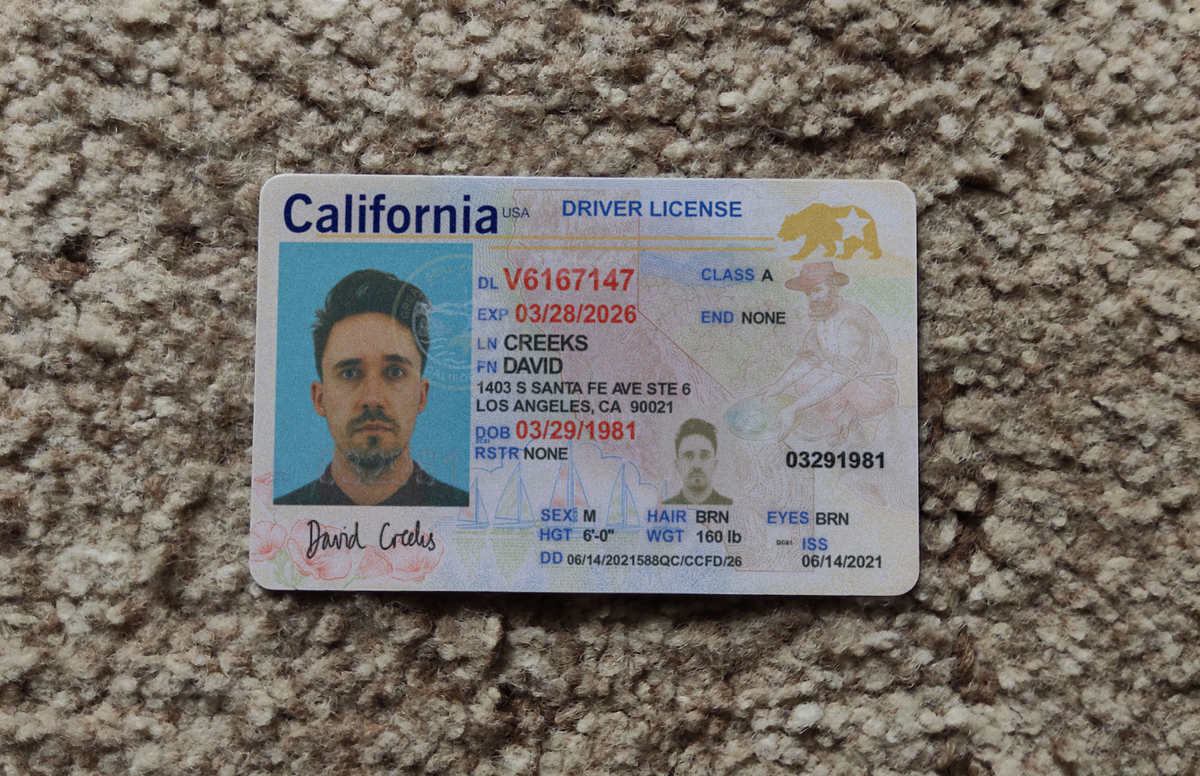
The site, called OnlyFake, threatens to streamline everything from bank fraud to money laundering, and has implications for cybersecurity writ large.
Updated: Data Breaches Caused by Leaks in 2024
We’re tracking data breaches that are most likely caused by leaked secrets and keeping this page up-to-date.

The Age of Realtime Deepfake Fraud Is Here
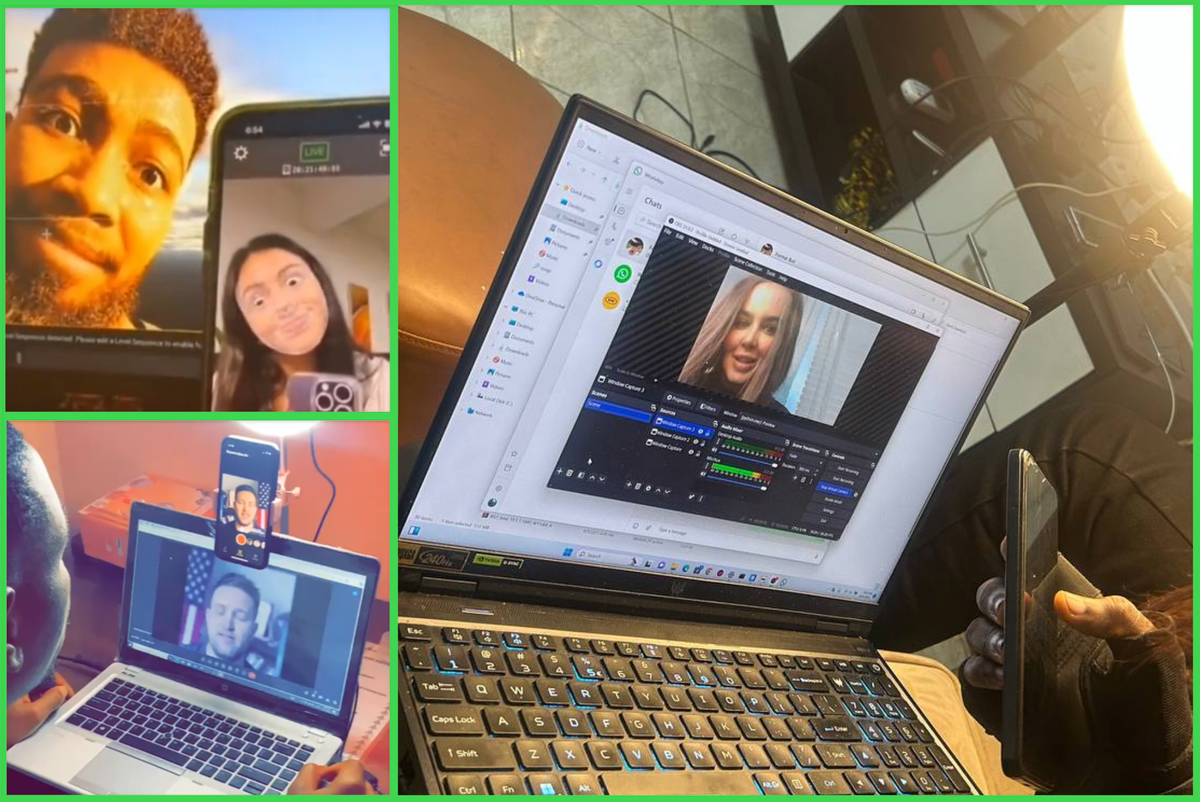
Fraudsters are able to change their race, facial hair, voice, and more during live video calls with very little effort. Scammers are already fooling the elderly and verification systems.
People are trying to claim real videos are deepfakes. The courts are not amused
The unleashing of powerful, generative AI on the public is raising concerns that as the technology becomes more prevalent, it will become easier to claim that anything is fake.
A Microsoft exec called AI scraping ‘theft of unprecedented proportions.’
In court documents unredacted Thursday, lawyers for the NYT in its copyright infringement case against Microsoft and OpenAI cited Microsoft’s Director of Applied Science, Brent Hecht, saying that “millions of people around the world will soon consider large models ‘hoovering up’ all their work to be an astonishing theft of unprecedented proportions… almost no one intended for content they created to be used in this fashion, nor are they compensated for its use.” The Orlando Sentinel, which is also part of the suit, reports a Microsoft filing “framed Hecht as someone on the payroll to play a contrarian.”
