When politicians and corporations agree, suspicion is natural.
White House proposes voluntary safety and transparency rules around AI | TechCrunch
The White House proposed what it calls an "AI Bill of Rights" to protect against algorithmic ills. But it's voluntary -- and far from the first of its kind.
Where AI Regulation Stands Today
The White House has released a National Artificial Intelligence Legislative Framework and new executive orders aiming to establish a single, nationwide standard for AI regulation...

Who decides when AI is too dangerous?
Anthropic asked for AI regulation, but not like this.

This critique of AI Safety is right on the money. An unwillingness to challenge corporate power even as people say a pause needs to seriously happen. Or lobbying for “differentiated development” even as these AI corps recklessly scale on. It’s internally inconsistent. 1
This critique of AI Safety is right on the money.An unwillingness to challenge corporate power even as people say a pause needs to seriously happen.Or lobbying for “differentiated development” even as these AI corps recklessly scale on.It’s internally inconsistent. 1/ https://t.co/eVwnYV0kWM pic.twitter.com/GiSBSuRYuE— Remmelt Ellen 🛑 (@RemmeltE) April 16, 2024

A brief history of AI executives calling for regulation
The industry is in a panic, but it’s been claiming to want legal guardrails for years — with few meaningful results.

Senate AI and Kids Safety Package Won’t Justify Preempting State AI Laws
Press reports indicate that the Senate Commerce Committee is preparing to markup a package of kids’s safety and artificial intelligence legislation on July 29. For months, the White House has been in talks with Republican Senate leaders to strike a deal on kids’ safety and AI bills that would also preempt certain state AI legislation. […]
Why AI companies can’t be trusted to self-regulate
From aviation to banking, high-risk industries are subject to independent oversight and meaningful penalties. AI companies should be no exception.
Why We Can't Let Enormous Weirdos Regulate AI
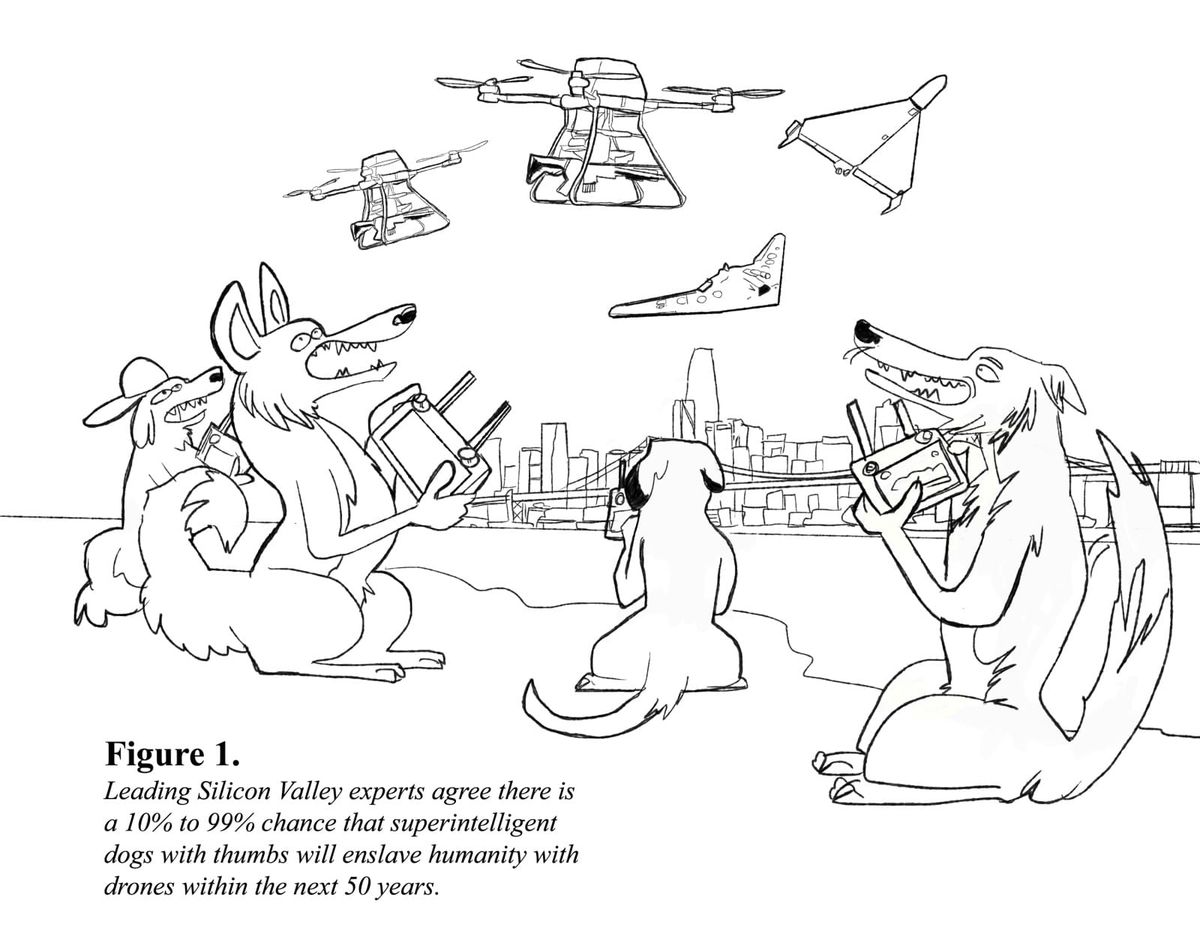
Imagine if instead of regulating drones via the standard lengthy, boring, and bureaucratic process - which we did - we instead decided, in the name of fostering all-important American drone innovation, to avoid regulating drones meaningfully at all. Also, imagine that we did not pay well-known aviation safety experts, aeronautical
AI regulation is taking shape, but startups are being left out
AI startups feel they’re not part of the regulation conversation.

'Synthetic Suspicion' and the Perils of AI-Prompted Police Actions
Synthetic suspicion — the replacement of human judgment with AI — cannot become a police norm, writes Tech Policy Press Fellow Jake Laperruque.
Our views on AI policy and political advocacy
Our approach to AI policy and political advocacy, transparency, support for thoughtful regulation and AI safety, and that no outside political group speaks on the company’s behalf.
SIAI Critique (Singularity Institute for Artificial Intelligence)
This is a fundamental error in the SIAI analysis. CFAI 4.2.1 says "If an effort to get Congress to enforce any set of regulations were launched, I would expect the final set of regulations adopted to be completely unworkable." It further says that government regulation of AI is unnecessary because "The existing force tending to ensure Friendliness is that the most advanced projects will have the brightest AI researchers, who are most likely to be able to handle the problems of Friendly AI." History vividly teaches the danger of trusting the good intentions of individuals.
Michael Geist -
The Standing Senate Committee on Social Affairs, Science and Technology is one of several committees in the House and Senate conducting hearings on artificial intelligence. I appeared before the committee yesterday (my fourth appearance on the issue in recent months), but rather than reiterate previous testimony on privacy, copyright, and transparency, I focused on the big issue of the moment: bans on social media and AI chatbots for children. The committee had been hearing from many supportive witnesses who emphasized the risk of harm associated with AI. Indeed, one Senator asked the panel before mine to raise their hands if they supported a ban, and virtually all hands went up. I was unsure about how my comments would be received, but I found the Senators open to debate on the issue. A video of my opening remarks, together with the transcript, is posted below. A future Law Bytes podcast episode will delve into the discussion that followed.
AI is now unpopular. That may not make a difference.
US begins study of possible rules to regulate AI like ChatGPT
The Biden administration said Tuesday it is seeking public comments on potential accountability measures for artificial intelligence (AI) systems as questions loom about its impact on national security and education.

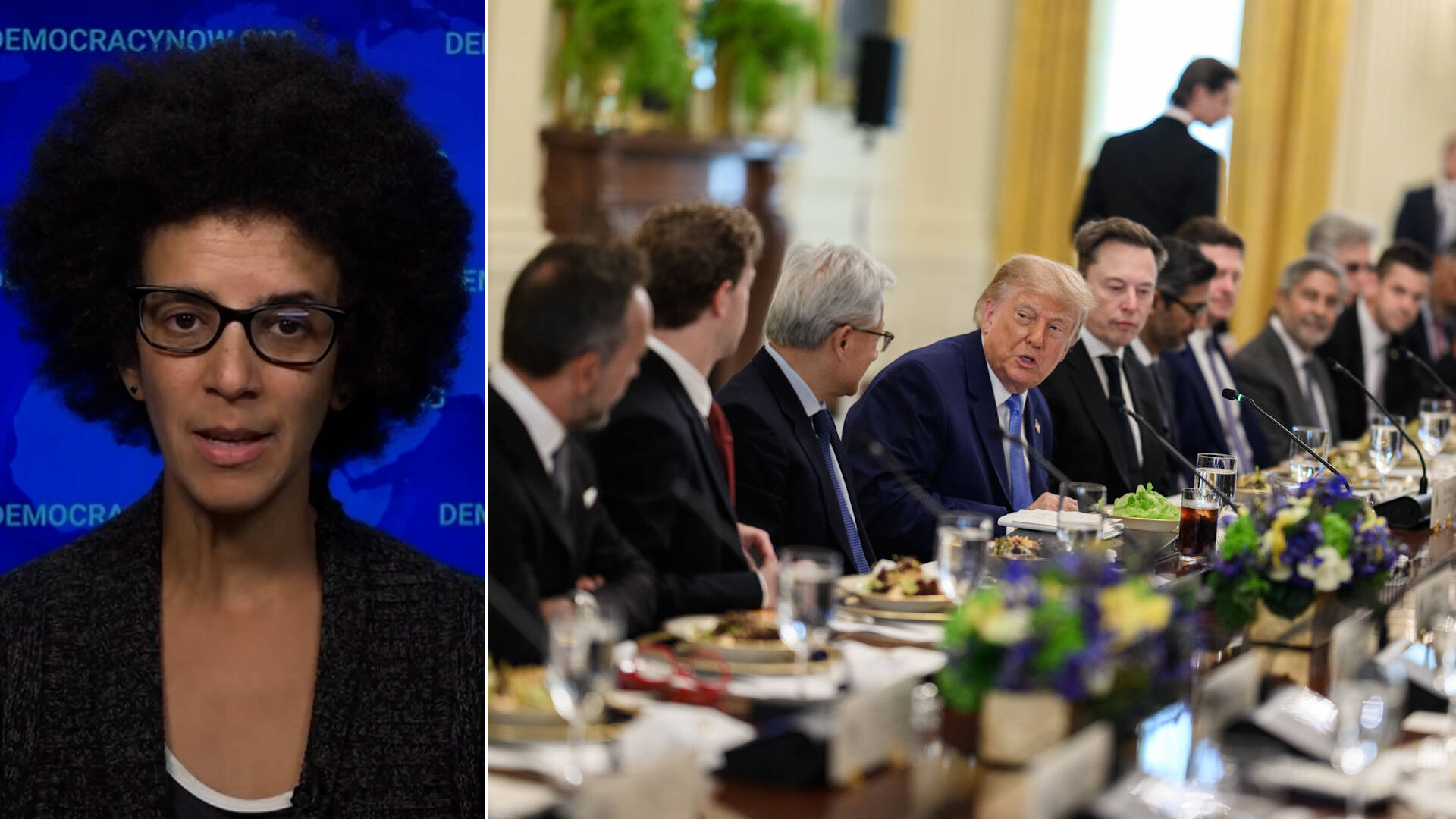
The Real Existential Risk Is AI CEOs Avoiding Oversight: “Alternative Nobel” Winner Timnit Gebru
We speak to the prominent AI researcher and leading critic of the AI industry, Timnit Gebru, who was recently awarded a 2026 Right Livelihood Award for her work investigating the harms and hype behind the global buildup of artificial intelligence. “Instead of discussing faulty, unreliable systems,” Gebru says tech leaders like SpaceXAI’s Elon Musk, OpenAI’s Sam Altman and Anthropic’s Dario Amodei are “marketing their systems as all-knowing, superpowerful, superintelligent,” and lobbying for “self-policing and self-regulation” to avoid being held “liable through existing laws.” Gebru expresses skepticism over increasingly widespread claims that AI algorithms pose an existential risk to humanity, warning that such claims are overblown and that “what is actually happening is regulatory capture.”