


Substack Notes just dropped. Can the startup survive this foray into social media?
Substack Writers Concerned as Subscriptions ‘Plummet’ Due to Follow Feature
Substack writers are expressing their concerns about the platform’s following feature on social media, which some argue is suppressing their subscription growth.

The Weird, Fragmented World of Social Media After Twitter
The common forum that Elon Musk destroyed will never be replaced—and that’s okay.
revolution.social with @rabble
Has Substack’s subscription model really “maxed out?”
Scott Carney and Taylor Lorenz posted on Substack about downward subscriber trends they’re seeing. Carney pins it on subscription fatigue and feeling like “The only way to grow is to pillage the paid subscribers from other creators.” Lorenz questions Substack’s direction, saying “more and more like this app is becoming another social media feed.” When we recently wrote about writers who are leaving Substack, they mentioned control, pricing, and the social feature creep among their reasons for choosing competitors like Ghost and Behiiv. [Link: Writers are fleeing the Substack Tax | https://www.theverge.com/tech/927294/substack-tax-ghost-beehiiv | The Verge]

Our Social Media is Broken. Is Decentralization the Fix? | Internet Archive Blogs
When Jack Dorsey, founder of the very centralized social media platform, Twitter, posted this message about decentralized social media, our DWeb community took note:
Shifts in U.S. Social Media Use, 2020–2024: Decline, Fragmentation, and Enduring Polarization
The social media ecosystem appears to be in flux. Twitter’s rebranding to X has come to symbolize a broader reorganization of online publics – political reshuffling, user attrition, and uncertainty over the role of legacy platforms. Simultaneously, the shift from text-based, networked feeds toward algorithmically curated, short-form video has accelerated, with TikTok setting the pace for the wider ecosystem [18, 14, 16]. At the same time, everyday communication increasingly migrates from large, open networks to semi-private spaces such as group chats and messaging apps. Commentators describe a digital public sphere in transition: smaller, more fragmented, less dominated by traditional social networking sites, and rise of more broadcast-oriented forms of media – with some even suggesting that we are seeing the beginning of the end of the social media era.
Here's my plan to save Twitter: let's buy it | Nathan Schneider
Corporate sharks are circling around the platform we love. But there is another way: shared ownership, where the community takes control
Micro.blog Surpasses Kickstarter Funding Goal, Set to Launch New Social Network for Independent Microblogs
Developer Manton Reece is on a mission to take back short form content for the open web by providing better tools for independent microblogging. Most short form content today is posted through cent…

Bluesky COO Rose Wang On Building a Better Social Network
Substack Doesn't Want You to Leave - Aaron Ross Powell’s Blog
Substack's business model is unsustainable—unless they lock all their writers in.
Rebuilding Social Media From Scratch!
Rebuilding Social Media From Scratch!
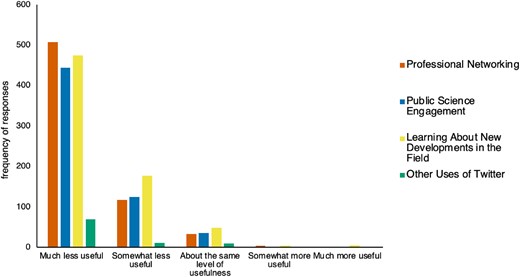
Scientists no Longer Find Twitter Professionally Useful, and have Switched to Bluesky
Synopsis Social media has become widely used by the scientific community for a variety of professional uses, including networking and public outreach. For the past decade, Twitter has been a primary home of scientists on social media. In recent years, new leadership at Twitter has made substantive changes that have resulted in increases in the prevalence of pseudoscience, conspiracy theory, and harassment on the platform, causing many scientists to seek alternatives. Bluesky has been suggested as a good alternative to Twitter, but the phenomenon of academics switching social media platforms has not previously been studied. Here we report on the results of a survey distributed to scientists on Twitter and Bluesky (n = 813). Results overwhelmingly confirm that changes to Twitter have made the social media platform no longer professionally useful or pleasant, and that many scientists have abandoned it in favor of Bluesky. Results show that for every reported professional benefit that scientists once gained from Twitter, scientists can now gain that benefit more effectively on Bluesky than on Twitter.
Can you really leave Substack? Substack was built on the promise that creators could leave whenever they wanted, taking their audience & payments with them. Then they built an app, started processing payments through Apple & Google Pay, & now if you leave, you lose everything.
Substack's CEO now trying to scare people into *only* distributing their content through their proprietary app, not email. (The link he posted warns users away from email.) It's not enough that Substack's locking in publishers & readers with "notes" and comments, now they're escalating tactics.

