


The usage policy update also adds new rules addressing propaganda campaigns, surveillance, and weapon development.
US used 'Claude' to strike over 1000 targets in first 24 hours of war
Despite a spat and Pentagon ban, Anthropic’s ‘AI is being used in the kill chain while Hegseth says ‘no stupid rules of engagement’

The Illusion of Protection: Why Canada’s Growing Push to Ban Social Media for Kids Won’t Work - Michael Geist
The momentum behind a social media ban for Canadian minors has been building for months. The federal Liberals voted at their April policy convention to back a minimum age of 16 for social media accounts and AI chatbots, the government’s expert panel on online safety is studying the issue, protesters have now rallied on Parliament Hill calling for it, and on Saturday night, Manitoba Premier Wab Kinew told a Winnipeg fundraiser that his government will be the first in Canada to ban social media and AI chatbots for kids. Kinew did not specify which kids, when it would happen, or how it would be enforced, none of which appeared to matter to the audience. The political appeal of a ban is obvious, since concerns about social media’s effects on young users are widely shared. Yet the policy itself is a terrible idea that will not work. This post examines at least six reasons why an outright age-based ban, particularly one that extends to AI chatbots, is the wrong response to a serious issue.
Wikipedia:Long-term abuse
This page summarises a limited number of long term abusers, to assist members of the community who believe they may have cause to report another incident. Note that this page is not a noticeboard. Names should only be added for the most egregious and well-attested cases. Most users here will have been banned, some on multiple occasions.
Anthropic on Twitter / X
Claude Fable 5 will be available again globally tomorrow.After a series of productive conversations with the US government, we're redeploying the model with a new set of classifiers to target and block more cybersecurity tasks. In the near term, some routine tasks like coding…— Anthropic (@AnthropicAI) July 1, 2026
Debate: Social media in children and young people – time for a ban? Weighing up the implications and limitations of age-based social media restrictions
Recent legislation in Australia banning social media accounts for children under 16, alongside similar proposals worldwide, has ignited debate about whether age-based restrictions are an effective way to protect young people's mental health. While the intent of such bans is to reduce exposure to harmful content, their feasibility and effectiveness remain unclear. Enforcement requires robust age verification, often relying on sensitive data such as government-issued identification or facial scans, which raises privacy concerns and can be circumvented through the use of VPNs. Moreover, social media use is diverse. Although it can intensify harms such as bullying, it also provides vital opportunities for connection and support, particularly for marginalised adolescents. Removing access to accounts may limit risks within platforms, but does not prevent exposure to harmful content elsewhere, nor does it guarantee increased offline engagement. Importantly, blanket bans fail to address unsafe design features embedded within social media or to equip adolescents with the skills needed to navigate online environments. More targeted, evidence-based regulation that promotes safer platform design and accountability may provide a more effective pathway to protecting young people's well-being.

Reading the Digital Safety Act with My Mastodon Admin Hat On
Back in 2024, I published a reading of the Online Harms Act from my perspective as an admin of a Mastodon instance. The Online Harms Act was a proposed Canadian bill meant to regulate social media to prevent harmful content, particularly hate speech and child abuse materials. While the Online Harms Act ultimately did not come to pass (due the proroguing of Parliament later that year), the Carney Liberal government is bringing much of it back with a new Digital Safety Act. In this post, I am also giving the new Act a look from the perspective of a Mastodon admin.
How ICE Is Weaponizing Social Media Against Its Critics
The agency says its surveillance program searches for threats to agents, but critics see free-speech infringements.

Online abuse: banning anonymous social media accounts is not the answer
In the wake of the tragic death of Sir David Amess, some politicians are calling for a law banning anonymous social media profiles. But it’s not the right way to tackle online abuse.

Online abuse: banning anonymous social media accounts is not the answer
In the wake of the tragic death of Sir David Amess, some politicians are calling for a law banning anonymous social media profiles. But it’s not the right way to tackle online abuse.
Meta’s New Content Policy Will Harm Vulnerable Users. If It Really
Earlier this week, when Meta announced changes to their content moderation processes, we were hopeful that some of those changes—which we will address in more detail in this post—would enable greater

Bias, Skew, and Search Engines Are Sufficient to Explain Online Toxicity
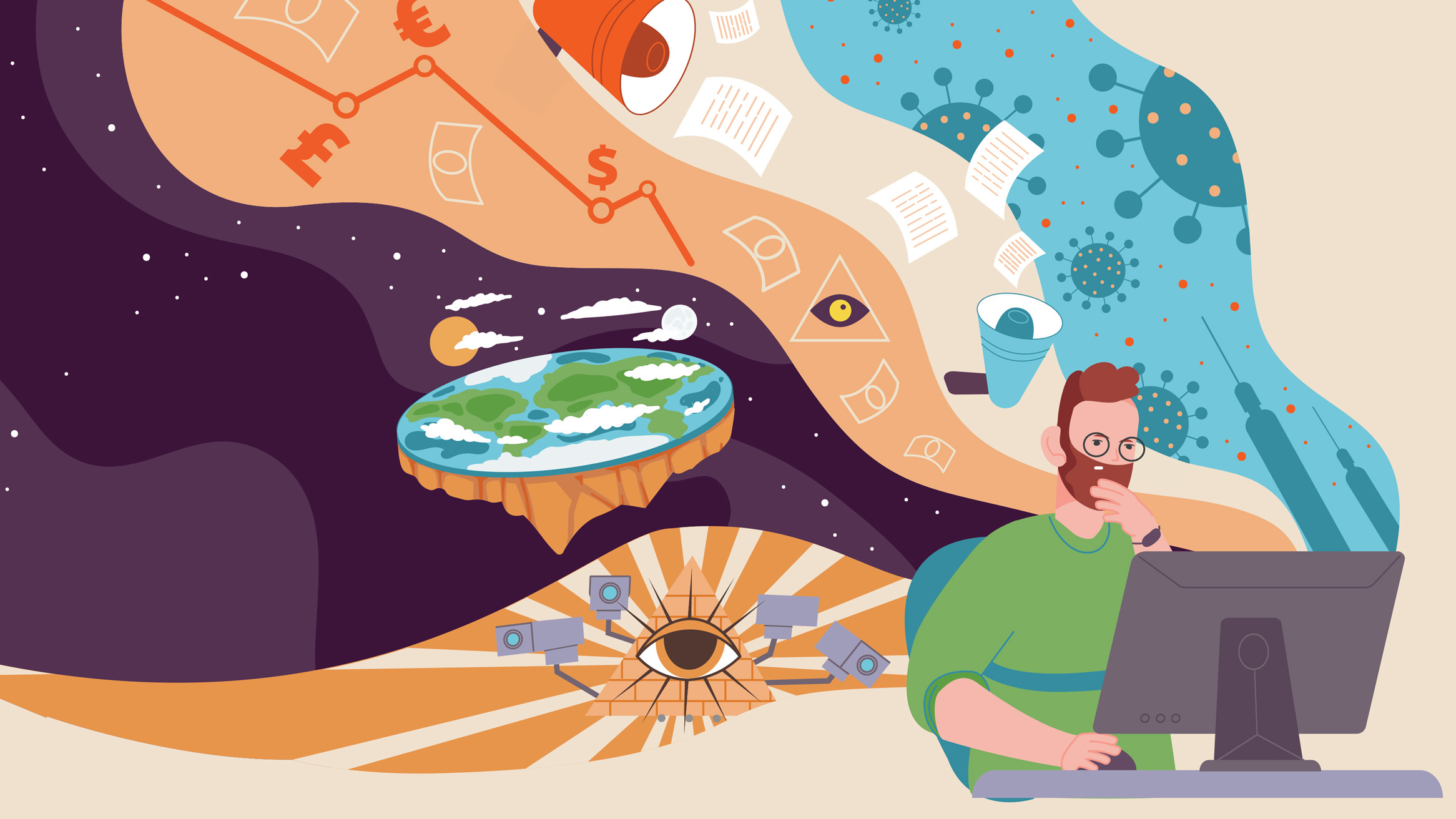
U.S. political discourse seems to have fissioned into discrete bubbles, each reflecting its own distorted image of the world. Many blame machine-learning algorithms that purportedly maximize “engagement”—serving up content that keeps YouTube or Facebook users watching videos or scrolling through their feeds—for radicalizing users or strengthening their partisanship. Sociologist Shoshana Zuboff15 even argues that “surveillance capitalism” uses optimized algorithmic feedback for “automated behavioral modification” at scale, writing the “music” that users then “dance” to.
Bias, Skew, and Search Engines Are Sufficient to Explain Online Toxicity
U.S. political discourse seems to have fissioned into discrete bubbles, each reflecting its own distorted image of the world. Many blame machine-learning algorithms that purportedly maximize “engagement”—serving up content that keeps YouTube or Facebook users watching videos or scrolling through their feeds—for radicalizing users or strengthening their partisanship. Sociologist Shoshana Zuboff15 even argues that “surveillance capitalism” uses optimized algorithmic feedback for “automated behavioral modification” at scale, writing the “music” that users then “dance” to.
Global: Risk Profiling Systems Used to Identify Potential Offenders Breach International Law and Must Be Banned – New Report
Widespread risk profiling by law enforcement, social security and migration is incompatible with international human rights law and must be banned.

Anthropic’s Third-Party Harness Ban and Why it Matters for Enterprise
On April 4th, Anthropic cut off Claude Pro and Max subscribers from routing their flat-rate, OAuth usage through OpenClaw and other…
Spurious normativity enhances learning of compliance and enforcement behavior in artificial agents
Significance The fact that humans enforce and comply with norms is an important reason why humans enjoy higher levels of cooperation and welfare than other animals. Some norms are relatively easy to explain: They may prohibit obviously harmful or uncooperative actions. But many norms are not easy to explain. For example, most cultures prohibit eating certain kinds of foods, and almost all societies have rules about what constitutes appropriate clothing, language, and gestures. Using a computational model focused on learning shows that apparently pointless rules can have an indirect effect on welfare. They can help agents learn how to enforce and comply with norms in general, improving the group’s ability to enforce norms that have a direct effect on welfare. , How do societies learn and maintain social norms? Here we use multiagent reinforcement learning to investigate the learning dynamics of enforcement and compliance behaviors. Artificial agents populate a foraging environment and need to learn to avoid a poisonous berry. Agents learn to avoid eating poisonous berries better when doing so is taboo, meaning the behavior is punished by other agents. The taboo helps overcome a credit assignment problem in discovering delayed health effects. Critically, introducing an additional taboo, which results in punishment for eating a harmless berry, further improves overall returns. This “silly rule” counterintuitively has a positive effect because it gives agents more practice in learning rule enforcement. By probing what individual agents have learned, we demonstrate that normative behavior relies on a sequence of learned skills. Learning rule compliance builds upon prior learning of rule enforcement by other agents. Our results highlight the benefit of employing a multiagent reinforcement learning computational model focused on learning to implement complex actions.

Morally Motivated Networked Harassment as Normative Reinforcement
While online harassment is recognized as a significant problem, most scholarship focuses on descriptions of harassment and its effects. We lack explanations of why people engage in online harassment beyond simple bias or dislike. This article puts forth an explanatory model where networked harassment on social media functions as a mechanism to enforce social order. Drawing from examples of networked harassment taken from qualitative interviews with people who have experienced harassment ( n = 28) and Trust & Safety workers at social platforms ( n = 9), the article builds on Brady, Crockett, and Bavel’s model of moral contagion to explore how moral outrage is used to justify networked harassment on social media. In morally motivated networked harassment, a member of a social network or online community accuses a target of violating their network’s norms, triggering moral outrage. Network members send harassing messages to the target, reinforcing their adherence to the norm and signaling network membership. Frequently, harassment results in the accused self-censoring and thus regulates speech on social media. Neither platforms nor legal regulations protect against this form of harassment. This model explains why people participate in networked harassment and suggests possible interventions to decrease its prevalence.
