


On Version History: how to play your voice like an instrument, with a little help from Chromeo.
Sonic Tau
Live code your music in the browser. A working technical demo by Sam Aaron, creator of Sonic Pi.

Audiobox: Meta's new foundation research model for audio generation | Hacker News
The more rational voices in my mind, though, become more and more afraid of a world where the only thing you can trust is people sitting right in front of you. That makes the world of information pretty small again.
A dispatch from the dawn of the electronic music age | Aeon Videos
These days, synthesised sound is easy to access – but early electronic music pioneers had to get hands on to produce it

Show HN: An algorithmic audio landscape | Hacker News
It's definitely inspired by in-world music that sometimes appears in games. I basically took that concept, keeping the music aspect, and dropping the entire "game" aspect.
Pocket TTS: a high-quality TTS with voice cloning that runs on CPU
Our mission is to build and democratize artificial general intelligence through open science.
Devices | Audiotool
Explore Audiotool's collection of synthesizers, drum machines, and effects. From powerful synths like Heisenberg and Pulverisateur to classic drum machines and professional effects.
AI Slop, Vibe-Coded Clones & Indie Plugins | Audio Damage
Vibe-coded clones, AI pitch spam, and Big Tech gunning for music software. After nearly 25 years, our take on AI and why plugin buyers should be skeptical.

OpenAI's WebRTC Problem - Media over QUIC
Media over QUIC: There are ways to do voice AI without being traumatized by WebRTC.

Deepfake audio has a tell and researchers can spot it
With deepfake audio, that familiar voice on the other end of the line might not even be human.

Operation Voder: AT&T, Bell Labs, and the Labor of Techno-Utopia at the 1939 New York World’s Fair
This article explores the labor demands of the Voder, the electrical speech synthesis machine developed by Bell Labs for AT&T’s 1939 New York World’s Fair exhibit. The article situates the Voder within the historical context of the fair, with the United States emerging from the Great Depression and political tensions escalating across the globe. By examining the decision to incorporate the machine’s young female operators into the exhibit, the article argues that AT&T executives used Voder operators to normalize a new vision of technological utopia that relied heavily and conspicuously on the infrastructural labor of women. Moreover, the article highlights the previously unacknowledged engineering contributions of Voder operators in the years before the fair, writing women into the origin story of a machine that laid critical groundwork for speech recognition and voice encryption technology.
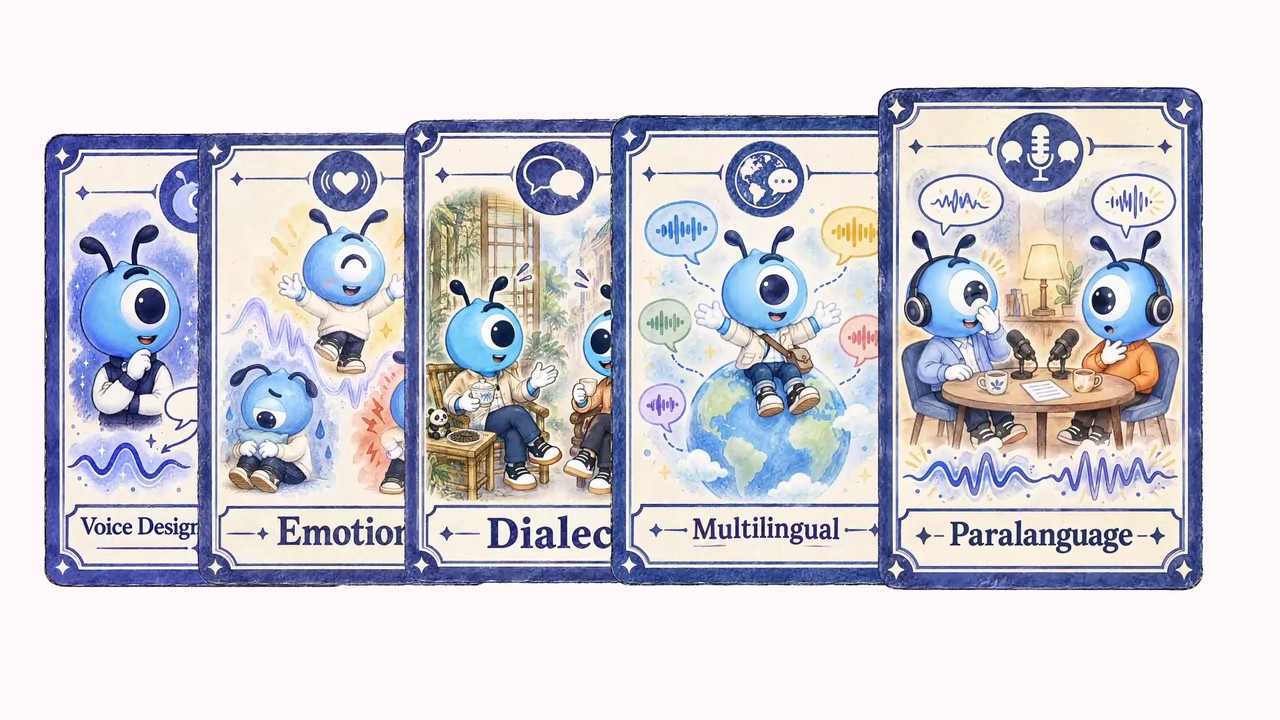
Ming-3.0-tts
Open-weights speech generation for audio stories, short-video narration and product assistants.
Google is embedding inaudible watermarks right into its AI generated music
SynthID comes to audio.
