“How did these people go out and get gas masks?” AG Bondi asked.
Masks and respirators for prevention of respiratory infections: a state of the science review
SUMMARY This narrative review and meta-analysis summarizes a broad evidence base on the benefits—and also the practicalities, disbenefits, harms and personal, sociocultural and environmental impacts—of masks and masking. Our synthesis of evidence from over 100 published reviews and selected primary studies, including re-analyzing contested meta-analyses of key clinical trials, produced seven key findings. First, there is strong and consistent evidence for airborne transmission of severe acute respiratory syndrome coronavirus 2 (SARS-CoV-2) and other respiratory pathogens. Second, masks are, if correctly and consistently worn, effective in reducing transmission of respiratory diseases and show a dose-response effect. Third, respirators are significantly more effective than medical or cloth masks. Fourth, mask mandates are, overall, effective in reducing community transmission of respiratory pathogens. Fifth, masks are important sociocultural symbols; non-adherence to masking is sometimes linked to political and ideological beliefs and to widely circulated mis- or disinformation. Sixth, while there is much evidence that masks are not generally harmful to the general population, masking may be relatively contraindicated in individuals with certain medical conditions, who may require exemption. Furthermore, certain groups (notably D/deaf people) are disadvantaged when others are masked. Finally, there are risks to the environment from single-use masks and respirators. We propose an agenda for future research, including improved characterization of the situations in which masking should be recommended or mandated; attention to comfort and acceptability; generalized and disability-focused communication support in settings where masks are worn; and development and testing of novel materials and designs for improved filtration, breathability, and environmental impact.

Masks and respirators for prevention of respiratory infections: a state of the science review
SUMMARY This narrative review and meta-analysis summarizes a broad evidence base on the benefits—and also the practicalities, disbenefits, harms and personal, sociocultural and environmental impacts—of masks and masking. Our synthesis of evidence from over 100 published reviews and selected primary studies, including re-analyzing contested meta-analyses of key clinical trials, produced seven key findings. First, there is strong and consistent evidence for airborne transmission of severe acute respiratory syndrome coronavirus 2 (SARS-CoV-2) and other respiratory pathogens. Second, masks are, if correctly and consistently worn, effective in reducing transmission of respiratory diseases and show a dose-response effect. Third, respirators are significantly more effective than medical or cloth masks. Fourth, mask mandates are, overall, effective in reducing community transmission of respiratory pathogens. Fifth, masks are important sociocultural symbols; non-adherence to masking is sometimes linked to political and ideological beliefs and to widely circulated mis- or disinformation. Sixth, while there is much evidence that masks are not generally harmful to the general population, masking may be relatively contraindicated in individuals with certain medical conditions, who may require exemption. Furthermore, certain groups (notably D/deaf people) are disadvantaged when others are masked. Finally, there are risks to the environment from single-use masks and respirators. We propose an agenda for future research, including improved characterization of the situations in which masking should be recommended or mandated; attention to comfort and acceptability; generalized and disability-focused communication support in settings where masks are worn; and development and testing of novel materials and designs for improved filtration, breathability, and environmental impact.
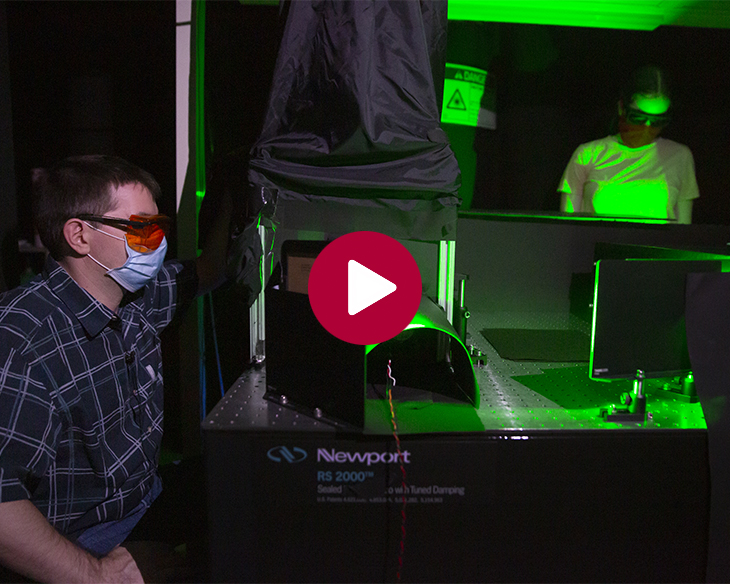
Low-cost measurement of face mask efficacy for filtering expelled droplets during speech
A simple method was developed for evaluating the efficacy of face masks to reduce respiratory droplet emission during speaking. , Mandates for mask use in public during the recent coronavirus disease 2019 (COVID-19) pandemic, worsened by global shortage of commercial supplies, have led to widespread use of homemade masks and mask alternatives. It is assumed that wearing such masks reduces the likelihood for an infected person to spread the disease, but many of these mask designs have not been tested in practice. We have demonstrated a simple optical measurement method to evaluate the efficacy of masks to reduce the transmission of respiratory droplets during regular speech. In proof-of-principle studies, we compared a variety of commonly available mask types and observed that some mask types approach the performance of standard surgical masks, while some mask alternatives, such as neck gaiters or bandanas, offer very little protection. Our measurement setup is inexpensive and can be built and operated by nonexperts, allowing for rapid evaluation of mask performance during speech, sneezing, or coughing.

Low-cost measurement of face mask efficacy for filtering expelled droplets during speech
A simple method was developed for evaluating the efficacy of face masks to reduce respiratory droplet emission during speaking. , Mandates for mask use in public during the recent coronavirus disease 2019 (COVID-19) pandemic, worsened by global shortage of commercial supplies, have led to widespread use of homemade masks and mask alternatives. It is assumed that wearing such masks reduces the likelihood for an infected person to spread the disease, but many of these mask designs have not been tested in practice. We have demonstrated a simple optical measurement method to evaluate the efficacy of masks to reduce the transmission of respiratory droplets during regular speech. In proof-of-principle studies, we compared a variety of commonly available mask types and observed that some mask types approach the performance of standard surgical masks, while some mask alternatives, such as neck gaiters or bandanas, offer very little protection. Our measurement setup is inexpensive and can be built and operated by nonexperts, allowing for rapid evaluation of mask performance during speech, sneezing, or coughing.
Inexpensive, Accessible Device Provides Visual Proof that Masks Block Droplets
DURHAM, N.C. – Duke physician Eric Westman was one of the first champions of masking as a means to curtail the spread of coronavirus, working with a local non-profit to provide free masks to at-risk and under-served populations in the greater Durham community.
Welcome to the Wasteland: A Thousand Gas Towns
Howdy partner, and welcome to the Wasteland!

How to Protect Yourself during Protests
Demonstrators face tear gas, flash bangs, coronavirus and surveillance

Ryan Greenblatt on Twitter / X
I was the main person doing transcript analysis for this investigation of the Hugging Face incident. My main takeaway: We don't have good approaches for understanding/overseeing the activity and aims of AI 'swarms'.I semi-jokingly called our efforts a "slop-vestigation" because… https://t.co/eqBONVaSAV— Ryan Greenblatt (@RyanGreenblatt) August 26, 2026
🎧 Ep. 2: Valerie Rayne's Smoking Fetish Journey - The Valerie Rayne Show
Valerie Rayne discusses her smoking fetish and answers some commonly asked questions.
Early results are encouraging: experiences organizing against the surveillance-industrial complex in the ATmosphere and the fediverses
Part 3 of The time is right

An Indian Trans Person’s Harrowing Encounter Fuels Backlash Against Meta AI ‘Pervert Glasses’
Karen Rebelo reports on incidents of abuse caused by use of Meta's wearable tech.


AMAA - Hitchhiker's Guide to the Atmosphere
Ask me anything AT Protocol, with guests!
Slowly, Then Quickly: What AtmosphereConf Made Visible - AT Protocol
With AtmosphereConf 2026 wrapped, Boris Mann and Ted Han join to talk about what the gathering surfaced in the ecosystem. From the IETF working group, the move beyond a single foundation, to a growing layer of co-ops, regional meetups, and independent stewards.