Chegg and PMC’s claims don’t stand up to antitrust laws, a judge ruled.
Google fends off news publishers' antitrust lawsuit over online search
Alphabet's Google won a ruling dismissing a lawsuit that accused the tech giant of monopolizing the U.S. online news market and exploiting its dominance in search to extract publishers' content without payment.

Pluralistic: The worst possible antitrust outcome (03 Sep 2025) – Pluralistic: Daily links from Cory Doctorow
Last year, Google lost an antitrust case to Biden's DoJ. The DoJ lawyers beat Google like a drum, proving beyond a shadow of a doubt that Google had deliberately sought to create and maintain a monopoly over search, and that they'd used that monopoly to make search materially worse, while locking competitors out of the market.
What the Verdict Against Meta and Google Says About the Way We Live Now
Serving as a signal of a taste in the courts and among the public to have tech companies bear some of the costs of harm that they have allegedly caused, the recent verdict against Meta and Google in California says a lot about the central anxieties of our time.

Landmark German ruling declares Google's AI Overviews are Google's own words and makes it liable for false answers
A German regional court has ruled that Google is directly liable for the content of its AI search overviews. According to the court, previous limited liability protections for search engine operators don't apply to AI overviews. In this case, Google's AI had falsely linked two publishers to fraud and made claims that didn't appear in any of the linked sources. The ruling could set a precedent for AI-generated content liability worldwide.

James Damore has sued Google. His infamous memo on women in tech is still nonsense.
Don’t be taken in by the document’s faux-reasonable tone.

Lawsuit says Anthropic, OpenAI, Google and SpaceXAI of illegal agreement to slow AI
Anthropic CEO acknowledged potential antitrust hurdles, writing that it would assist if the US government were to mediate ‘or at least enable’ cross-lab discussions

The DOJ Still Wants Google to Sell Off Chrome
In its final proposed remedy filing in the Google antitrust case, the Department of Justice reiterated that Google should stop paying partners for search placement—and divest its dominant Chrome browser.

Google Fights Back
At Google I/O, Google was the opposite of defensive: the company set out to make the case that its approach made for better products that makes people’s lives better

Book publishers sue Google for copyright infringement over Gemini AI training
Group of major publishers accuses the tech giant of ‘one of the most prolific infringements of copyrighted materials in history’

Defending an open web: What the Google search ruling means for the future | The Mozilla Blog
Last week, Judge Amit Mehta issued a ruling in the remedies proceedings of the U.S. v. Google LLC search case. Among the issues addressed, one key aspect t

The Technical Feasibility of Divesting Google Chrome – Knight-Georgetown Institute
As the European Commission advances efforts under the Digital Markets Act to require Google to share its search data with competitors, lessons from historic antitrust remedies underscore how data access could be transformational in the AI-powered search market. While the Commission’s proposals represent a novel and comprehensive approach, key improvements to data scope and sharing frequency, privacy protections, and dispute resolution are needed. US courts and enforcers charged with implementing similar provisions should take note.

Google’s Chrome Antitrust Paradox
This Article examines Google’s dominance of the browser market, highlighting how Google’s Chrome browser plays a critical role in reinforcing Google’s dominance in other markets. While Google portrays Chrome as a neutral platform built on open-source technologies, this Article shows that Chrome is, in fact, instrumental in Google’s strategy to reinforce its dominance in the online advertising, publishing, and browser markets. The examination of Google’s strategic acquisitions, anticompetitive practices, and the implementation of so-called “privacy controls” underlines that Chrome is far from a neutral gateway to the web. Rather, it serves as a key tool for Google to maintain and extend its market power, often to the detriment of competition and innovation in the digital economy.This Article illustrates how Chrome not only bolsters Google’s position in online advertising and publishing through practices such as coercion and self-preferencing, but also leverages its advertising clout to engage in a “pay-to-play” paradigm—the cornerstone of Google’s larger strategy of market control. It also outlines potential regulatory interventions and remedies by drawing on historical antitrust precedents. Lastly, this Article proposes a triad of solutions motivated by an analysis of Google’s abuse of Chrome, including behavioral remedies targeting specific anticompetitive practices, structural remedies involving an internal separation of Google’s divisions, and divestiture of Chrome from Google into an independent organization.Despite Chrome’s dominance and its critical role in Google’s ecosystem, as well as its recent legal troubles with the Department of Justice, it so far has avoided significant antitrust action. A key reason for this inaction lies in the long-standing precedent supporting the hegemony of technology firms and the uncertainty surrounding Chrome’s viability as a standalone entity. This Article attempts to address these issues to enable antitrust actions that are essential in remedying current market imbalances. Such actions are also critical to mitigate future threats to competition from an increasingly monopolistic technology landscape, thereby fostering a competitive digital environment that promotes innovation and protects consumer interests.
Did Uber Steal Google’s Intellectual Property?
Silicon Valley was built on job-hopping. But when a leader of Google’s self-driving-car unit joined Uber, Google filed suit. Now the Feds are on the case.

Judge Learns Lawyers on Both Sides of Case Used AI, Cancels Trial, Kicks Everyone Off the Case
When two AIs argue against each other, the legal system loses.

Google must let publishers opt out of AI Search features, rules UK
Rejoice, website owners.

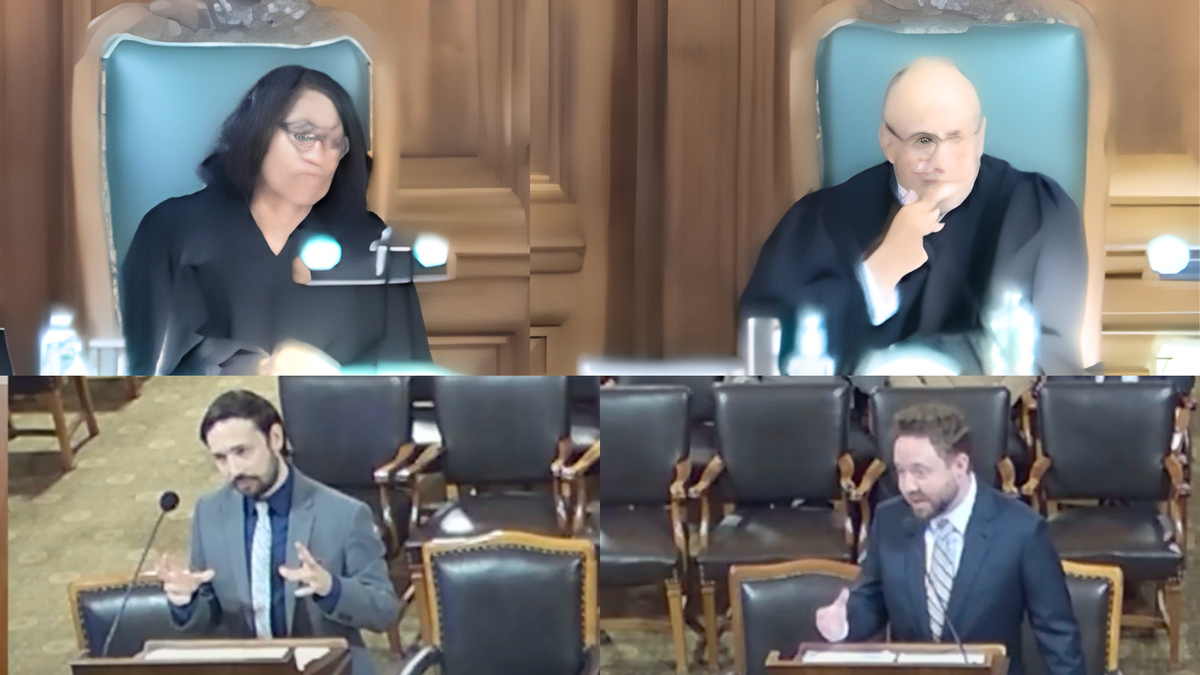
Watch These Judges Rip Into Lawyers For Citing Cases That Don't Exist
“It's striking, concerning, disappointing, and saddening to think that members of the bar would forward cases to a court that don't exist, and to think that the lawyers on the other side of that didn’t read it for whatever reason, didn’t check it.”