

Simple inference-time memory module that treats memory management as a series of LLM calls and agent loops over a markdown-based file tree.
nanomem: An Extremely Simple, Inference-Time Memory Module
nanomem is an extremely simple, user-owned memory module that casts memory management as LLM calls / agent loops on a markdown file tree. You interact with the tree with natural language commands like nanomem add <fact>, nanomem retrieve <query>, and nanomem import <chatgpt>. As such, nanomem is by design interpretable, partitionable, portable, and versioned.
vllm-project/vllm
A high-throughput and memory-efficient inference and serving engine for LLMs
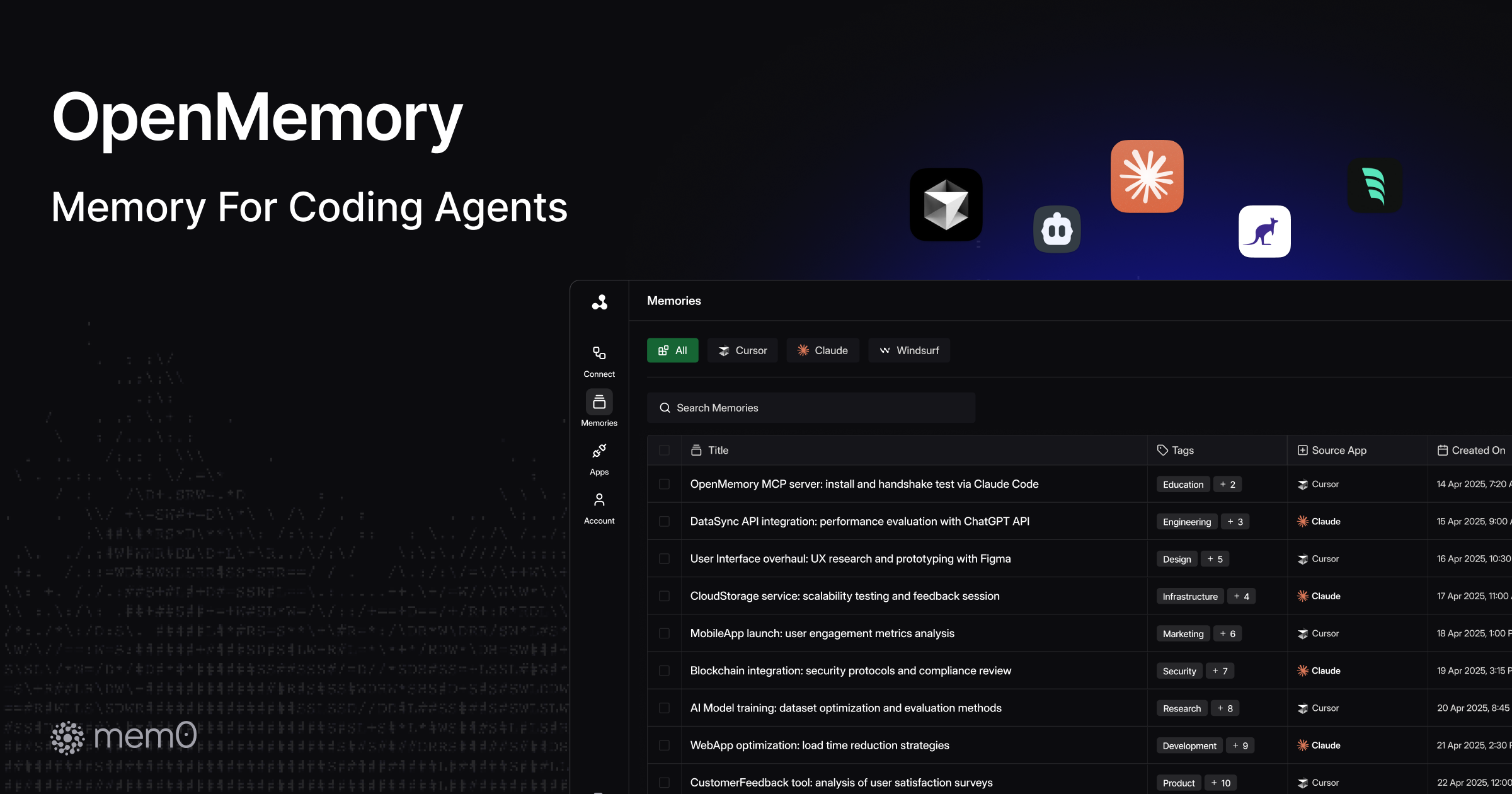
OpenMemory - AI Memory MCP Server for Coding Agents | Mem0
With OpenMemory, add persistent, project-aware memory to Cursor, Windsurf, and VS Code agents. Store preferences, patterns, and context that get retrieved automatically.
mem-agent: Equipping LLM Agents with Memory Using RL
The insights and the technical report behind Mem-Agent, our 4B model for persistent memory in LLMs
I Benchmarked OpenAI Memory vs LangMem vs Letta (MemGPT) vs Mem0 for Long-Term Memory: Here’s How They Stacked Up
145 votes, 53 comments. Lately, I’ve been testing memory systems to handle long conversations in agent setups, optimizing for: Factual consistency…
I accidentally turned LLM memory into program analysis :: pwning.systems
Why I stopped trying to give LLM agents a better memory and instead built Lemmalog, a Datalog engine that maintains an agent's knowledge as analysis state, with provenance, retractions and incremental evaluation, plus what happened when I benchmarked it on LongMemEval and LoCoMo.

Cross-Harness Agentic Memory
Supermemory built a ~99% benchmark ensemble to prove the benchmarks are gameable.Letta scored 74% on LoCoMo with just a filesystem. No vector DB, no graph.
Pieces | Infinite Artificial Memory for your Digital Workers and Agents
Pieces is your AI companion that captures live context from browsers to IDEs and collaboration tools, manages snippets and supports multiple llms - all while processing data locally for maximum control.

Ambient Associative Memory
Most agent memory waits to be queried. Ambient memory runs on every tool call — past lessons surface on their own, no rules list required.

Alex Cheema on Twitter / X
.@karpathy shouted out my work on @exolabs at @ycombinator AI SUS!“we use LLMs similarly to mainframes in the ‘70s - compute is timeshared by having a slice in the batch dimension. models will compress over time, and with this we’ll be able to run more on-device” pic.twitter.com/UKSrquQGAL— Alex Cheema (@alexocheema) June 18, 2025

Demystifying llm-d and vLLM: The race to production
Learn how vLLM and llm-d work together for efficient and scalable large language model (LLM) inference. Discover the benefits of disaggregated scaling, expert-parallel scheduling, and KV cache-aware routing.

Utkarsh on Twitter / X
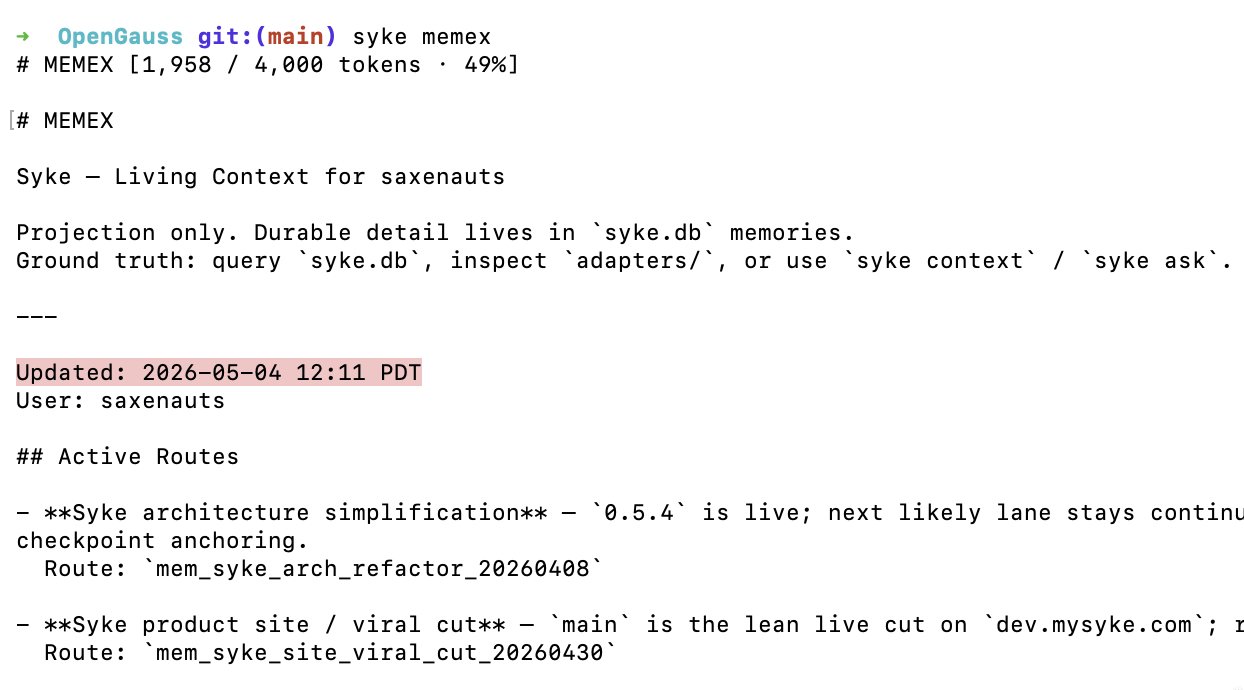
Another reason why you want an ambient memory agent is TIME. Your other coding agents understand time differently depending on who or which company writes them. Your machine however should live and breathe with you in your timeline. With Claude, I often find myself begging… pic.twitter.com/XVAvzciplY— Utkarsh (@saxenauts) May 4, 2026
LLM in a flash: Efficient Large Language Model Inference with Limited Memory
Large language models (LLMs) are central to modern natural language processing, delivering exceptional performance in various tasks. However, their substantial computational and memory requirements present challenges, especially for devices with limited DRAM capacity. This paper tackles the challenge of efficiently running LLMs that exceed the available DRAM capacity by storing the model parameters in flash memory, but bringing them on demand to DRAM. Our method involves constructing an inference cost model that takes into account the characteristics of flash memory, guiding us to optimize in two critical areas: reducing the volume of data transferred from flash and reading data in larger, more contiguous chunks. Within this hardware-informed framework, we introduce two principal techniques. First, "windowing" strategically reduces data transfer by reusing previously activated neurons, and second, "row-column bundling", tailored to the sequential data access strengths of flash memory, increases the size of data chunks read from flash memory. These methods collectively enable running models up to twice the size of the available DRAM, with a 4-5x and 20-25x increase in inference speed compared to naive loading approaches in CPU and GPU, respectively. Our integration of sparsity awareness, context-adaptive loading, and a hardware-oriented design paves the way for effective inference of LLMs on devices with limited memory.

Introducing Beads: A coding agent memory system
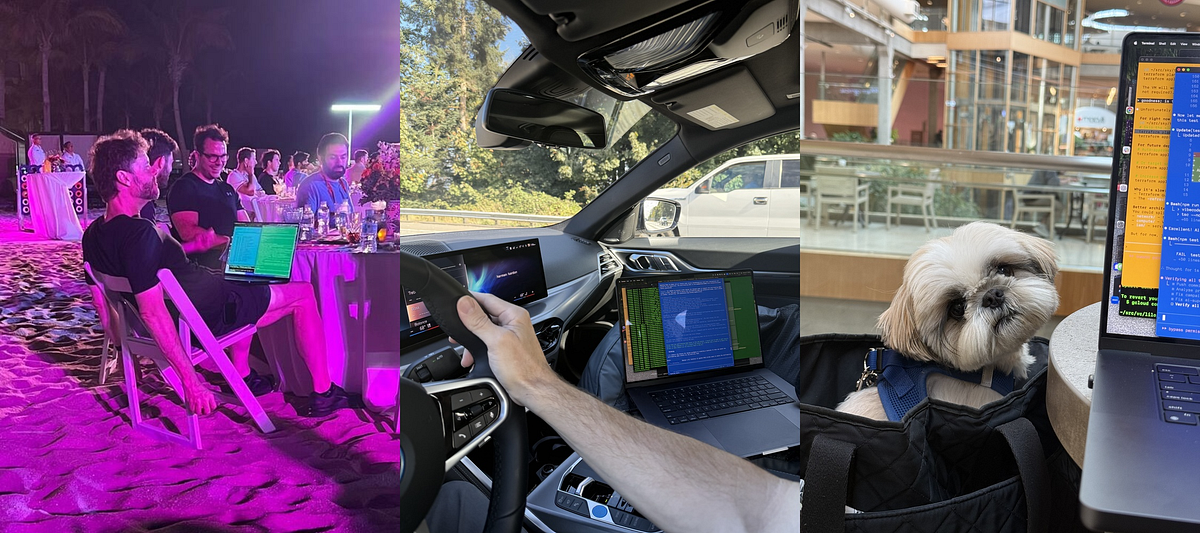
I have been vibe coding like a madman for forty days and forty nights. It’s a long story, so I’ll summarize in these three pictures.
i can’t help but think we’re far from nailing memory systems this one here is extremely interesting. two LLMs at once, one just managing and surfacing memory for the other

Asa ⭔
I'm not a fan of the decoupled 'memory retrieval → task execution' loop, so my agent has a subconscious background thread that looks for relevant, unique memory context in its experiential database while it runs and injects it on top of the live context window.
