

The furore about trigger warnings and no-platform campaigns reveals not a timid generation but rather one unafraid to tackle reality head-on, argues Tom Cutterham
The contagion of fear | The Observation Deck
I have a difficult confession to make — a shameful incident that I have never spoken of, even to those closest to me. Late one night in my first year at university and having found computer science to be my life’s calling, I was in the back of the large computer science lab, talking with some fellow underclassmen. We were snidely decrying the lack of technological understanding in the broader population, with the kind of arrogance and hubris that youth and precociousness can uniquely summon. Somewhere in this discussion, a terrible idea was hatched: what if we went next door to the general computer lab, and told the humanities students there that a computer virus was spreading through their machines? Would they believe it?
Thread by @AustenAllred: "This is a tweetstorm about things that have surprised me having started a school, coming from a non-educational background 1. Students’ brai […]"
Thread by @AustenAllred: "This is a tweetstorm about things that have surprised me having started a school, coming from a non-educational bacents’ brains are broken by our existing system. We’ve been reworked purely for extrinsic reward and forgotten […]"

The Retweeting Class
I have often found myself confounded by the behaviour of some people who seem impervious to reality — like the people still on X today. Here, I try to understand what grounds their epistemology and its consequences, and what that means for the rest of us. Being committed to a better future is where genuine seriousness is, and that seriousness can only be approached in a spirit of embodied, determined, relentless hope.

'A Groundbreaking Study Shows Kids Learn Better On Paper, Not Screens. Now What?' - Slashdot
In an opinion piece for the Guardian, American journalist and author John R. MacArthur discusses the alarming decline in reading skills among American youth, highlighted by a Department of Education survey showing significant drops in text comprehension since 2019-2020, with the situation worsening ...

The Kids Are (Mostly) Alright: New Pew Study Deflates The Social Media Panic
A couple weeks back, Jonathan Haidt published another entry in his ongoing campaign to convince the world that social media is inherently ruining kids’ lives. This one was a victory lap title…

Under digital surveillance: how American schools spy on millions of kids
Fueled by fears of school shootings, the market has grown rapidly for technologies that monitor students through official school emails and chats
Jonathan Haidt’s Claims On Kids & Tech Crumble Under Scrutiny From Top Expert, Candice Odgers
Jonathan Haidt’s incredibly well-timed decision to surf on the wave of a moral panic about kids and social media has made him a false hero for many parents and educators. In my review, I noted that…
From file-sharing to prison: A Megaupload programmer tells his story
Programmer Andrew Nõmm: "I had to be made an example of as a warning to all IT people."

Why Protecting Kids from Social Media May Make Things Worse — Douglas Rushkoff
I’m supposed to give a talk next week about kids and social media and the need for more media literacy education, more regulation of platforms, and more substantive discussion about how to keep our kids from media-induced self-harm. The whole event is well-meaning, but is characterized by a sense of worry and protection. And for some reason, after years of making those sorts of arguments in my articles and documentaries, I have a strong impulse to pivot the other way.
the collapse of online political education is upon us
the greatest minds of our generation are wasting time making video essays about sydney sweeneys jeans, liberal influencers are taking dark money, Philosophy YouTube is crumbling & im really stressed
Dec 2020 -- Jelle Bruineberg -- Embodied cognition and the attention crisis
Open science meets orange skies: K-12 educators’ engagement with computational notebooks to explore scientific events with human impacts
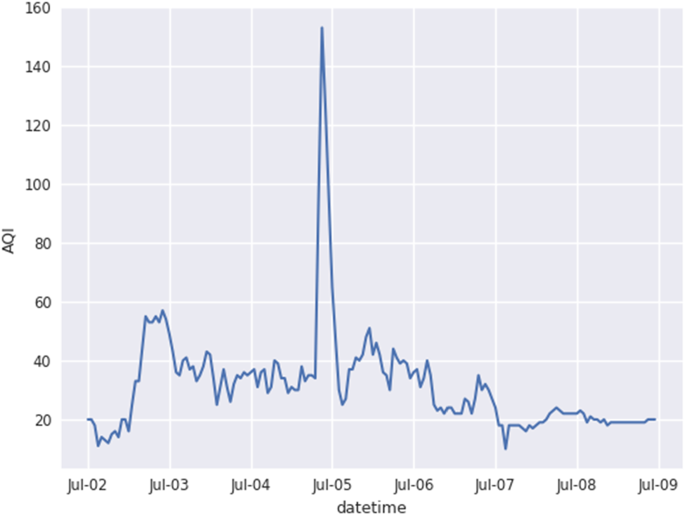
Computational notebooks are becoming a popular method to introduce mathematics, data, and scientific computing concepts to secondary students. Advocates argue computational notebooks encourage transparency and reproducibility in student work and can enable more personalized investigations of publicly available civic and scientific datasets. However, little is known about how teachers navigate these complex artifacts, let alone how they might support their students in doing so. In this paper, we investigate six pre-service and two in-service K-12 teachers’ sensemaking during a structured clinical think-aloud interview as they engaged with a computational notebook that examines disruptions in local air quality. The notebook presented a common event (annual fireworks) and an extreme event that impacted human health, during which the skies above the greater metropolitan San Francisco Bay region in California, USA turned orange due to wildfire pollution (“Orange Skies Day”, Sept 9, 2020). We examine the ideas that participants engaged as they interacted with the notebooks, and identify three ways in which they interacted with code in the notebook: to make sense of the scientific phenomenon (all participants), to make sense of the available data (6 out of 8 participants), and/or integrate these two dimensions (4 out of 8 participants). We present examples of each of these three forms of sensemaking, highlight their similarities and distinguishing features, and discuss implications for teacher education.
'Students Are Being Treated Like Guinea Pigs:' Inside an AI-Powered Private School
Leaked documents reveal the inner workings of Alpha School, which both the press and the Trump administration have applauded. The documents show Alpha School's AI is generating faulty lessons that sometimes do "more harm than good."

Opinion | My Students Can’t Read
The generational collapse in literacy is measurable, persistent, and likely to get worse.
Just a professor standing in front of BlueSky demoralized because exams my students used to get a mean of 83% on prior to 2020 are now failed in large numbers. It seems that their ability to APPLY concepts to new contexts/domains has all but disappeared. I love these students & I am worried.
