


They took the lathe of heaven away from me, and they were right to.
The Right Wants You Stupid
The eternal quest to preserve the “pleasing illusions” that hold society and its authorities together.

Vermin Trials
AbstractFor 250 years insects and rodents accused of committing property crimes were tried as legal persons in French, Italian, and Swiss ecclesiastic courts under the same laws and according to the same procedures used to try actual persons. I argue that the Catholic Church used vermin trials to increase tithe revenues where tithe evasion threatened to erode them. Vermin trials achieved this by bolstering citizens’ belief in the validity of Church punishments for tithe evasion: estrangement from God through sin, excommunication, and anathema. Vermin trials permitted ecclesiastics to evidence their supernatural sanctions’ legitimacy by producing outcomes that supported those sanctions’ validity. These outcomes strengthened citizens’ belief that the Church’s imprecations were real, which allowed ecclesiastics to reclaim jeopardized tithe revenue.

Hell/a Mexican — Oakland Public Library
Hell/a Mexican — Madrigal Galindo, Kevin, — "Hell/a Mexican is an appreciation of the tragicomedy that is existing on American soil with foreign roots. These stories shed light on the boundless experience of living and learning through your identity. This collection, much like us, reaches for hope: sometimes we find it, sometimes we don't."--Back cover.
First They Built a Secular Apocalypse Belief System. Now They Want Religious Authority.
Over the weekend, a clip about “Anthropic thinks it’s building God” started making the rounds.

It's Christlike to Love Immigrants and Transfolk
Responding to readers who invoke Christianity to defend exclusion, I argue that the Gospels consistently welcome lepers, foreigners, sinners, and gender-no…

The changing nature of America’s irreligious explained
Americans are increasingly choosing not to identify with any religious tradition. But this group of irreligious people is a complex one – with different relationships to religion.

The Coalition Against Life
From the united conspiracy of his enemies, God crafted his victory.

On Merveilles
When old friends ask what I’ve been up to lately, I usually start by saying “Well, I joined a cult.” Which is a satisfying thing to utter in the moment because, objectively, it’s a more interesting answer than an asker of this mundane question has a right to expect. There is an additional layer of surprise involved for those who know me well, since I’m an inveterate non-joiner. But as a secret admirer of actual weird cults, it is on some level what I have longed to be able to say since I was audited with an actual e-meter in a Scientology tent.
Opinion: What the case of Jeffrey Epstein tells us about America's sickening worship of billionaire gods
The religion of money goes back centuries in America. Our country has always believed that you can do anything with human lives so long as you have enough cash to throw around

America is Mine, and it Owes Me a Living
But ask me why and I'll spit in your eye


American Fascists: The Christian Right and the War on A…
Twenty-five years ago, when Pat Robertson and other rad…

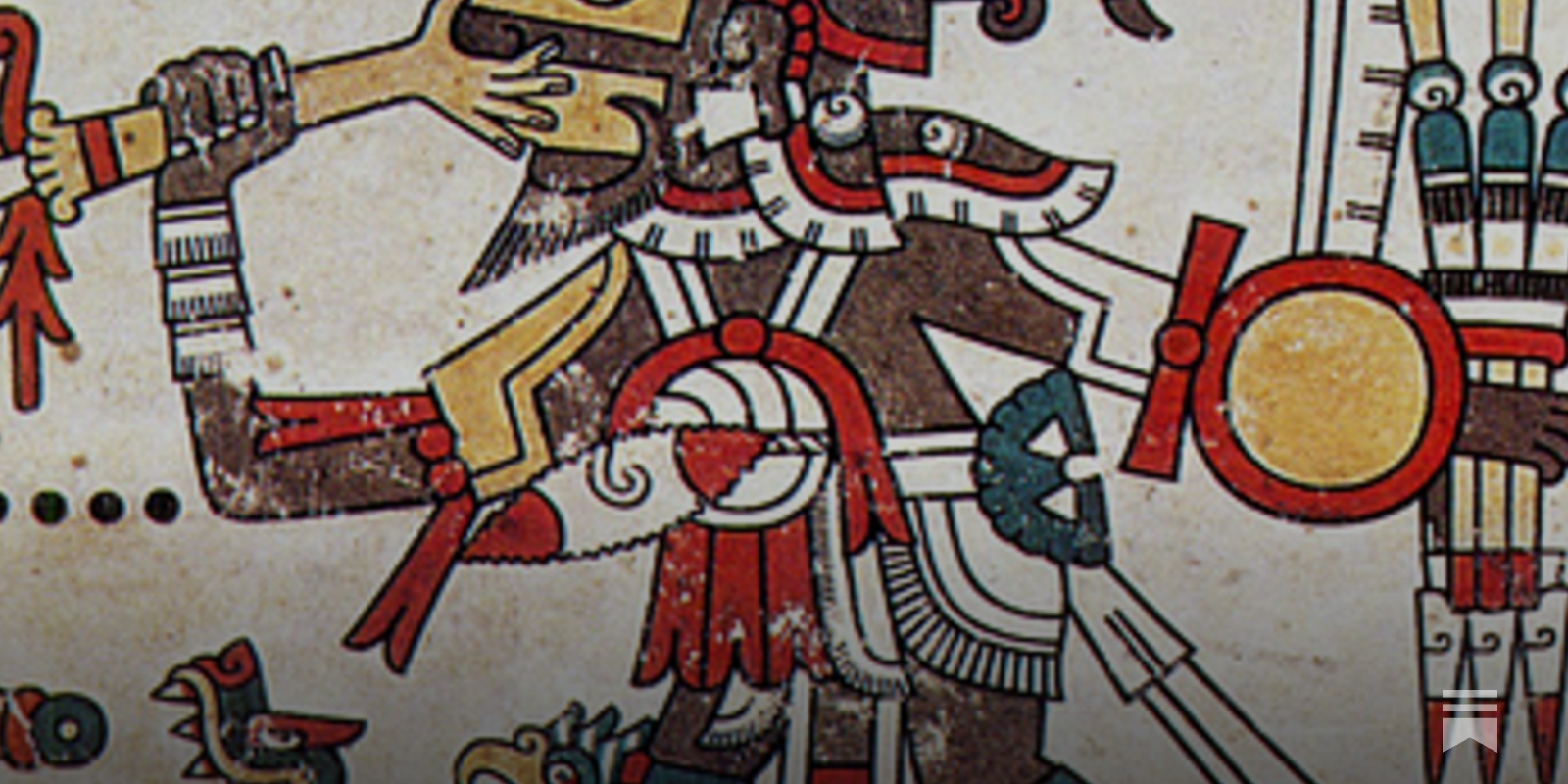
REVIEW: Aztecs, by Inga Clendinnen
Aztecs: An Interpretation, Inga Clendinnen (Cambridge University Press, 1991).

Sacralizing Dominion: The Doctrine of Christian Discovery and the Religious Nationalist Imagination
White Christian nationalism presents itself as restoration—of a Christian nation, a moral order, a rightful hierarchy. This article argues that what it restores is the world-making rhetoric of the Doctrine of Christian Discovery (DoCD). Reading the fifteenth-century papal bulls, their sedimentation into United States law, culture, religion, and contemporary dominionist discourse as a single rhetorical formation, we show that the bulls’ vocabulary of discovery, vacancy, and civilization did not describe a world but constituted one: a moral-legal order in which Christian identity conferred sovereignty and racialized peoples appeared as obstacles to salvation and property. That order persists as hegemonic common sense, carried by legal precedent, curricula, and popular culture, and it is re-performed today in the territorial rhetoric of the New Apostolic Reformation and white Christian nationalism. Following Steven T. Newcomb (Shawnee/Lenape), repudiating the doctrine’s documents without dismantling its embeddedness within language and cognition leaves religious nationalism’s deepest resource intact. Against the discovery template, we set three counter-rhetorics—Indigenous theologies, Black theology, and womanism—and argue that desanctifying dominion requires conciliation, not reconciliation.

Here Where We Live is Our Country Book — Molly Crabapple
The dramatic story of the Jewish Bund—a revolutionary movement from a vanished world—and its radical vision of solidarity in an age of division.
