


«Тогда» — культурологический проект о 1920—1930-х годах.
Брендинговое агентство Супрематика
Брендинг, коммуникация, диджитал проекты и реклама: 200+ наград и премий / 500+ проектов / 15 лет на рынке.

Лукоморье - посуда ручной работы по мотивам русских сказок
Красивая посуда с ручной росписью, ювелирные украшения, декор для дома. Купить керамику с доставкой по всей России.

Мы продолжаем восстанавливать Яндекс Пэй | Сайт для Инвесторов | Яндекс
Сайт для частных инвесторов Яндекса содержит информацию про бизнесы и технологии компании, а также географию присутствия, финансовые результаты, важные новости и многое другое о компании и её рынках.

Ветеринар на дом в СПб — вызов врача, выезд от 30 минут | Ветуслуги
Вызов ветеринара на дом в СПб круглосуточно: осмотр, прививки, УЗИ, анализы, операции — у вас дома. Фикс. прайс, приезд от 30 минут по 18 районам и пригородам.

Школа дизайна НИУ ВШЭ — профессиональное цифровое портфолио для студентов
Школа дизайна НИУ ВШЭ — это цифровая экосистема: портфолио студентов и выпускников, конкурсы и курсы.

Как «Яндекс» стал новой жертвой ВСУ, сколько Россия потратит на блокировки и к какой катастрофе готовятся лидеры ИИ-гонки
После складов Wildberries и Ozon новой мишенью украинских дронов на этой неделе стали дата-центры «Яндекса». За две ночи ВСУ уничтожили или серьезно вывели из

Статус компонентов платформы Yandex Cloud - Сервисы
Статус работы сервисов платформы, история событий и подробные отчеты об инцидентах.

Удари по датацентрах "Яндекса" зменшили активність ботів у соцмережах – Зеленський
Президент заявив, що в соцмережах стало менше розбрату і ненависті після ударів по інфраструктурі російської ІТ-компанії

Imperialism, the Highest Stage of Capitalism
[1] Written in Zurich in January-June 1916. Lenin began to take note of new developments in capitalism long before the outbreak of the First World War. In several of his writings from 1895 to 1913—”Draft and Explanation of a Programme for the Social-Democratic Party” (1895-96); “The War in China” (1900); “The Lessons of the Crisis” (1901), “Review of Home Affairs” (1901); “Concentration of Production in Russia” (1912); “The Growth of Capitalist Wealth” (1913) “Backward Europe and Advanced Asia” (1913); “The Historical Destiny of the Doctrine of Karl Marx” (1913); “Concerning Certain Speeches by Workers’ Deputies” (1912), and others—Lenin pointed out and analysed some characteristic aspects of the imperialist epoch— the concentration of production and the growth of monopoly; the export of capital; the struggle for new markets and spheres of influence; the internationalisation of economic relations; the parasitism and decay of capitalism; the growth of contradictions between labour and capital and the sharpening of the class struggle; and the creation of the material conditions for the transition to socialism. He devoted special attention to exposing predatory colonial policy, the fight for a division and redivision of the world, and the preparation of imperialist wars of aggrandisement. In his article, “Marxism and Revisionism”, written in 1908, he came out against the attempts to revise Marxism and undermine it from inside under the pretext of amending and correcting the theory in particular, Marx’s theory of crises. Lenin wrote: ‘The forms, the sequence, the picture of particular crises changed, but crises remained an inevitable component of the capitalist system. While uniting production, the cartels and trusts at the same time and in a way that was obvious to all, aggravated the anarchy of production, the insecurity of existence of the proletariat and the oppression of capital, thereby intensifying class antagonisms to an unprecedented degree. That capitalism is heading for a breakdown—in the sense both of individual political and economic crises and of the complete collapse of the entire capitalist system— has been made particularly clear, and on a particularly large scale, precisely by the new giant trusts” (see present edition, Vol. 15, pp. 35-36). Lenin kept abreast of all the latest writings on capitalism, as will be seen from his review of Hobson’s The Evolution of Modern Capitalism. In August 1904, Lenin began a translation of Hobson’s Imperialism, the manuscript of which has not yet been found. It was on the outbreak of the First World War that Lenin undertook a comprehensive study of the monopoly stage of capitalist development This was required by the working-class revolutionary struggle in Russia and other capitalist countries. In order to provide correct leadership for the revolutionary movement and combat the ideology of imperialist reaction and the reformist policy of conciliation with imperialists, it was necessary to see one’s way in the key economic question without a study of which there was no understanding of the assessment of modern war or modern politics, namely: the economic essence of imperialism”. Lenin must have started his close study of the writings on imperialism in mid-1915, when he was in Berne, for his first indexes of literature, plans, extracts, notes and summaries date to that period. The preparatory materials for Imperialism, the Highest Stage of Capitalism (Notebooks on Imperialism) make up about 800 printed pages. They contain extracts from 148 books (including 106 in German, 23 in French, 17 in English, and 2 translations into Russian), and 232 articles (of them 206 in German, 13 in French, and 3 in English) from 49 periodicals (34 German, 7 French and 8 English). In early January 1916, Lenin accepted an order for a book on imperialism from the legal Parus Publishers, founded in Petrograd in December 1915. Lenin wrote to Maxim Gorky on December 29, 1915 (January 11, 1916): “I am getting down to the writing of a pamphlet on imperialism” (see present edition, Vol. 35). In the early part of February 1916, he left Berne for Zurich, where he continued to collect and work on materials on imperialism. He worked at the Zurich Cantonal Library and ordered books from other towns. On June 19 (July 2), 1916 Lenin wrote to M. N. Pokrovsky, who was then living in France and editing for Parus a series of pamphlets about West-European countries during the First World War: “Today, I sent you a manuscript by registered mail” (see present edition, Vol. 35). The manuscript, which was mailed with the letter, did not reach Pokrovsky, and another copy had to be sent. Besides, the publishers suggested that the finished manuscript should be shortened from eighty to fifty pages, but Lenin objected because “it is absolutely impossible to cut it down once again and squeeze it into fifty pages” (ibid.). When the book reached the publishers, Menshevik elements among the management deleted from the book parts sharply criticising Kautsky and Martov, and made corrections in the text which not only distorted Lenin’s style but also his ideas. Thus, Lenin’s terms pererastaniye (capitalism growing into imperialism) was altered to prevrashcheniye (transformation); reaktstonny kharakter (reactionary nature of the theory of ultra-imperialism) to otstaly kharakter (backward character), etc. In mid-1917, the book was published under the title Imperialism, the Latest Stage of Capitalism(A Popular Outline) with a preface by Lenin, dated April 26, 1917.
На границе могут сделать полную копию вашего телефона — и точечная чистка переписок в этом случае не поможет. А что поможет? Исчерпывающая инструкция «Медузы» для всех, кто едет в Россию — Meduza
Все чаще россияне, живущие за рубежом и приезжающие в страну временно, рассказывают о психологическом давлении и проверках телефонов на границе РФ. Последнее может обернуться куда более серьезными проблемами, чем лишние часы дороги, — вплоть до уголовного дела и лишения свободы. Понять, чем рискуете лично вы и как именно стоит готовить технику к поездке, бывает непросто: в интернете много разрозненных советов. Поэтому вместе с юристом и специалистом по кибербезопасности мы подготовили подробную инструкцию, отвечающую на основные вопросы по этой теме. Правда ли, что у сотрудников ФСБ есть специальная машина, способная найти в вашем устройстве что угодно? Имеете ли вы право не разблокировать телефон — и есть ли в этом смысл? И какая стратегия подготовки в конце концов наиболее эффективна?

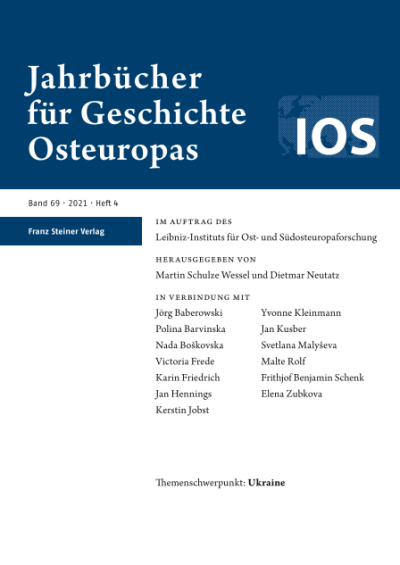
Sollte der Krieg Russlands gegen die Ukraine die Epistemologie der Osteuropäischen Geschichte verändern und wenn ja, wie?
The short article argues for revitalizing historical research to questions of the longue durée and, in analogy to the New Imperial History, considers the emergence of a New National History possible. Above all, the article calls for a continued decolonialisation of Russian history and, in this context, also for a strengthening of the Ukraine and Belarus focus in research, teaching and language mediation as well as in the form of a German Historical Institute in Kyiv.
Полный фильм по книге "В объятиях Дракулы". Эрнст Мулдашев.
antifilter.download
Роскомнадзор в своей непрестанной заботе о благополучии граждан Российской Федерации ведет несколько списков ресурсов, на которые гражданам ходить нельзя. К сожалению, из-за нехватки сил, вызванной думами о будущем России, они не могут донести содержимое этого списка до каждого гражданина Российской Федерации.
Рыбарь
📝О борьбе с «народным ВПК»📝 Про рухнувшие с дуба идеи Раз за разом в Сети можно увидеть предложения по наведению порядка в области «народного ВПК» вплоть до его фактической ликвидации. Подается все это с посылом необходимости борьбы с террористической угрозой в России. Дескать, ненормально, что производством FPV-дронов занимаются какие-то там непонятные частники, чего советское время даже представить нельзя было! Поэтому сферу нужно срочно национализировать, дабы не оставалась она вне контроля государства! 🖍Вот только авторы подобных инициатив, по всей видимости, несколько отстали от реальности и не в курсе, что «народный ВПК» с 2023 года прошел уже несколько стадий эволюции, один из результатов которой — как раз интеграция в систему. 🚩 Да-да, десятки тысяч FPV-дронов для фронта сегодня создают, поставляют и распределяют в войсках не без надзора государства — для нынешних объемов выпуска иначе сложно. Спрашивается, что и зачем в таких условиях нужно национализировать? ❗️Сюр еще и в том, что сейчас по всему миру, наоборот, говорят о важности частных предприятий в создании военной продукции из-за бóльшей гибкости. То есть пока там предлагают перенимать опыт СВО, у нас кто-то предлагает выстрелить в ногу, от него отказавшись. А если уж так хочется порядка, то не стоит ли вместо идей «национализаций» подумать о совершенствовании механизмов, позволяющих инициативным лицам легально присоединяться к производству БЛА? Это сразу снимет вопросы, кто делает их для фронта, а кто — для иных подозрительных целей. #БЛА #промышленность #Россия ⭐️@rybar 💸Поддержать нас