

We're building a national movement for urban trees and tree equity, creating greener, healthier, more resilient cities.
TreeKIT: Measuring, Mapping, and Collaboratively Managing Urban Forests
As cities across the United States expand their stock of street trees to address a range of environmental sustainability goals, municipal foresters are increasingly turning to volunteers to supplement their tree care efforts. TreeKIT is a small non-profit organization that helps city dwellers collaboratively measure, map, and manage urban forests. Using TreeKIT’s mapping methods, volunteers are able to create spatially accurate inventories of street trees. In the process, volunteers learn to identify street trees and develop an effective appreciation for their local urban forest. The following article describes the TreeKIT mapping methods and ongoing efforts to scale these techniques for large, synchronous street tree census initiatives.
Urban problems: nature-based solutions and a Green New Deal everywhere
Nature-based Solutions with localised Green New Deals could save our settlements, and provide a just transition to a low-carbon society

What if our cities were designed for wildlife as well as people?
New research argues urban planning must recognise animals, plants and ecosystems as fellow inhabitants of our cities.

A City for Children — Oakland Public Library
A City for Children — Gutman, Marta, — American cities are constantly being built and rebuilt, resulting in ever-changing skylines and neighborhoods. While the dynamic urban landscapes of New York, Boston, and Chicago have been widely studied, there is much to be gleaned from West Coast cities, especially in California, where the migration boom at the end of the nineteenth century permanently changed the urban fabric of these newly diverse, plural metropolises. In A City for Children Marta Gutman focuses on the use and reuse of everyday buildings in Oakland, California, to make the city a better place for children. She introduces us to the women who were determined to mitigate the burdens placed on working-class families by an indifferent industrial capitalist economy. Often without the financial means to build from scratch, women did not tend to conceive of urban land as a blank slate to be wiped clean for development. Gutman shows how, over and over, women instead turned private houses and even a saloon in Oakland into orphanages, kindergartens, settlement houses, and day care centers, and in the process built the charitable landscape--a network of places that was critical for the betterment of children, families, and public life. The industrial landscape of Oakland, riddled with the effects of social inequality and racial prejudice, is not a neutral backdrop in Gutman's story but an active player. Spanning one hundred years of history, A City for Children provides a compelling model for building urban institutions, and it demonstrates that children, women, charity, and reform, along with incremental construction, renovations, alterations, additions, and repurposed structures, are central to the understanding of modern cities.
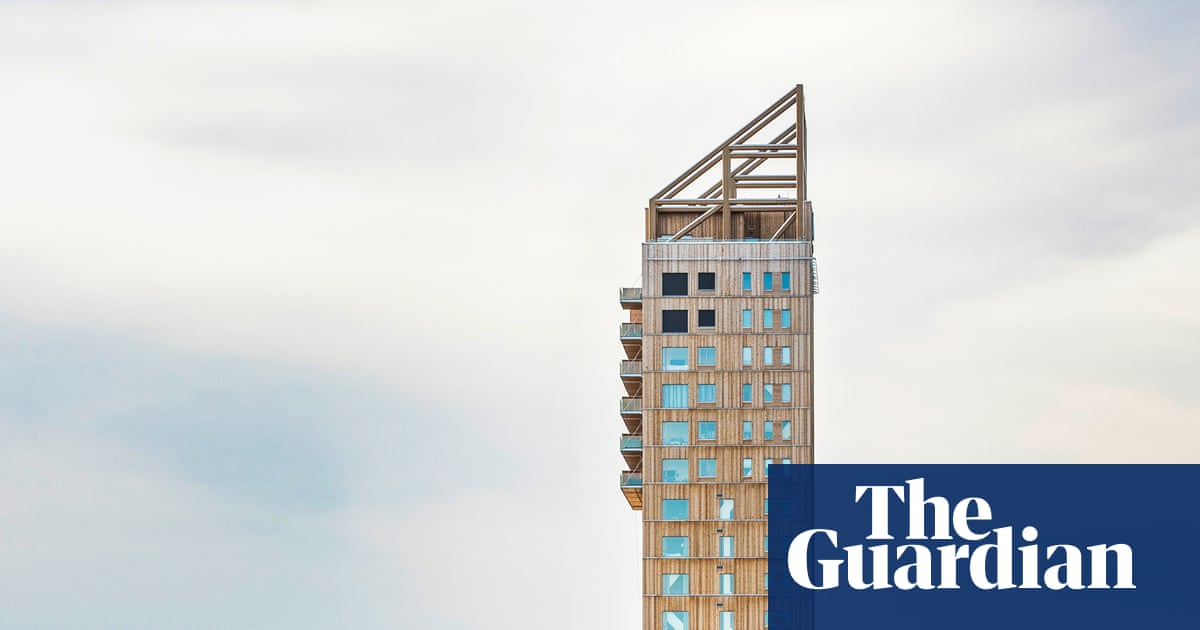
The flat-pack skyscraper: how wood can shape the cities of the future
The long read: Our buildings are monuments to extraction and extreme emissions. But what if we turned from destructive concrete to timber?
Protect our Living Legends - Woodland Trust
Many of our oldest and most special trees are not legally protected. Urge Government to change the law and prevent further tragedy.
Autonomous Forest | LAS Art Foundation
Autonomous Forest is a living work of art and a new techno-legal entity that reimagines ecological regeneration
A City Is Not a Computer: Other Urban Intelligences
<strong>A bold reassessment of "smart cities" that reveals what is lost when we conceive of our urban spaces as computers</strong> Computational models of urbanism—smart cities that use data-driven planning and algorithmic administration—promise to deliver new urban efficiencies and conveniences. Yet these models limit our understanding of what we can know about a city. <i>A City Is Not a Computer</i> reveals how cities encompass myriad forms of local and indigenous intelligences and knowledge institutions, arguing that these resources are a vital supplement and corrective to increasingly prevalent algorithmic models. Shannon Mattern begins by examining the ethical and ontological implications of urban technologies and computational models, discussing how they shape and in many cases profoundly limit our engagement with cities. She looks at the methods and underlying assumptions of data-driven urbanism, and demonstrates how the "city-as-computer" metaphor, which undergirds much of today's urban policy and design, reduces place-based knowledge to information processing. Mattern then imagines how we might sustain institutions and infrastructures that constitute more diverse, open, inclusive urban forms. She shows how the public library functions as a steward of urban intelligence, and describes the scales of upkeep needed to sustain a city's many moving parts, from spinning hard drives to bridge repairs. Incorporating insights from urban studies, data science, and media and information studies, <i>A City Is Not a Computer</i> offers a visionary new approach to urban planning and design.
Quebec town recognizes trees as living beings with rights | CBC News
A small town west of Montreal has decided to officially recognize trees as living beings with rights of their own, in what an environmental organization describes as a first in Quebec and Canada.

Canopy | The UK umbrella group of tree campaigners
Canopy is the national coalition of grassroots tree campaigners and campaign groups. By coming together we can have a louder voice in the fight to save our trees and green spaces.

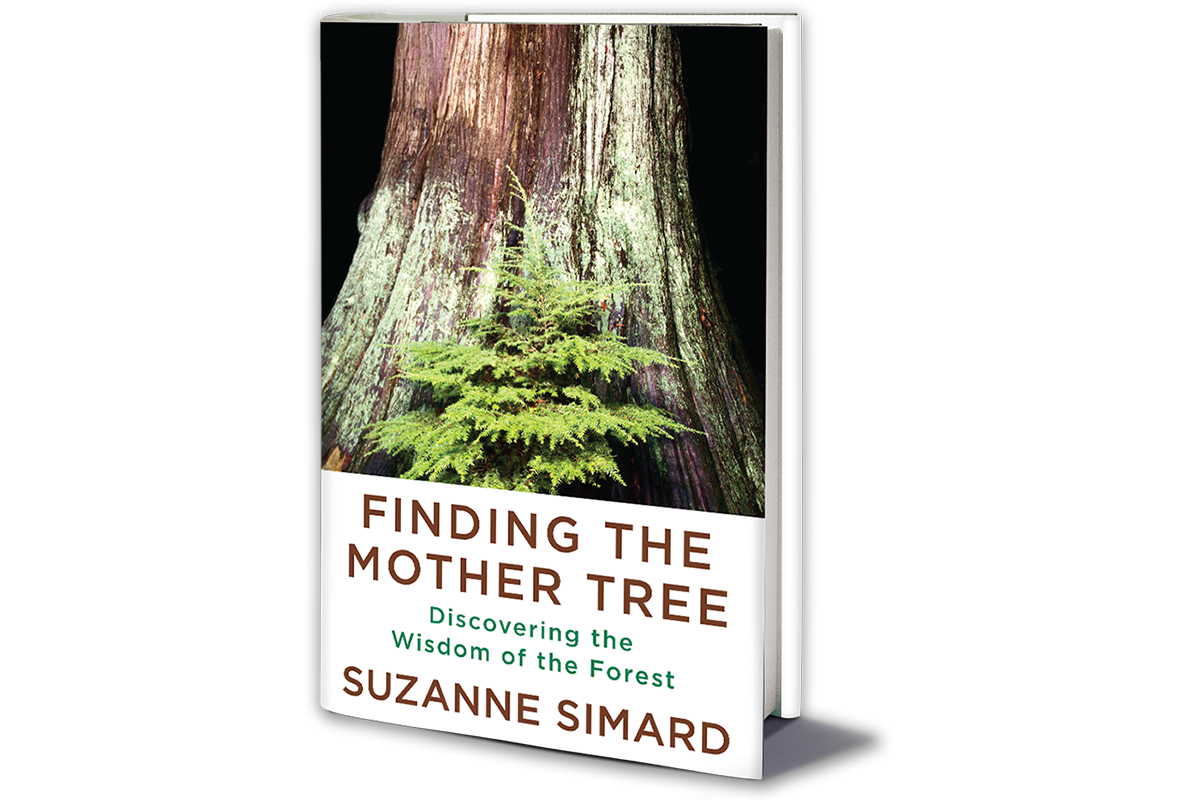
Finding the Mother Tree by Suzanne Simard
The upcoming book from Suzanne Simard, the world’s leading forest ecologist who forever changed how people view trees and their connections to one another.
Nate on Twitter / X
OSTP just released 'Science: A New Golden Age' — 72 pages modeled on Vannevar Bush's 1945 report. I read the whole thing. It's remarkably good.The sharpest insight is on page 60. AI could do to science what fire suppression did to forests: make each individual tree safer while…— Nate (@NateWBradford) July 21, 2026
Public trees
The public tree dataset includes a listing of public trees on boulevards and public trees in parks, in the City of Vancouver and provides data on tree coordinates, species and other related characteristics. Private trees are not included in the inventory.Tree records that do not have coordinates data will not show up in the list. Data currencyThe dataset refreshes daily on weekdays. Tree attributes are updated on a regular basis but it may be several years between updates for some attributes. Priorities and resources determine how fast a change in reality is reflected in the data. The coordinates were originally provided by the 2016 Geospatial Data for City of Vancouver Street Trees project. Data accuracyTree attributes are updated on a regular basis but it may be several years for some attributes. Note: 0 value in latitude and longitude fields mean there is no related information available Websites for further informationStreet Tree BylawCity trees

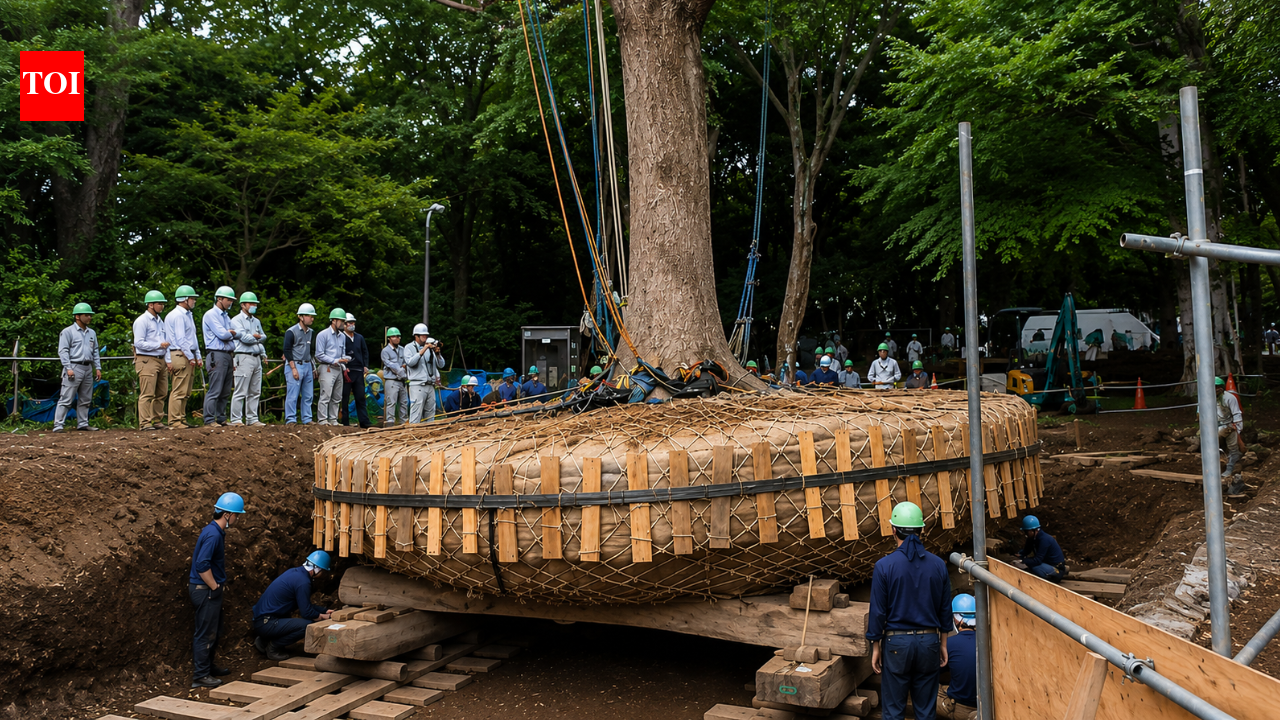
Japan does not cut down centuries-old trees for development. Instead, experts spend months preparing their roots and relocating them
When roads, railways or new buildings are planned, centuries-old trees are often among the first casualties of development. In Japan, however, some of the country's most valuable trees are given a second chance.
"we're building rainforests, not skyscrapers" diverse ecosystems with lots of different life forms and symbiotic relationships and growth! @schlage.town got me feeling hopeful, talking about building an Atmospheric (sub) stack
