


I talked to 20 mathematicians about rapid AI progress in their field.
Can AI replace mathematicians? Vienna researchers weigh in
In September, OpenAI announced that some 10,000 AI agents partially 'solved' the Navier–Stokes problem, one of the most prestigious open challenges in mathematics. University of Vienna mathematicians Nathanaël Berestycki and Vera Fischer agree that the field will never be the same, but argue that maths is far more than producing proofs at speed.

I’ll write romance novels if AI solves all maths, Chinese Fields winner jokes
As AI models prove they can push the boundaries, mathematicians are grappling with the threat that they could become obsolete.

The AI Revolution in Math Has Arrived | Quanta Magazine
AI is being used to prove new results at a rapid pace. Mathematicians think this is just the beginning.
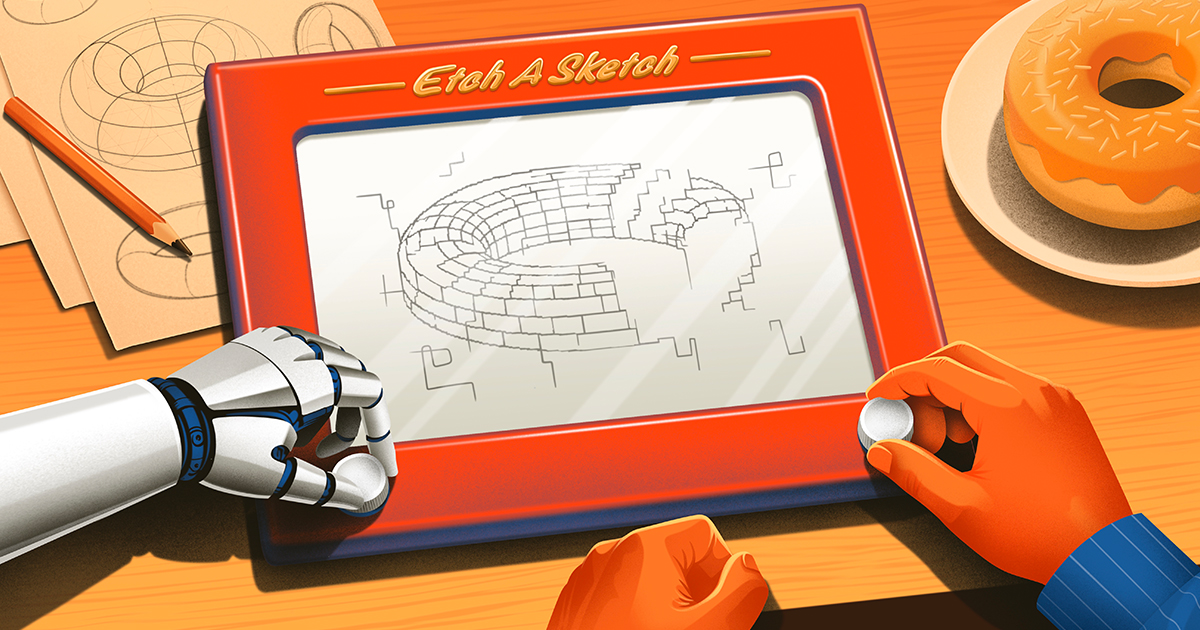
Is AI the End of Math As We Know It? | Quanta Magazine
Mathematicians are facing the sudden shift with grief, anger, and a desperate search for fresh ideas: “If we don’t adapt, there’s just no more math in 50 years.”
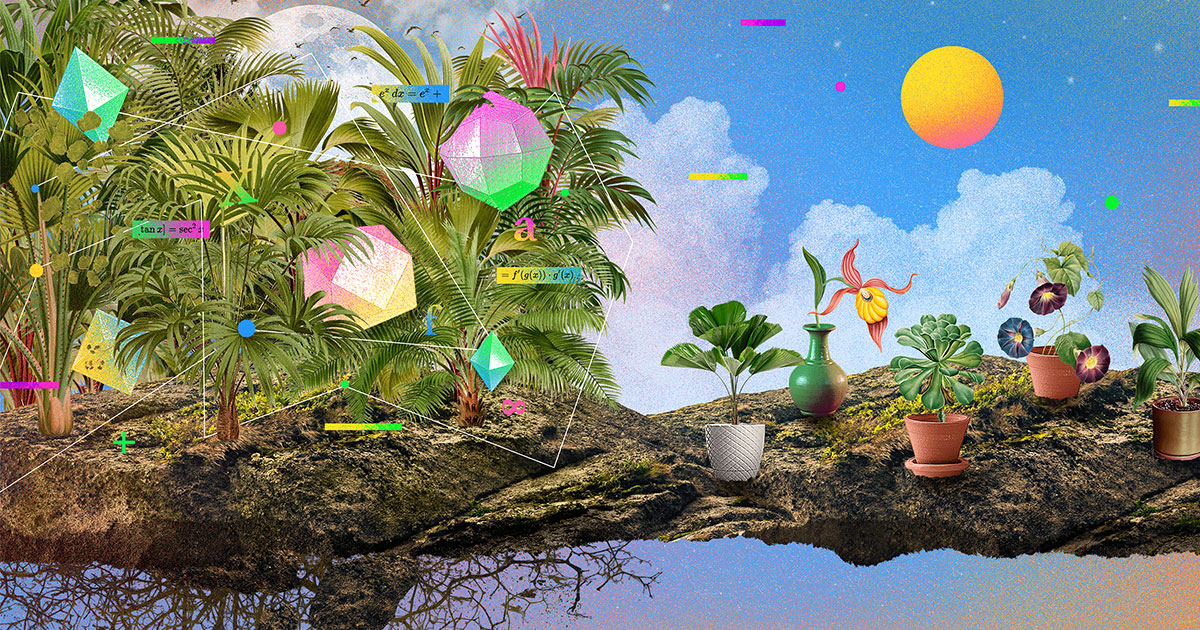
Early science acceleration experiments with GPT-5
AI models like GPT-5 are an increasingly valuable tool for scientists, but many remain unaware of the capabilities of frontier AI. We present a collection of short case studies in which GPT-5 produced new, concrete steps in ongoing research across mathematics, physics, astronomy, computer science, biology, and materials science. In these examples, the authors highlight how AI accelerated their work, and where it fell short; where expert time was saved, and where human input was still key. We document the interactions of the human authors with GPT-5, as guiding examples of fruitful collaboration with AI. Of note, this paper includes four new results in mathematics (carefully verified by the human authors), underscoring how GPT-5 can help human mathematicians settle previously unsolved problems. These contributions are modest in scope but profound in implication, given the rate at which frontier AI is progressing.

AI co-mathematician: Accelerating mathematicians with agentic AI
We introduce the AI co-mathematician, a workbench for mathematicians to interactively leverage AI agents to pursue open-ended research. The AI co-mathematician is optimized to provide holistic support for the exploratory and iterative reality of mathematical workflows, including ideation, literature search, computational exploration, theorem proving and theory building. By providing an asynchronous, stateful workspace that manages uncertainty, refines user intent, tracks failed hypotheses, and outputs native mathematical artifacts, the system mirrors human collaborative workflows. In early tests, the AI co-mathematician helped researchers solve open problems, identify new research directions, and uncover overlooked literature references. Besides demonstrating a highly interactive paradigm for AI-assisted mathematical discovery, the AI co-mathematician also achieves state of the art results on hard problem-solving benchmarks, including scoring 48% on FrontierMath Tier 4, a new high score among all AI systems evaluated.
What it Means to Be a Mathematician When AI Does the Math
Researchers debate motivation, purpose, and the field’s future

I expect rapid progress but not towards general superintelligence
I’ve often been surprised when I hear from top researchers in industry that they think AI will be better than them at their job in a few years, and I didn’t really know why I doubted it.
Mathematics in the age of AI
An essay, based on a public lecture delivered at the 2026 International Congress of Mathematicians, on how the mathematical community might respond to the arrival of artificial intelligence tools that are capable of performing research-level mathematical tasks. Rather than debating the capabilities of such tools, we condition on the hypothesis that these capabilities will arrive, and examine instead a question that is orthogonal to it: what the goals and values of mathematical research actually are. The problem-solving component of mathematics is used as a case study.
Terence Tao – Kepler, Newton, and the true nature of mathematical discovery
“And what those stories teach us about how AI will revolutionize math”
AI That Evolves in the Wild | Edge.org
I’m interested not in domesticated AI—the stuff that people are trying to sell. I'm interested in wild AI—AI that evolves in the wild. I’m a naturalist, so that’s the interesting thing to me. Thirty-four years ago there was a meeting just like this in which Stanislaw Ulam said to everybody in the room—they’re all mathematicians—"What makes you so sure that mathematical logic corresponds to the way we think?" It’s a higher-level symptom. It’s not how the brain works. All those guys knew fully well that the brain was not fundamentally logical.
Daron Acemoglu on Twitter / X
I recommend Columbia mathematician Michael Harris’s wide-ranging, informative and thought-provoking essay in Boston Review on AI and mathematics:https://t.co/txwAd8ri4xHarris rightly worries about the possible negative effects of AI-generated proofs and mathematics on…— Daron Acemoglu (@DAcemogluMIT) June 16, 2026
The fall of the theorem economy
How AI could destroy mathematics and barely touch it
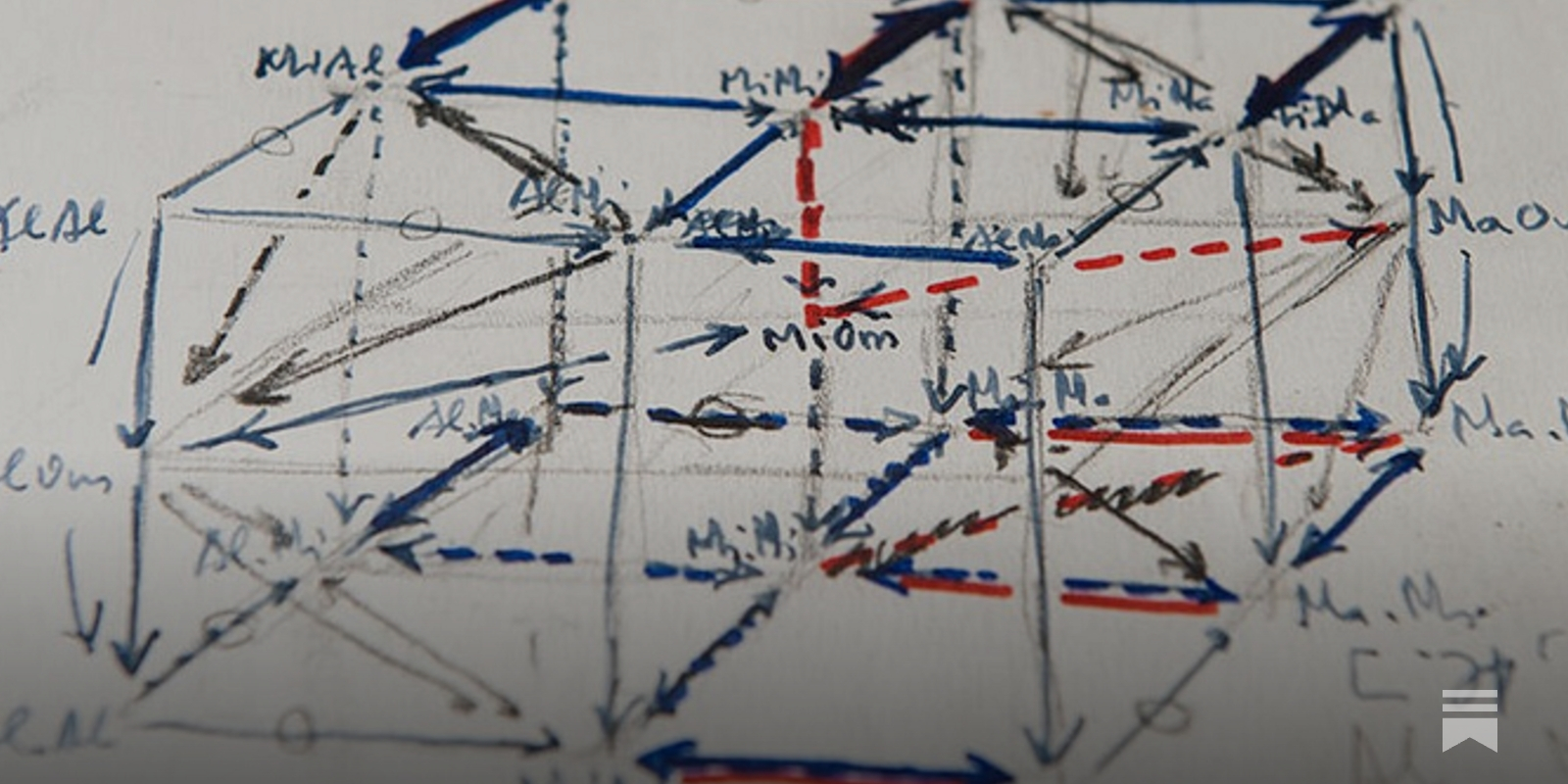
The fall of the theorem economy
How AI could destroy mathematics and barely touch it
No. 008: AI co-mathematician, compiler-verified protocols, open infrastructure bets - The Hallway Track
The Hallway Track No. 008 - How AI is affecting the practice of science
A Severe Misalignment of AI in Mathematics
I am proud to be among the list of 25 initial signatories — all Fields Medallists — to the declaration below, which grew out of discussions between ourselves over the last week. We have…
