


The Real AI Risk is to Culture Itself
The stupidity of AI
The long read: Artificial intelligence in its current form is based on the wholesale appropriation of existing culture, and the notion that it is actually intelligent could be actively dangerous
Loss of control - Problem profile
Why do we think that reducing risks from AI is one of the most pressing issues of our time?
Who decides when AI is too dangerous?
Anthropic asked for AI regulation, but not like this.

On the Death of Amazon’s Writing Culture
How AI has turned what was once a superpower into a liability.

Rescuing Democracy From The Quiet Rule Of AI
Our gravest AI risk isn’t runaway superintelligence but our cultural readiness to surrender collective judgment to algorithmic systems.

The AI Preference Cascade Reaches Farther
Those who know keep warning us about AI risks.
Counterarguments to the basic AI x-risk case
Sixteen weaknesses in the classic argument for AI risk.

AI FOR EPISTEMICS & COORDINATION
Civilization and technology have radically improved the human condition. Nonetheless, the world sometimes goes in directions which essentially nobody would prefer — e.g., nuclear arms races, unexpected financial crashes, predatory marketing, or ubiquitous political misinformation.

Trusting your own judgement on ‘AI’ is a huge risk
Writing at the end of the world, from Hveragerði, Iceland
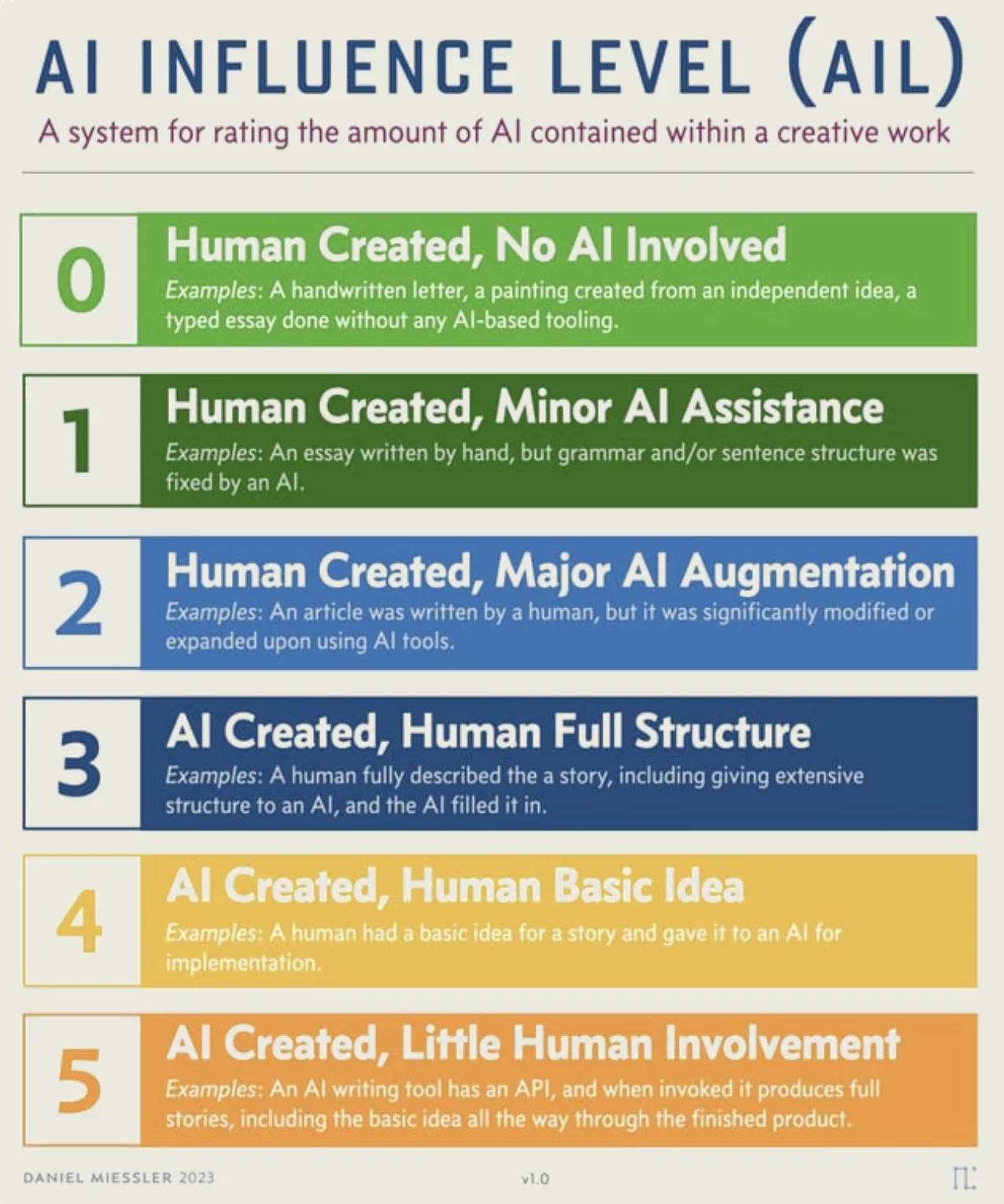
AI Influence Level (AIL) v1.0
Humans care who created things. Especially art. They especially care when the origin is in question, and more again when the origin might not be human. AI is yi
The real AI risk is inside the labs - <antirez>

The ecology of AI risk
Understanding the risk from applications of artificial intelligence (AI) is a critical part of creating AI governance strategies. Building on the idea of studying AI using ecological and evolutionary perspectives, we propose a novel approach for assessing risk from AI using indicators derived from theoretical ecology models. We illustrate our methods by deriving 3 indicators from population and ecosystem models originating from theoretical ecology. We conclude with a discussion of limitations of our analysis and considerations for improving AI governance policy.
Our minds aren’t equipped to handle AI
AI is junk food for the mind: easy, tempting and ultimately very bad for you.

People know AI is risky. They just don’t know what to do about it. | TrendLife Blog
New international research from TrendLife reveals a wide gap between AI adoption and awareness of AI-powered threats.