


Regular cannabis use has harmful effects regardless of the age a person starts using, a University of Queensland-led study has found.
Reefer Madness or Pot Paradise? The Surprising Legacy of the Place Where Legal Weed Began (Published 2019)
Colorado’s first-in-the-nation experiment with legalized marijuana has infused the drug into almost every corner of life.

In Colo., a look at life after marijuana legalization - The Boston Globe
In November, Massachusetts voters are likely to consider a ballot question legalizing recreational marijuana.

The Global Decline in the Mental Health of the Young
One of the major findings in wellbeing research until recently was that happiness was U-shaped by age and unhappiness hump-shaped by age. There was a midlife crisis — a finding reported in well over 600 published papers using data on 145 countries. It was present in both developing and developed countries. And it was persistent over time. The finding of a peak in ill-being in midlife was consistent with Anne Case and Angus Deaton’s work on mortality and the so-called “deaths of despair.”1 In the US in particular and to a lesser extent in other countries, White prime-aged individuals without a college degree had high death rates from suicide, drug overdoses, and cirrhosis of the liver. Drug overdose deaths in the US, for example, peaked at midlife ages. In 2023, the Centers for Disease Control and Prevention (CDC) reported that overdose death rates per 100,000 by age rose from 13.5 for 15-to-24-year-olds to 45.6 for 25-to-34-year-olds and 60.8 for 35-to-44-year-olds, and then declined to 53.3 for 45-to-54-year-olds, 49.2 for 55-to-64-year-olds, and 14.7 for those over the age of 65.2 The morbidity data matched the mortality data.

Alcohol intake and risk of incident gout in men: a prospective study
Alcohol intake is strongly associated with an increased risk of gout. This risk varies substantially according to type of alcoholic beverage: beer confers a larger risk than spirits, whereas moderate wine drinking does not increase the risk.

151 Million People Affected: New Study Reveals That Leaded Gas Permanently Damaged American Mental Health
Childhood lead exposure from leaded gasoline has caused widespread mental health issues, particularly in Generation X, highlighting the dangers of delayed environmental regulation.
Alcohol Quantity and Type on Risk of Recurrent Gout Attacks: An Internet-based Case-crossover Study
Although beer and liquor have been associated with risk of incident gout, wine has not. Yet anecdotally, wine is thought to trigger gout attacks. Further, how much alcohol intake is needed to increase the risk of gout attack is not known. We examined the quantity and type of alcohol consumed on risk of recurrent gout attacks.

Timescales of developmental toxicity impacting on research and needs for intervention
Abstract Much progress has happened in understanding developmental vulnerability to preventable environmental hazards. Along with the improved insight, the perspective has widened, and developmental toxicity now involves latent effects that can result in delayed adverse effects in adults or at old age and additional effects that can be transgenerationally transferred to future generations. Although epidemiology and toxicology to an increasing degree are exploring the adverse effects from developmental exposures in human beings, the improved documentation has resulted in little progress in protection, and few environmental chemicals are currently regulated to protect against developmental toxicity, whether it be neurotoxicity, endocrine disruption or other adverse outcome. The desire to obtain a high degree of certainty and verification of the evidence used for decision‐making must be weighed against the costs and necessary duration of research, as well as the long‐term costs to human health because of delayed protection of vulnerable early‐life stages of human development and, possibly, future generations. Although two‐generation toxicology tests may be useful for initial test purposes, other rapidly emerging tools need to be seriously considered from computational chemistry and metabolomics to CLARITY ‐ BPA ‐type designs, big data and population record linkage approaches that will allow efficient generation of new insight; epigenetic mechanisms may necessitate a set of additional regulatory tests to reveal such effects. As reflected by the Prenatal Programming and Toxicity ( PPTOX ) VI conference, the current scientific understanding and the timescales involved require an intensified approach to protect against preventable adverse health effects that can harm the next generation and generations to come. While further research is needed, the main emphasis should be on research translation and timely public health intervention to avoid serious, irreversible and perhaps transgenerational harm.

Learning What Substance Is Suspected of Causing Alzheimer’s May Throw You Into an Existential Crisis
A surprisingly common substance was found to have a causal relationship with the kind of brain damage associated with Alzheimer's disease.

10 (Not So) Hidden Dangers of Age Verification
It’s nearly the end of 2025, and half of the US and the UK now require you to upload your ID or scan your face to watch “sexual content.” A handful of states and Australia now have various
Intravenous Methylphenidate Abuse
Data are presented from a case series of 22 patients who abused methylphenidate hydrochloride (Ritalin-SR). The abuse pattern and symptoms of toxicity were similar to that seen with cocaine hydrochloride and amphetamine sulfate addiction; yet, the morbidity and mortality seen in this case series...

Does adolescence really last until age 32?
Those “turning points” in brain aging aren’t quite what you think

Acute Effects of Coffee Consumption on Health among Ambulatory Adults
Coffee is one of the most commonly consumed beverages in the world, but the acute health effects of coffee consumption remain uncertain. We conducted a prospective, randomized, case-crossover trial...

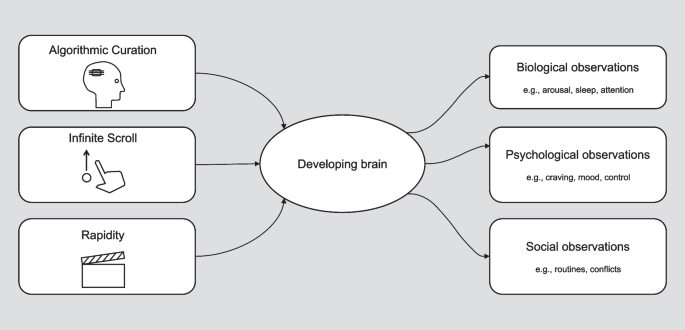
Taming the endless scroll? Short-form videos, digital routines and neurocognitive outcomes in youth
Short-form videos (SFVs) deliver digital content in a way that sets them apart from other media. Concerns have arisen that such user interfaces may diminish attention, memory and emotional wellbeing in young people, yet evidence has not previously been synthesised for this demographic and in isolation from other media types. To assess the association between exposure to SFV-interfaces and neurocognitive outcomes in individuals aged $$\varvec{\le 25}$$years, and to appraise the certainty of this evidence. Following PRISMA and Cochrane guidelines, four databases (PubMed, PsycINFO, WoS, Cochrane Reviews) were searched (2015–2025). Of 1,498 records, 42 studies (N = 46,912; mean age = 16.8) met the PICOS criteria. Most were cross-sectional (88%), with two longitudinal, one EEG, and one MRI study. Risk of bias and quality were evaluated using GRADE. Heavy, unstructured SFV use (typically $$\varvec{\ge 4}$$h/day) was consistently associated with: small-to-moderate increases in inattention ($$\varvec{\beta \approx 0.30}$$) and impulsivity ($$\varvec{\beta \approx 0.25}$$); moderate reductions in working-memory span ($$\varvec{\beta \approx -0.75}$$) and self-regulation ($$\varvec{\beta \approx -0.45}$$); moderate elevations in anxiety ($$\varvec{\beta \approx 0.35}$$), depression ($$\varvec{\beta \approx 0.48}$$) and stress ($$\varvec{\beta \approx 0.32}$$); and a moderate-to-large surge in addiction symptoms ($$\varvec{\beta \approx 0.60}$$). Two cross-sectional imaging studies also reported associations between heavier short-video use and neurobiological measures. These included grey-matter volume differences in the orbitofrontal cortex and cerebellum, altered resting-state signal synchrony, and reduced P300 amplitudes. Protective factors included supportive environments, digital routines, and digital literacy. Consistent, albeit preliminary, evidence links excessive SFV watching to cognitive and emotional challenges in youth. Longitudinal and experimental studies are urgently needed, alongside trials of modifiable levers to reduce addiction-like use and related harms.
Increases in Serious Psychological Distress among Ontario Students between 2013 and 2017: Assessing the Impact of Time Spent on Social Media
Objective: The objective of the current research was to examine the association between time spent on social media and serious psychological distress between 2013 and 2017, a period when the rates of both were trending upward. Methods: The current study analyzed population-based data from 3 waves of the Ontario Student Drug Use and Health Survey ( N = 15,398). Multivariate logistic regression models were used to examine the association between time spent on social media and serious psychological distress controlling for theoretically relevant covariates. Interactions were tested to assess whether the association changed over time. Results: The prevalence of serious psychological distress increased from 10.9% in 2013 to 16.8% in 2017 concomitantly with substantial increases in social media usage, especially at the highest levels. In the multivariate context, we found a significant interaction between social media use and the survey year which indicates that the association between time spent on social media and psychological distress has decreased from 2013 to 2017. Conclusion: Although both social media use and psychological distress increased between 2013 and 2017, the interaction between these variables indicates that the strength of this association has decreased over time. This finding suggests that the higher rate of heavy social media use in 2017 compared to 2013 is not actually associated with the higher rate of serious psychological distress during the same time period. From a diffusion of innovation perspective, it is possible that more recent adopters of social media may be less prone to psychological distress. More research is needed to understand the complex and evolving association between social media use and psychological distress. Researchers attempting to isolate the factors associated with the recent increases in psychological distress could benefit from broadening their investigation to factors beyond time spent on social media.

Online harms research publications: December 2022
This is a selection of research reports to enhance the online harms evidence base. This research has helped improve understanding of harms experienced by adults and children, as well as how online harm can be measured.

Coffee consumption and risk of incident gout in men: A prospective study
Objective Coffee is one of the most widely consumed beverages in the world and may affect the risk of gout via various mechanisms. We prospectively evaluated the relationship between coffee intake a...
