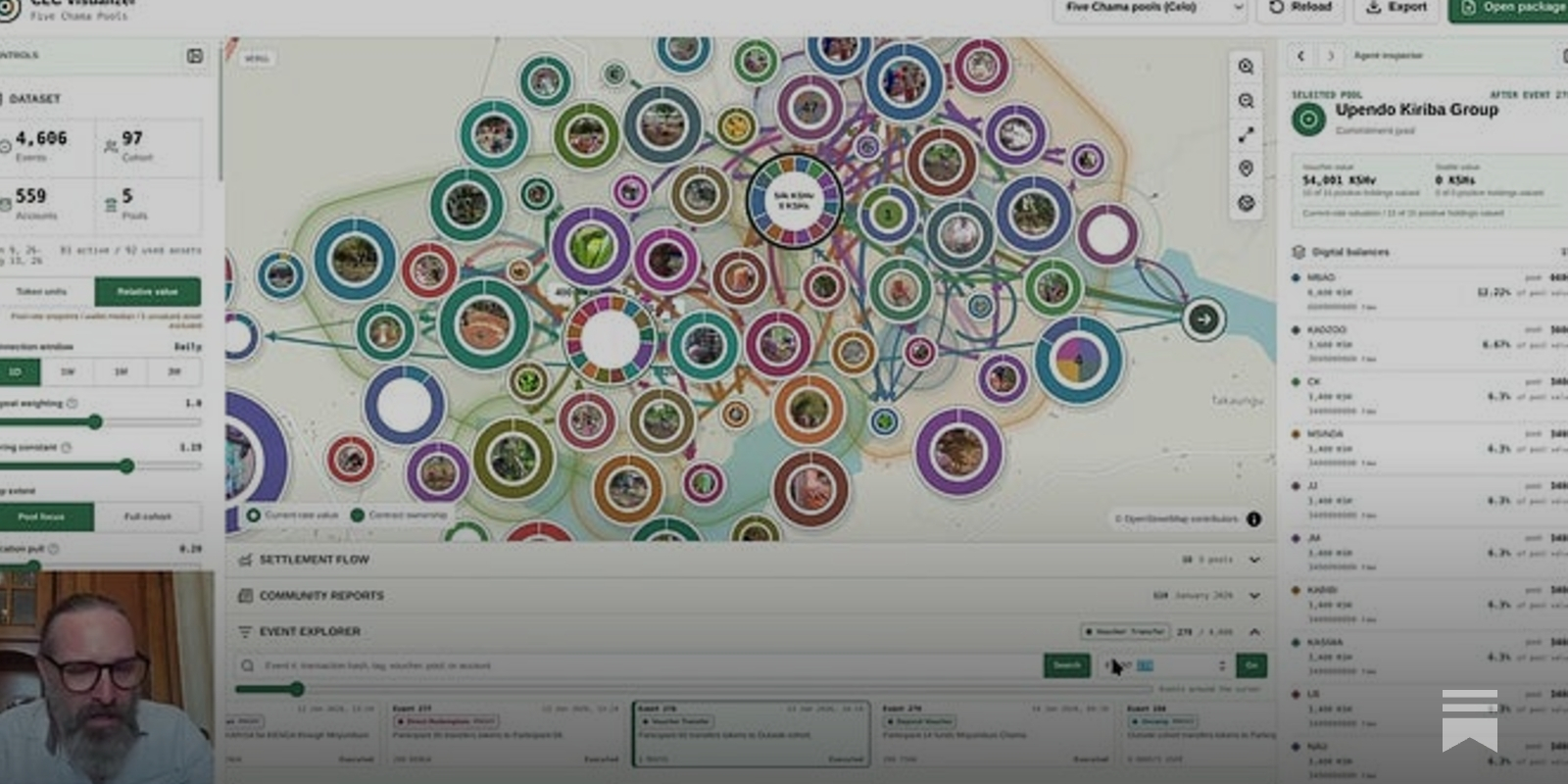
Rain Reef Prototype of the regenerative city of the future
The Corals That Shouldn’t Exist - bioGraphic
Beneath Miami’s skyscrapers, a colony of corals defies expectations—and offers insight into other undersea urban ecosystems.

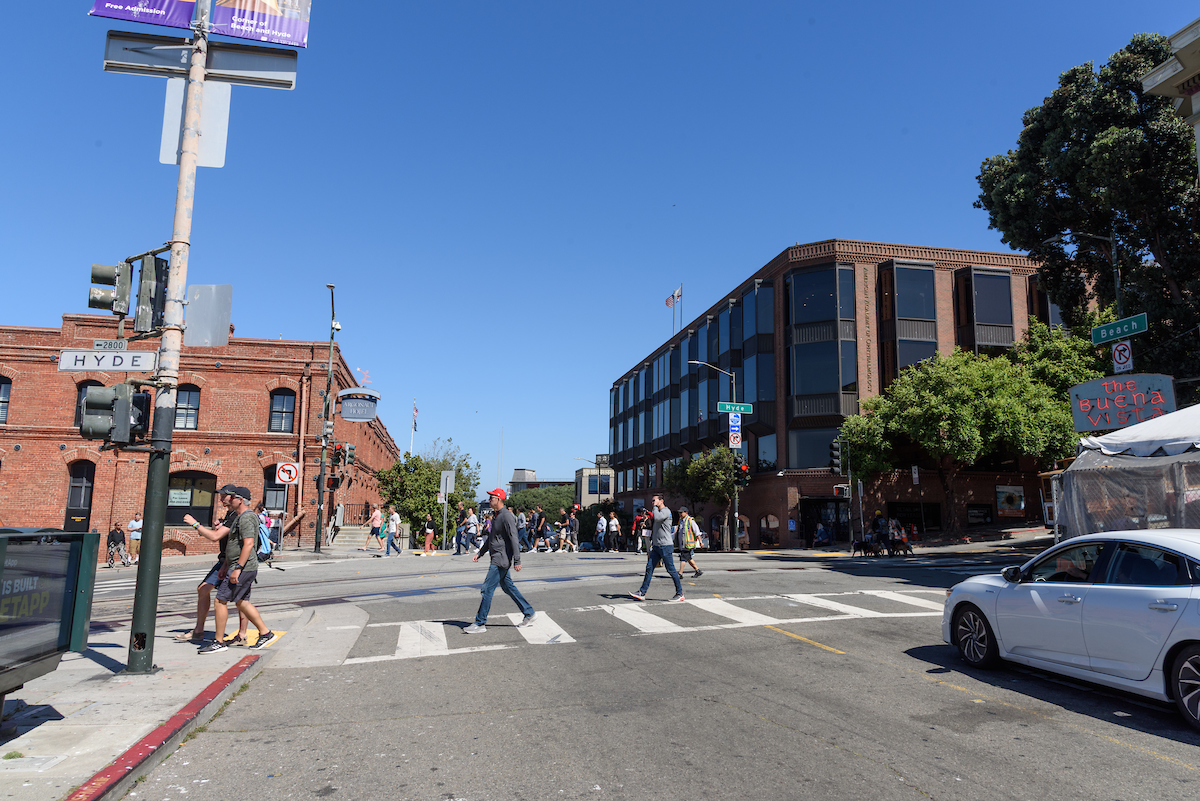
Beach Street Quick-Build Project
Construction for the Beach Street Quick-Build Project is substantially complete!What’s New
Coral Stack - Build Local-First. Encrypted. Effortless.
Coral Stack is the developer platform for building fast, privacy preserving local-first applications easily.
About Coral | Coral
We believe that AI will help create a better world, but only when we explore, learn, and build it together.

Urban problems: nature-based solutions and a Green New Deal everywhere
Nature-based Solutions with localised Green New Deals could save our settlements, and provide a just transition to a low-carbon society

Ma Earth | Collective funding for community-led regeneration
Ma Earth is a collective funding platform for community-led regeneration.

Autonomous Forest | LAS Art Foundation
Autonomous Forest is a living work of art and a new techno-legal entity that reimagines ecological regeneration
Home - Coastal Watershed Institute
Protecting marine and terrestrial ecosystems through scientific research and local community, place-based partnerships
Transformational Pathways to Sustainability Through Polycrisis
Keep up to date with our latest news, events, and other IIASA activities. Sign up.
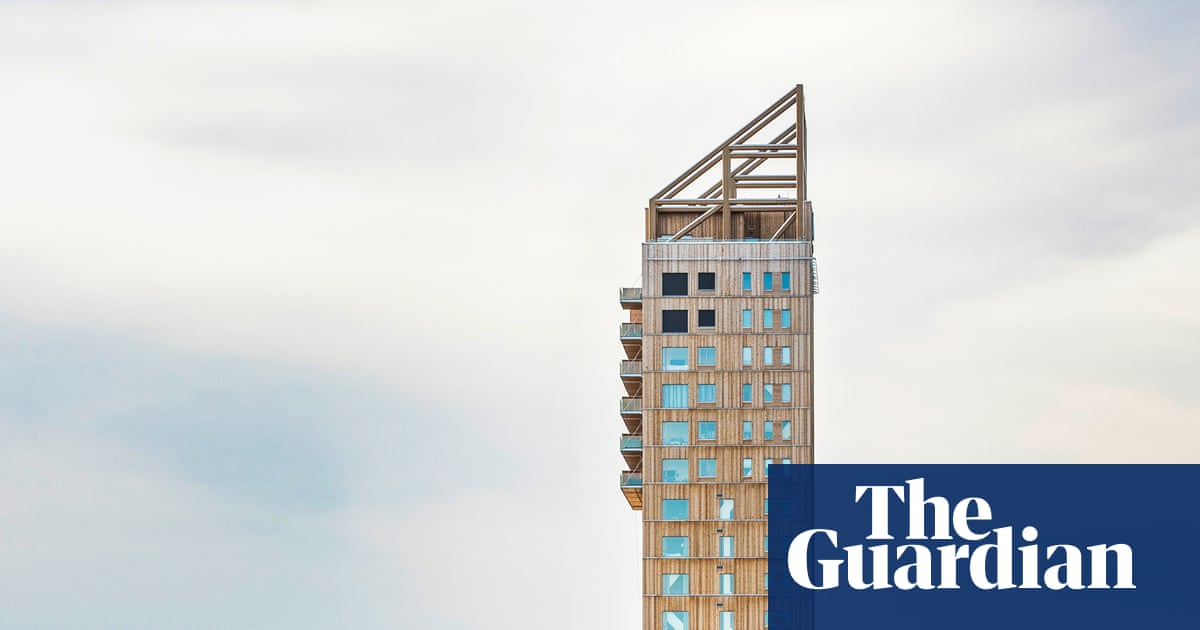
The flat-pack skyscraper: how wood can shape the cities of the future
The long read: Our buildings are monuments to extraction and extreme emissions. But what if we turned from destructive concrete to timber?
Exploring Rectangle Subdivisions
Last week, I saw a talk on Vuntra City, a procedurally generated city with a fully explorable city. Developer Larissa Davidova explained that she settled on using Recursive Subdivision for the city…

CIRCULAR ECONOMY IN CONSTRUCTION – MAXIMIZING RESOURCE EFFICIENCY AND MINIMIZING WASTE
GainForest — Fund Regenerative Impact
GainForest connects funders with nature stewards doing on-ground regenerative work. Fund verified environmental impact directly.
The case for environmentally sensitive housing
If we are serious about providing the best quality homes we must regenerate the empty built environment. Sustainability would be good too

Design for a Living Planet: Settlement, Science, & the Human Future
In this brief, accessible volume, the authors — an urban philosopher and a mathematician-physicist — explain the surprising new findings from the sciences that are beginning to transform environmental design in the modern era. Authors Michael Mehaffy and Nikos Salingaros explore fractals, networks, self-organization, dynamical systems and other revolutionary ideas, describing them to non-science readers in a direct and engaging way. The book also examines fascinating new topics of design, including Agile, Wiki, Design Patterns and other “open-source” approaches from the software world. The authors conclude that a profound transformation is under way in modern design — and today’s students and practitioners will need to be aware of its implications for our future.“Lucidly describes what’s coming in the world of design — and what needs to come.” — Ward Cunningham, Inventor of wiki, and pioneer of Pattern Languages of Programming, Agile, and Scrum“Essential reading for all urban designers.” — Jeff Speck, Author of Walkable City“Brilliant.” — Charles Montgomery, Author of Happy City“Inspired, compelling and fascinating… Recognizes that a true architecture can be dug from the facts, insights, and theories, that occur with a broadening of science to include the human being.” — Christopher Alexander, Author of A Pattern Language and Notes on the Synthesis of FormSome comments on the individual chapters:“Packed with detail and beautiful in presentation.” — Gil Friend“Human society must find a path of retreat. Salingaros and Mehaffy point the way.” — David Brussat, Providence Journal“Michael Mehaffy and Nikos Salingaros have written some brilliant articles on how we can co-create cities which are truly resilient, rather than being ‘engineered resilient’.” — Smallworld Urbanism“For me, this essay was like a flash of insight, and I suddenly saw the world in a new light.” — Oeyvind Holmstad, Permaliv“We’ve just come across a very thoughtful article by Michael Mehaffy and Nikos Salingaros… [who] draw a number of lessons from biological systems and use them to draw conclusions about how resilient human systems must be designed.” — Resilient Design Institute“Salingaros and Mehaffy take us from the configuration of city spaces to the order of cells in living beings.” — Jaap Dawson, Delft Institute of Technology“If you wanted to know where the cutting edge was in urban design, it is here.” — Patrick J. Kennedy, CarFreeInBigD“This is the single most intelligent and illuminating article I’ve seen on Archdaily in 3 years.” — Nìming Pínglùn Zhě, ChinaMichael Mehaffy is an urbanist and design theorist, and a periodic visiting professor or adjunct in five graduate universities in four countries and three disciplines (architecture, urban planning and philosophy) including the University of Oregon (US) and the University of Strathclyde (UK). He has been a close associate of the architect and software pioneer Christopher Alexander, and a Research Associate with the Center for Environmental Structure, Alexander’s research center founded in 1967. He is currently executive director of Portland, Oregon based Sustasis Foundation, and editor of Sustasis Press.Nikos A. Salingaros is a mathematician and polymath known for his work on urban theory, architectural theory, complexity theory, and design philosophy. He has been a close collaborator of the architect and computer software pioneer Christopher Alexander. Salingaros published substantive research on Algebras, Mathematical Physics, Electromagnetic Fields, and Thermonuclear Fusion before turning his attention to Architecture and Urbanism. He is Professor of Mathematics at the University of Texas at San Antonio and has been on the Architecture faculties of universities in Italy, Mexico, and The Netherlands.