

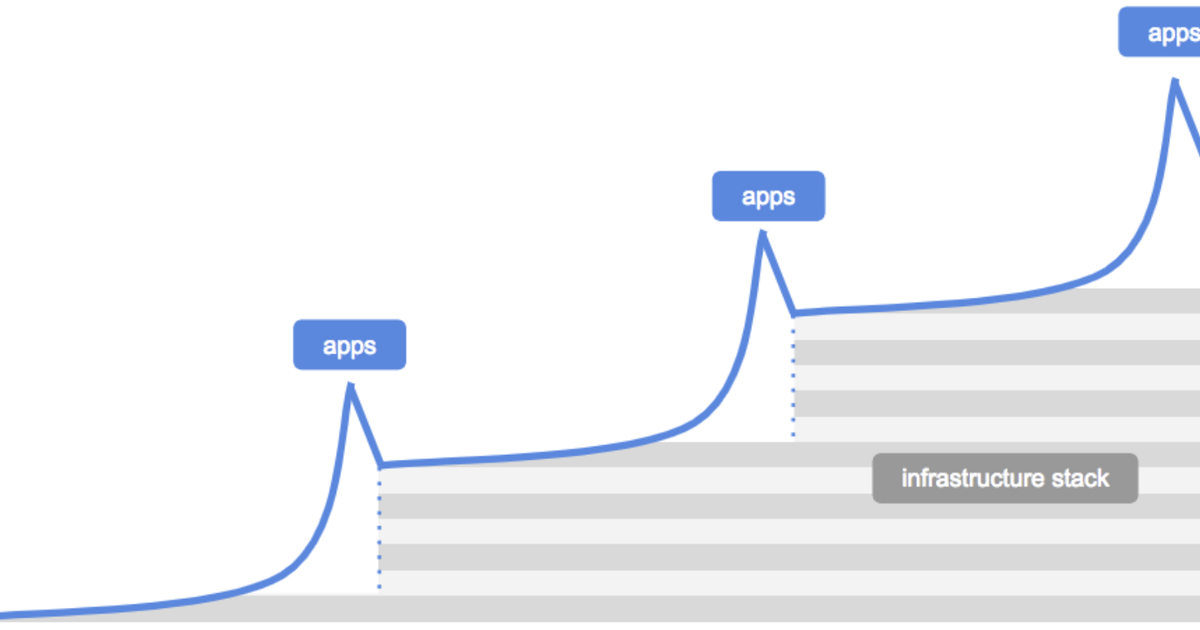
We are not in an infrastructure phase, but rather in another turn of the apps-infrastructure cycle. First, apps inspire infrastructure. Then that infrastructure enables new apps…
Minimum Viable Infrastructure
Minimum Viable Infrastructure Innovation often emerges not solely from brilliant ideas but from the infrastructure readiness that makes those ideas viable. Consider the progression of mobile consumer internet applications over the past two decades: Twitter, Instagram, Snapchat, TikTok. Their lau...


All Infrastructure is AI Infrastructure: Keynote by Mirantis CTO
Organizations must embrace infrastructure built for AI: composable, observable, scalable, and ready to deliver performance across all environments.

There's Life Beyond the App Store
With the imminent release of Foundation for Apps, we've been chatting a lot about apps and how they're built. We've discussed the topic internally with our team, externally with our clients and with tons of our amazing ZURB friends. Much of that discussion revolved around not just how to produce apps, but what an app really is, how they differ from websites and even the future of where they'll go.

How Infrastructure Works: Transforming our shared systems for a changing world
'Pulsing with wisdom and humanity... a masterpiece' ED YONG'A hopeful, lyrical - even beautiful - hymn to the systems of mutual aid we embed in our material world' CORY DOCTOROW'An extraordinary book' MARK MIODOWNIK'You won't see the world the same after reading this book!' AUSTIN KLEONEvery day, we are granted the power to travel at high speeds, fly, see in the dark, summon water from distant mountains and electricity from the sun. The systems that run our world are invisible to us until they fail.Infrastructure enables lives of astounding ease and freedom that would have been unimaginable just a century ago. These technological systems - the most complex and vast ever created by humans - have allowed us to work collectively for the public good. But these systems are now beginning to fail us.Engineering professor Deb Chachra takes readers on a fascinating tour of these essential utilities, revealing how they work, what it takes to keep them running, and just how much they shape our lives - but also the price they extract, who pays it and in what ways, as well as the threats to our infrastructure in a changing world.From Snowdonia's Electric Mountain to a solar plant in southern India, Chachra shows how we can rebuild our shared infrastructure to be not just functional but also equitable, resilient, and sustainable. We need to learn how to see these systems and to transform them, together, because the cost of not being able to rely on them is unthinkably high.
Scaling Azure infrastructure through open collaboration | Microsoft Azure Blog
Learn how we're transforming frontier innovation into infrastructure that makes intelligence accessible and affordable.

The State of Context Engineering
As models improve, they bring surprising challenges for those building apps and harnesses. How context engineering has changed this year, and where it’s headed.

Agents vs Operating Systems : The War That Could Kill Apps
The Infrastructure Shock
The explosion of digital infrastructure systems over the past thirty years may be the biggest but least recognised shock delivered by the internet. We need to develop the governance capacity to manage it and force it out of hands of the democracy-hostile corporations that control it today.

Solidarity Infrastructures
Solidarity Infrastructures is a class that brings together creative practitioners to investigate, strategize, upskill, and dream toward alternative socio-technological systems.
Open Source infrastructure deserves a business model
Open Source infrastructure is essential, invisible, and chronically underfunded. A more sustainable approach may be to connect the cost of running that infrastructure to the organizations that rely on it most.

I'm building on atproto because I think that a single social network has essentially no shot of dethroning the current tech monopolies. But an open ecosystem of interoperating apps is so infinitely more interesting than legacy social that it seems almost inevitable it will win

Ronen Tamari
Can everyone building on atproto please answer this question? 😇
