


Find communication theories like: Health Believe Model | Agenda Setting Theory | Information Theory | Cultivation Theory | Hypodermic Needle Theory, | Two Step Flow Theory | Theory of Planned Behaviour | Social Cognitive Theory | etc.
The Social Physics of Conversation: Why Communication Patterns Matter
Discover how communication patterns shape team performance, innovation, and collective intelligence. Learn why idea flow matters more than talent alone.
Connectivism (Siemens, Downes) – Learning Theories
Keywords: communication, connection, distributed cognition, distributed learning, information, Internet, knowledge sharing, links, massive open online course (MOOC), nodes, online, open educational resources (OER), social networks

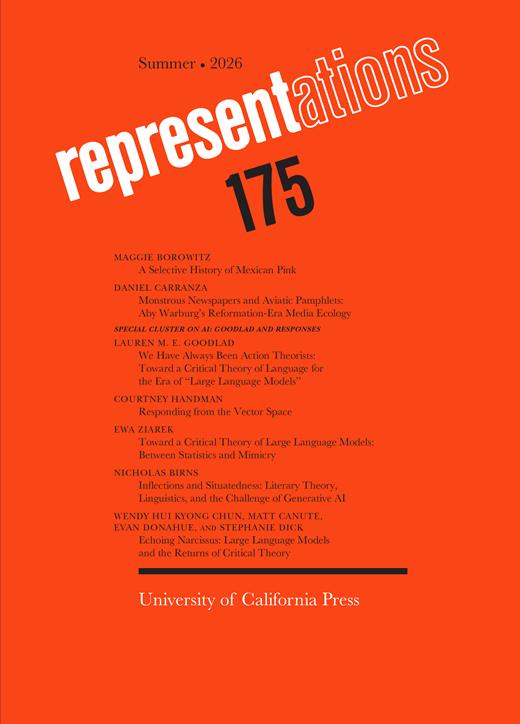
We Have Always Been Action TheoristsToward a Critical Theory of Language for the Era of “Large Language Models”
Scholars of literature and culture understandably place themselves among the world’s premiere experts on matters of language. But they also know that fields like linguistics and communication have their own ways of studying how people express themselves through speech and written media. A key difference concerns the theories and methodologies...
School of Communication
Experience a communication program with SFU. Offering endless possibilities in our Undergraduates and Graduate Programs. Create your own path.

Bachelor of Communication Studies
Become a master communicator in journalism or communications. Prepare for strategic roles in business, media, not-for-profit or public sectors.
Emily Riehl
Website for `Category theory in context' published in 2016 by Dover Publications.
BishopBlog
Ramblings on academic-related matters. For information on my research see https://www.psy.ox.ac.uk/research/oxford-study-of-children-s-communication-impairments. Twin analysis blog: http://dbtemp.blogspot.com/ . ERP time-frequency analysis blog: bishoptechbits.blogspot.com/ . For tweets, follow @deevybee.
Elegant theories and the problems of social psychology
This perspective article provides a commentary on the current state of theories used in social psychology, with a particular emphasis on the importance of distinguishing between theoretical models ...

Scholarly Communication Is a Research Problem. This Means You.
Scholarly Communication Is a Research Problem.

A Theory of Messaging Styles & Ghosting.
Online communication tools serve many purposes. So does silence.

Large language models are cultural technologies. What might that mean?
Four different perspectives

Practical Guide to Grounded Theory Research — Delve
Learn how to do grounded theory, a popular qualitative research methodology where data collection and analysis happen together in cycles.

Mailing-List 2.0: Discourse
You got a few people working on something and you seek for an efficient way to communicate (ideas, news, messages, etc.) online. This guide gives you an overview about what you could expect in the past and what you should ask for nowadays. Mails According to Wikipedia, the first mail was sent in 1971. The access to a network we call Internet today was quite limited in these early days. Users have been mostly universities, and I guess, not everyone, but mostly the STEM disciplines Science, Technology, Engineering, and Mathematics. So it comes at no surprise that mails are perceived as inconvenient and antiquated.
How to Give a Great Research Talk
What is open communication?
Open source collaboration requires open communication, they say. Just what is open communication, exactly? Drawing on past research [1], here are the four principles that make communication open. O…

Computer-Mediated Communication, Social Media, and Mental Health: A Conceptual and Empirical Meta-Review
Computer-mediated communication (CMC), and specifically social media, may affect the mental health (MH) and well-being of its users, for better or worse. Research on this topic has accumulated rapidly, accompanied by controversial public debate and numerous systematic reviews and meta-analyses. Yet, a higher-level integration of the multiple disparate conceptual and operational approaches to CMC and MH and individual review findings is desperately needed. To this end, we first develop two organizing frameworks that systematize conceptual and operational approaches to CMC and MH. Based on these frameworks, we integrate the literature through a meta-review of 34 reviews and a content analysis of 594 publications. Meta-analytic evidence, overall, suggests a small negative association between social media use and MH. However, effects are complex and depend on the CMC and MH indicators investigated. Based on our conceptual review and the evidence synthesis, we devise an agenda for future research in this interdisciplinary field.
