

Philosophy Experiments — Interactive Thought Experiments
Explore 27 interactive philosophy experiments that challenge your moral intuitions, test your logical reasoning, and probe the boundaries of belief.

The High Cost of Not Doing Experiments - Behavioral Scientist
We can pay dearly, in blood, treasure, and well-being, for experiments that aren’t done. -Richard Nisbett, Mindware

Against theory-motivated experimentation: Can random experimental choice lead to better theories?
Scientists must choose which among many experiments to perform. We study the epistemic success of experimental choice strategies proposed by philosophers of science or executed by scientists themselves. We develop a multi-agent model of the scientific process that jointly formalizes its core aspects: active experimentation, theorizing, and social learning. We find that agents who choose new experiments at random develop the most informative and predictive theories of the world. The agents aiming to confirm, falsify theories, or resolve theoretical disagreements end up with an illusion of epistemic success: they develop promising accounts for the data they collected, while misrepresenting the ground truth that they intended to learn about. Agents experimenting in these theory-motivated ways acquire less diverse or less representative samples from the ground truth that also turn out to be easier to account for. Random data collection, on the other hand, combines virtues of diverse and representative sampling from a target scientific domain which enables cumulative development of the successful theoretical accounts of it. We suggest that randomization, already a gold standard within experiments, is also beneficial at the level of experiments themselves.

How Field Experiments in Economics Can Complement Psychological Research on Judgment Biases
This review summarizes results of field experiments examining individual behaviors across several market settings—from open-air markets to rideshare markets to tax-compliance markets—where people sort themselves into market roles wherein they make consequential decisions. Using three distinct examples from my own research on the endowment effect, left-digit bias, and omission bias, I showcase how field experiments can help researchers understand mediators, heterogeneity, and causal moderation involved in judgment biases in the field. In this manner, the review highlights that economic field experiments can serve an invaluable intellectual role alongside traditional laboratory research.
Redecentralization
A thought experiment! Let's reimagine the web with r-selected thinking.

Redecentralization
A thought experiment! Let's reimagine the web with r-selected thinking.
Midjourney
An independent research lab exploring new mediums of thought and expanding the imaginative powers of the human species.
classic Trolley Experiment through the ERM v2
The classic Trolley Experiment through the ERM v2.0 protocol moves it from a philosophical parlor trick to a high-stakes stress test of systemic stability. Unlike traditional ethics (utilitarianism vs. deontology), ERM evaluates the Lever Pull as a hypothesis of system persistence. Stage 1 – Hyp...

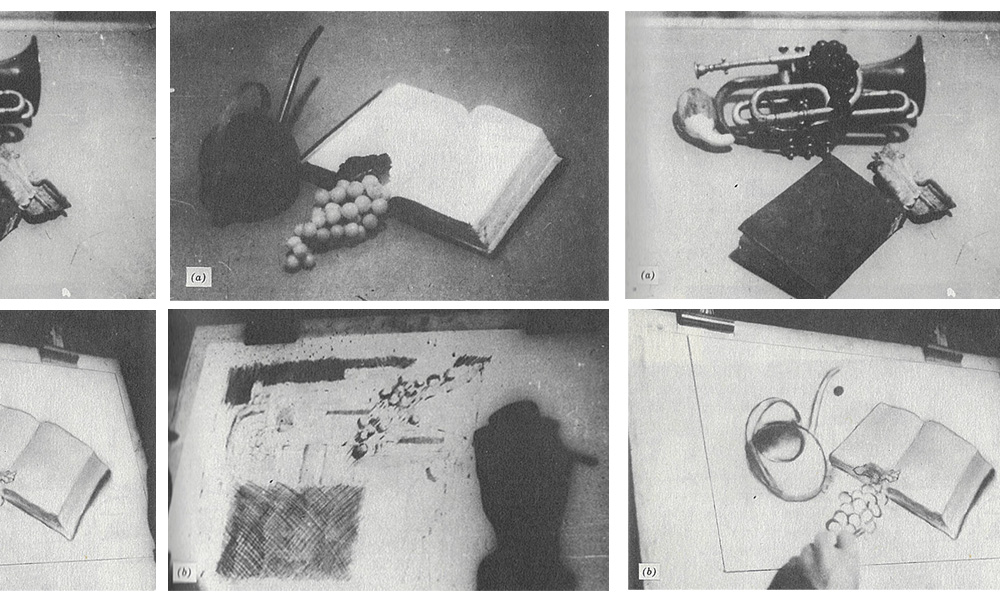
The 1960s Art School Experiment That Redefined Creativity
A groundbreaking study revealed that the most compelling artists seek to find problems, not solve them.
Causality
Written by one of the preeminent researchers in the field, this book provides a comprehensive exposition of modern analysis of causation. It shows how causality has grown from a nebulous concept into a mathematical theory with significant applications in the fields of statistics, artificial intelligence, economics, philosophy, cognitive science, and the health and social sciences. Judea Pearl presents and unifies the probabilistic, manipulative, counterfactual, and structural approaches to causation and devises simple mathematical tools for studying the relationships between causal connections and statistical associations. Cited in more than 2,100 scientific publications, it continues to liberate scientists from the traditional molds of statistical thinking. In this revised edition, Judea Pearl elucidates thorny issues, answers readers' questions, and offers a panoramic view of recent advances in this field of research. Causality will be of interest to students and professionals in a wide variety of fields. Dr Judea Pearl has received the 2011 Rumelhart Prize for his leading research in Artificial Intelligence (AI) and systems from The Cognitive Science Society.
On Taste, Effort & Curiosity - again
When AI collapses how long it takes to ship, what’s left is judgment, experimentation, and knowing what not to build.
Demand characteristics in human–computer experiments
Demand characteristics refer to cues that can inform participants in experiments about the hypothesis and influence their behavior. They lead researchers to erroneously infer non-existing effects, undermining the experimental integrity of empirical studies. Despite a widespread acknowledgment of their confounding influence in experimental psychology, experiments involving humans and computers to a lesser extent consider effects of demand characteristics, as computerized protocols are thought to be immune to some experimenter biases. Furthermore, demand characteristics are considered to mainly effect subjective measures. As a result, demand characteristics often remain uncontrolled in studies involving computers, and in particular for objective measures such as performance. In this paper, we present two experiments that underline the importance of demand characteristics in human–computer interaction experiments. In a text-entry study, we made participants believe they were evaluating a research-based keyboard. This belief led to increased performance and self-reported user experience. In a second study, we conducted a thought experiment on the illusion of body ownership in virtual reality, where the experimental design indicated the study hypothesis. We found hypothesis-compliant responses from participants, even when they did not experience the illusion. We conclude that demand characteristics pose a significant challenge to the interpretation and validity of human–computer experiments, even when they are fully automated. We discuss the implications and offer guidelines to mitigate effects of demand characteristics.
Guest post: If you’re going to critique science, be scientific about it
Loren K. Mell Editor’s note: This post responds to a Feb. 13 article in The Atlantic, “The Scientific Literature Can’t Save Us Now,” written by Retraction Watch cofounders Adam Marcus and Ivan Oran…

Field Experimentation in Marketing Research
Despite increasing efforts to encourage the adoption of field experiments in marketing research (e.g., Campbell 1969 ; Cialdini 1980 ; Li et al. 2015 ), the majority of scholars continue to rely primarily on laboratory studies ( Cialdini 2009 ). For example, of the 50 articles published in Journal of Marketing Research in 2013, only three (6%) were based on field experiments. The goal of this article is to motivate a methodological shift in marketing research and increase the proportion of empirical findings obtained using field experiments. The author begins by making a case for field experiments and offers a description of their defining features. She then demonstrates the unique value that field experiments can offer and concludes with a discussion of key considerations that researchers should be mindful of when designing, planning, and running field experiments.
Playable versions of canonical experiments in philosophy: the Socratic-questionnaire thought experiments — the trolley problem, Gettier cases, the side-effect effect, Mary the colour scientist.
Announcing a new version of our 2024 paper on linguistic hypothesis generation from LMs! @najoung.bsky.social and I have systematized our hypothesis generation framework, added stringent criteria for model selection, 10x-ed our learning trials, and included an epigraph from Jeff Elman 🙏!
Neuroscience, Cognition & Psychology


Anti-democratic attitudes are highly contagious, new psychology study finds

Hyperactive–impulsive ADHD traits predict higher curiosity in adults: evidence from a cross-sectional study
Understanding the influence of digital technology on human cognitive functions: A narrative review
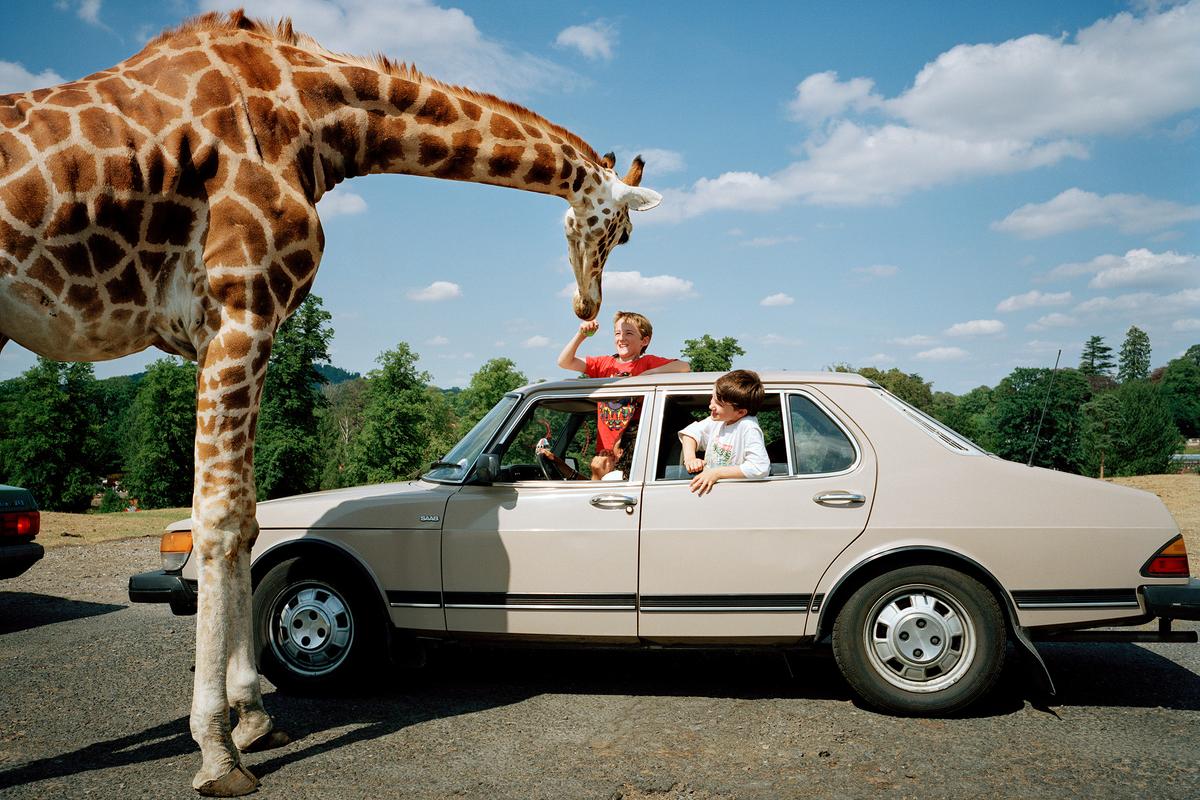
How the hypercuriosity of ADHD may have helped humans thrive | Aeon Essays
The Entangled Brain: How Perception, Cognition, and Emotion Are Woven Together
