


With talent poached from Wired, the Wall Street Journal, the New York Times, etc., and coverage written for “C-suite kinds of folks,” Protocol is Robert Allbritton’s latest dream. But is it late to the tech-journalism gold rush?
The Technological Republic: The Sunday Times bestseller from the great minds behind Palantir
The Sunday Times and #1 New York Times Bestseller‘The Technological Republic is far too important to ignore’ Times Literary SupplementSilicon Valley’s brightest minds once collaborated with governments to advance technologies, securing the West’s dominance on the global stage. But that relationship has corroded – with perilous repercussions for us all.Lifting the veil on tech giant Palantir and its broader political project, visionary co-founder and CEO Alexander C. Karp and his long-time deputy Nicholas W. Zamiska offer a searing critique of our collective culture of complacency. To regain geopolitical power and preserve our freedoms, we must tackle the world’s most pressing challenges – including the artificial intelligence arms race – together and head-on. Now is the time for the West to wake up.‘Bold and ambitious ... Essential reading’ Eric Schmidt‘Fascinating’ Financial Times‘A stirring manifesto’ Niall Ferguson‘Provocative and insightful’ Jamie Dimon
Tech Policy Press - Technology and Democracy
Tech Policy Press is a nonprofit media and community venture intended to provoke new ideas, debate and discussion at the intersection of technology and democracy. We publish opinion and analysis.

Your intellectual fly is open | The Observation Deck
Note: This was originally published as a LinkedIn post on November 11, 2025. I need to make a painful confession: somehow, LinkedIn has become an important social network to me. This isn’t necessarily due to LinkedIn’s sparkling competence, of course. To the contrary, LinkedIn is the Gerald Ford of social networks: the normal one that was left standing as the Richard Nixons and the Spiro Agnews of social media imploded around them. As with Gerald Ford, with LinkedIn we know that we’re getting something a bit clumsy and boring, but (as with post-Watergate America!), we’re also getting something that isn’t totally crooked — and that’s actually a bit of a relief.
The Press Release Is Dead — Use This Instead – Mike Butcher
I’m QUITE TIRED of dealing with MILLIONS of tech entrepreneurs (these days there are a HELL of a lot of you) and (some) PR people who have ZERO clue how to pitch me/TechCrunch/the media. Their pitches are long-winded and rambling. They ask if they could ‘send some more information’. Listen, I have no idea if it’s interesting or not until you send it! Many just ask me out to lunch or coffee. (Thanks, but I prefer hanging out with my *actual friends*). Even worse, they haven’t read this post or seen my presentation on how to deal with tech media. [2021 update: This is a basic outline for super-early startups. If you want something for Post Series A / later stage startups go here].
The scent of Musk: Power, charisma and paranoia in Silicon Valley
After the Feed: Trust, connection, and the next era of social technology | New_ Public | May 2026
After the Feed: Trust, connection, and the next era of social technology By Eli Pariser, Co-Director, Angelica Quicksey, Managing Director, Arnobio Morelix, AI Fellow May 2026 Newpublic.org

NewsGuild president writes to ProPublica management: Get serious on AI — ProPublica Guild
Artificial intelligence is guaranteed to shake up journalism in varied and unexpected ways. This could be a moment in which experienced journalists leverage a powerful new tool to produce even bigger and better investigations. Or it could be one in which management pivots to yet another new technolo

After the Feed: Trust, connection, and the next era of social technology | New_ Public | May 2026
After the Feed: Trust, connection, and the next era of social technology By Eli Pariser, Co-Director, Angelica Quicksey, Managing Director, Arnobio Morelix, AI Fellow May 2026 Newpublic.org

Could this be the beginning of the end for the billionaire-owned media propaganda blitz?
A campaign to free our national press from foreign billionaires like Rupert Murdoch is gaining momentum and attracting big-name support

The Anti-Intellectualism of Silicon Valley Elites
I recently re-read Richard Hofstadter's Anti-Intellectualism in American Life, and now every time a reactionary Silicon Valley billionaire opens his mouth, I think about it. So I wrote about it for The Nation. Here's the column: On Instagram, there’s an activist named Brian Patrick (@pano.

Farid Zakaria’s Blog
I’m a software engineer, father and wishful amateur surfer. If you’ve come seeking my political views, you’ve found the wrong Fareed.
Take it from the insiders: Silicon Valley is eating your soul | John Harris
Former Google and Facebook executives are sounding the alarm about the pervasive power of tech, writes Guardian columnist John Harris
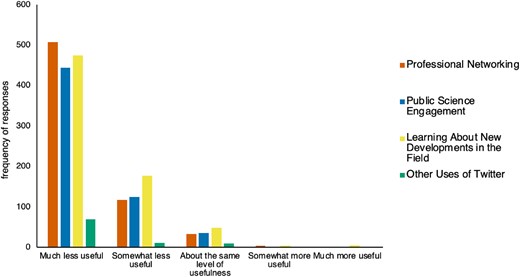
Scientists no Longer Find Twitter Professionally Useful, and have Switched to Bluesky
Synopsis Social media has become widely used by the scientific community for a variety of professional uses, including networking and public outreach. For the past decade, Twitter has been a primary home of scientists on social media. In recent years, new leadership at Twitter has made substantive changes that have resulted in increases in the prevalence of pseudoscience, conspiracy theory, and harassment on the platform, causing many scientists to seek alternatives. Bluesky has been suggested as a good alternative to Twitter, but the phenomenon of academics switching social media platforms has not previously been studied. Here we report on the results of a survey distributed to scientists on Twitter and Bluesky (n = 813). Results overwhelmingly confirm that changes to Twitter have made the social media platform no longer professionally useful or pleasant, and that many scientists have abandoned it in favor of Bluesky. Results show that for every reported professional benefit that scientists once gained from Twitter, scientists can now gain that benefit more effectively on Bluesky than on Twitter.
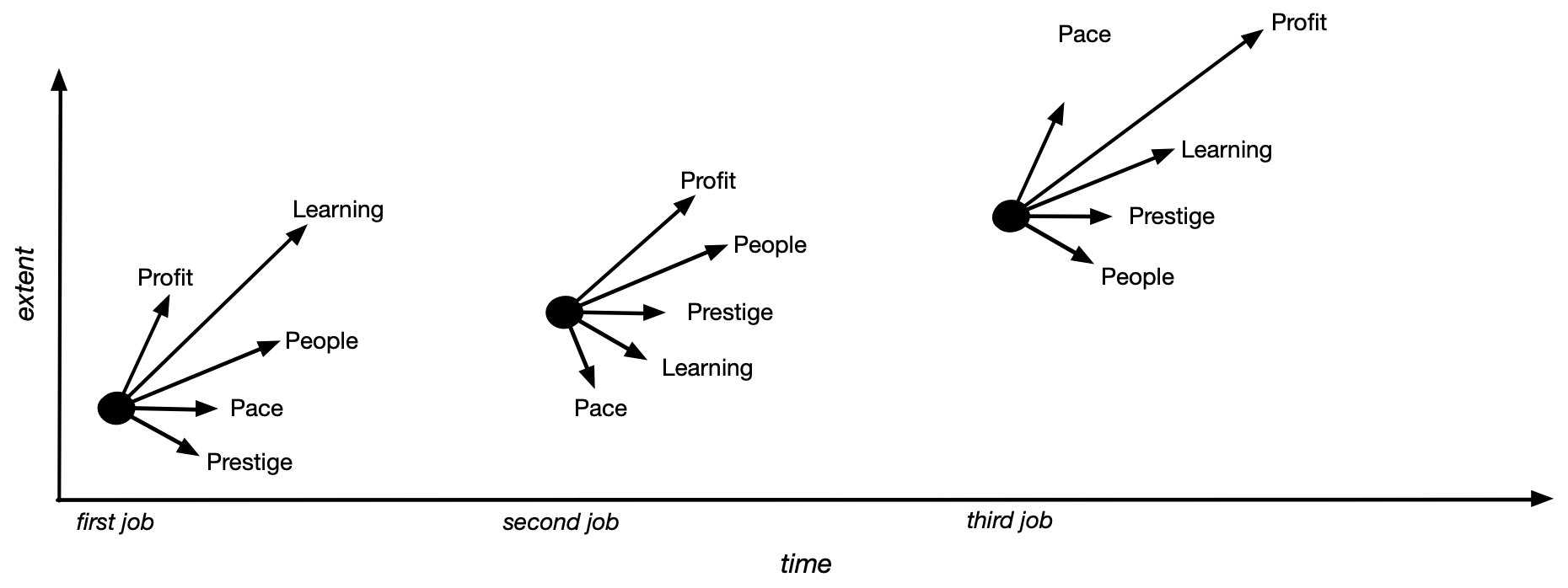
A forty-year career.
The Silicon Valley narrative centers on entrepreneurial protagonists who are poised one predestined step away from changing the world. A decade ago they were heroes, and more recently they’ve become villains, but either way they are absolutely the protagonists. Working within the industry, I’ve worked with quite a few non-protagonists who experience their time in technology differently: a period of obligatory toil required to pry open the gate to the American Dream.
Wired for the GOP
This column, by Alexander Burns, the head of news at Politico, is...
Institute of Network Cultures | Ben Grosser: Planning the Exodus from Platform Realism
Thinking about the current state of platforms, I’m reminded of Mark Fisher’s articulation of capitalist realism, the idea that we don’t imagine or build alternatives to capitalism because we can no longer envision a world without it. Big tech, in a few short years, has managed to instill within the public a similar state of platform realism. So many are unable to imagine how global communication, media, search, etc. could ever function without the platforms. Despite a growing malaise, it’s become difficult for many to consider a world without big tech platforms as a viable conception of the future.
