

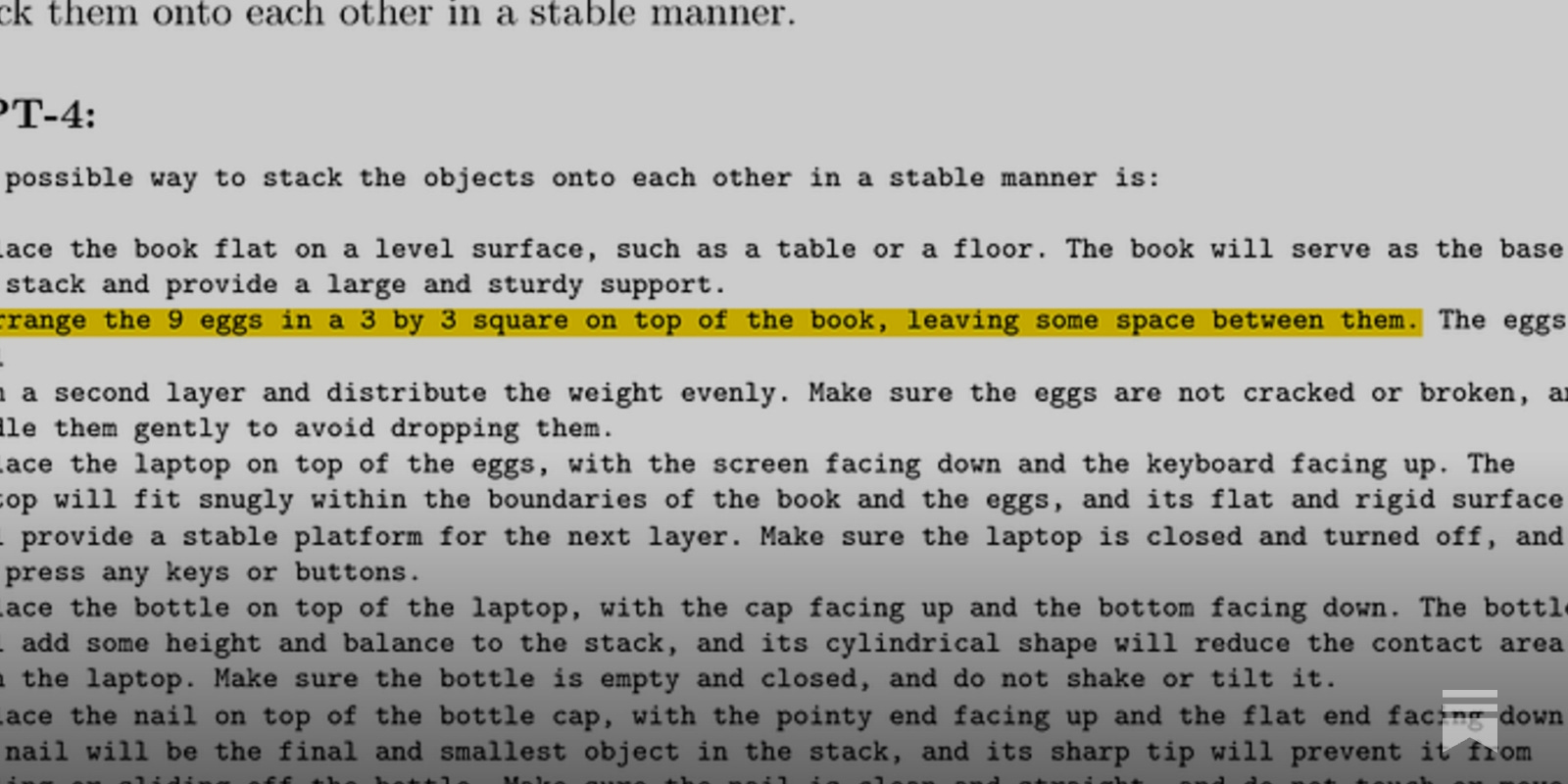
The “Stochastic Parrot” Argument is Both Wrong and Actively Harmful
Stochastic Parrots | Emily M. Bender - Professor of Computational Linguistics
No, “AI” is not a Stochastic Parrot 🦜
I’ve recently come across a new flavor of AI denialism making the rounds.

Post by Paul Musgrave (@professormusgrave.bsky.social) on Bluesky — View on Aturi
I don't know, man, can a stochastic parrot take a half-remembered anecdote and systematically refine its internet searching to come up with *exactly* the resour

Alex Mallen's Shortform — LessWrong
Comment by Alex Mallen - Some personal reflections in light of recent events, both on myself and on Constellation (of which I've been a part for a couple years). I think recent events somewhat vindicate a basic "optimization is scary" view more in line with my understanding of classic commentary by MIRI, Paul, etc, as compared to recent discourse about more contingent/specific threat models of "schemers" and "deception". In retrospect, my experience in the last couple years at Redwood (and the Constellation network more broadly) is that the discourse has focused somewhat too much on these more contingent stories for alignment risk and not enough on the basic "Goodharting" argument that misalignment is a convergent result of large-scale outcome-oriented optimization (at multiple levels: the agent, the RL process, and the developers iterating towards seemingly-safe superintelligence). For example, the Constellation view looks somewhat too focused on non-central inductive-bias questions around scheming; I think "the counting argument" was given too central a role when it wasn't a crux for whether superintelligence would take over. (Edit: I want to clarify that I think Redwood's project prioritization decisions look pretty reasonable and often excellent in hindsight, I far-from-regret working with Redwood as a whole, and that Ryan's/Buck's threat modeling looks pretty good too. I am focusing in this piece on the things we have to learn from recent events, which makes the overall mood seem more negative on my experience than I intend. I'm very grateful for being in a environment where I can openly have such reflections, and where these weedsy technical updates are productively received. Again, this is a personal reflection.) I think it was a priori unclear whether the misalignment resulting from of lots of imperfect optimization would result in the more MIRI-like kludge of proxies for fitness, or the more Paul-like explicit reward-seeking and measurement tampering (and reality looks somewhere

The AI safety vibe shift
Once a fringe obsession of Bay Area rationalists, existential risk is suddenly all anyone is talking about

In Dropping Reflecting Pool Case, Pirro Draws Trump’s Wrath
Jeanine Pirro, the U.S. attorney in Washington, blamed shoddy construction, contradicting President Trump’s pet theory. Mr. Trump said he disagreed “100%” with her.

Quote Origin: The Optimist Invents the Airplane and the Pessimist the Parachute – Quote Investigator®
George Bernard Shaw? Gladys Bronwyn Stern? W. H. H. MacKellar? Gil Stern? Mack McGinnis?
Eliezer Yudkowsky Is Frequently, Confidently, Egregiously Wrong
It is bad when people who are consistently egregiously wrong become deferred to on everything
C.S. Lewis's dangerous idea : a philosophical defense of Lewis's argument from reason
132 p. ; 21 cm; Includes bibliographical references (p. [129]-130) and index; Taking C.S. Lewis seriously: apologetics and the personal heresy -- Assessing apologetic arguments -- C.S. Lewis, Elizabeth Anscombe, and the argument from reason -- Several formulations of the argument from reason -- Explanatory dualism -- The inadequacy objection

Andreas De Block on Twitter / X
It took Nature three years to publish this rebuttal, which clearly demonstrates the fundamental flaws in the original paper. In the meantime, the paper's conclusions influenced scientific debate and policy decisions. Such delays in correcting flawed research do real damage. https://t.co/QI3Ei3PE70— Andreas De Block (@DeblockBlock) August 13, 2026
The Backward Mentality to Finding Victory - Mockingbird
It Doesn't Always Pay to Be a Thinker

We argue badly, and nothing accumulates. How could we do better? | Reason Commons — Issue Trees & Logical Thinking Process
Millions of people argue every day about the things that matter most — climate change, what to do about AI, how we might build a better world. Some of it is sharp, even insightful. And almost none of it accumulates.
The Phony Comforts of AI Optimism
A few months ago, Casey Newton of Platformer ran a piece called "The phony comforts of AI skepticism," framing those who would criticize generative AI as "having fun," damning them as "hyper-fixated on the things [AI] can't do." I am not going to focus too hard on this

I dunno how many times someone has told me, “the stochastic parrots paper was wrong,” and i’ve had to stutter, regain my composure, and put in real work to salvage the conversation. Like lol, wrong about what? That coherence is in the eye of the beholder? We see things as we are, not as they are.

Emily M. Bender
In this context, I feel like reminding people (again) that the stochastic parrots paper was not primarily a response to synthetic text extruding machines (not at all popular in late 2020), but an exploration of the range harms that had already been documented in the pursuit of LM scale. >>

