


The FBI previously purchased access to "netflow" data, which a company called Team Cymru obtains from ISPs. Team Cymru then sells it to the government.
We Now Know What Information the FBI Can Obtain from Encrypted Messaging Apps
Despite its “going dark” claims, the FBI can obtain a remarkable amount of user data from messaging apps that collectively have several billion global users

U.S. Spy Agencies Buy Vast Quantities of Americans’ Personal Data, U.S. Says
Commercially available data from cars, phones and web browsers now rivals results from wiretaps, cyber espionage and physical surveillance.

Your data is everywhere. The government is buying it without a warrant
Data brokers buy up huge amounts of information from cell phones and browsers to sell for targeted advertising. But the government, including ICE, also buys the data.

FBI Seizure of Mastodon Server Data is a Wakeup Call to Fediverse
We’re in an exciting time for users who want to take back control from major platforms like Twitter and Facebook. However, this new environment comes with challenges and risks for user privacy, so we
Data Is the New Copper
Data breaches fuel a complex cybercriminal ecosystem, similar to copper thefts after the financial crisis.

FBI document shows what data can be obtained from encrypted messaging apps
A recently discovered FBI training document shows that US law enforcement can gain limited access to the content of encrypted messages from secure messaging services like iMessage, Line, and WhatsApp, but not to messages sent via Signal, Telegram, Threema, Viber, WeChat, or Wickr.

FBI Breaks into iPhone. We Have Some Questions.
The FBI has successfully accessed data on an iPhone that has been the subject of a legal battle between the Justice Department and Apple, according to a court filing. EFF is pleased that the Justice
How internet-connected devices can track your data for sale to others | CBC News
A new generation of smart, always-on, internet-connected devices is redefining how companies collect and share user data — both the types of data collected, and who that data is shared with.

Dark Web Informer on Twitter / X
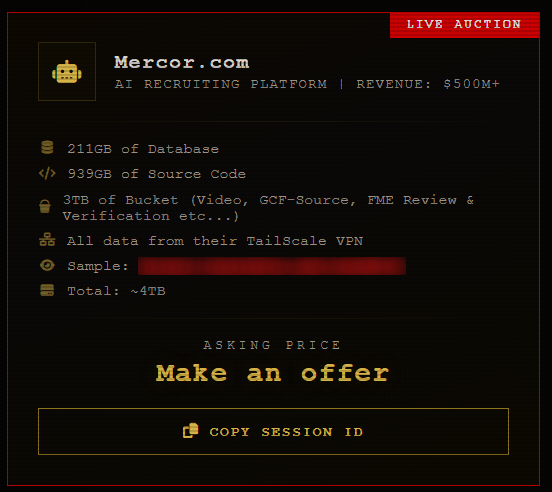
‼️🇺🇸 LAPSUS$ Group is allegedly selling a massive dataset of https://t.co/Q6UlD72i8v, an AI recruiting platform with $500M+ revenue, is being auctioned on a popular cybercrime forum, TG, and their website.▪️Total Size: ~4TB▪️Data Includes: 211GB of database▪️939GB of source… pic.twitter.com/hEvp244uNO— Dark Web Informer (@DarkWebInformer) March 30, 2026
How the FBI Stumbled in the War on Cybercrime — ProPublica
In this excerpt from “The Ransomware Hunting Team: A Band of Misfits’ Improbable Crusade to Save the World From Cybercrime,” the authors reveal how unprepared the nation’s top federal law enforcement agency was to combat online crime.

The Decentralized Internet Is Here, With Some Glitches
Privacy advocates and venture capitalists want to circumvent the tech giants with apps using encrypted data stored on networks of computers.
Spy agencies, PM's adviser defend airport Wi-FI data collection | CBC News
The head of Canada's communications surveillance agency defended its use of metadata Monday and argued a test using Canadian passengers' data — revealed by CBC News last week — didn't run in real-time and wasn't an actual operation.

Stop Bill C-22!
🚨 Bill C-22 forces every Canadian internet provider, messaging app & cloud service to build surveillance backdoors and store a year of your data. Foreign state hackers exploited similar legislation in the US. Shut the backdoor: https://openmedia.org/StopC22 #BillC22
How the FBI’s online wiretapping plan could get your computer hacked
Security researchers argue that an FBI proposal for government-mandated back doors in communications software is a disaster waiting to happen.

‘Order from Amazon’: Tech giants storing mass data for Israel’s war
The Israeli army is using Amazon’s cloud service and AI from Google and Microsoft for military activities in Gaza, investigation reveals.

Aye > Data Ownership as a conversation changes when data resides primarily with people (..). > Instead of arguing for what kinds of data we ought to be able to download from the corporate silos, the platforms should be asking us what kinds of data they may copy from *our* servers.

Erlend Sogge Heggen
The web can be made personal again. blog.muni.town/personal-data-storage-idea/