A study of millions of Reddit posts found there are people who fit the typical conspiracy caricature, but they’re not the majority.
Leveraging Motivations to Curb Misinformation: Self-Affirmation Reduces the Appeal of Political Conspiracy Theories
Abstract: In an era where digital misinformation poses significant challenges to societal well-being, this study explores a novel approach to preserving information integrity by addressing the motivational underpinnings of conspiracy theory engagement. As conspiracy theories proliferate online, traditional fact-checking and debunking strategies often prove ineffective due to the self-reinforcing nature of conspiracy theories. This research investigates whether a priori self-affirmation interventions can reduce individuals’ propensity to engage with conspiracy theories by preemptively fulfilling the ego-protective function these theories often serve. Using a randomized experiment ( N = 451), this study finds that participants who completed a self-affirmation task were less likely to read politicized conspiracy theories, and those who chose to read a conspiracy theory reported greater feelings of affirmation than those who did not. Thus, bolstering individuals’ self-integrity may offer an opportunity to mitigate the appeal of politicized conspiracy theories.

Do conspiracy theorists see more patterns in randomness? Apparently not
Three experiments found no difference in conspiracists’ information processing...
How Conspiracy Theories are Gripping the Resistance
Democrats have always prided themselves on being a voice of political sanity. So why has Trump's election turned the left into a breeding ground for conspiracy theories?

Does Developing a Belief in One Conspiracy Theory Lead a Person to be More Likely to Believe in Others?
ABSTRACT The monological belief system model suggests that—for at least a subset of people—developing a belief in one conspiracy theory will cause them to be more likely to believe in others. This model has been influential in the literature, but its core causal hypothesis has never been credibly tested. We therefore tested it in two longitudinal studies. Study 1 used a sample from New Zealand and Australia ( N = 498), with 7 monthly waves. Study 2 (preregistered) used a sample from New Zealand, Australia and the United Kingdom ( N = 978), with 13 monthly waves. We applied random intercept cross‐lagged panel models, permitting a credible causal identification strategy, albeit we cannot rule out time‐varying confounds. We find that increased belief in a conspiracy theory at one wave did (on average) predict increased belief in other conspiracies at the next wave, although the estimated coefficients were small.

Fascists Really Believe It
Millions could die because of ideas intellectually and morally equivalent to the ‘lizard people’ conspiracy theory.

Instagram Is Full of Conspiracy Theories and Extremism
As other social networks wage a very public war against misinformation, it’s thriving on Instagram.
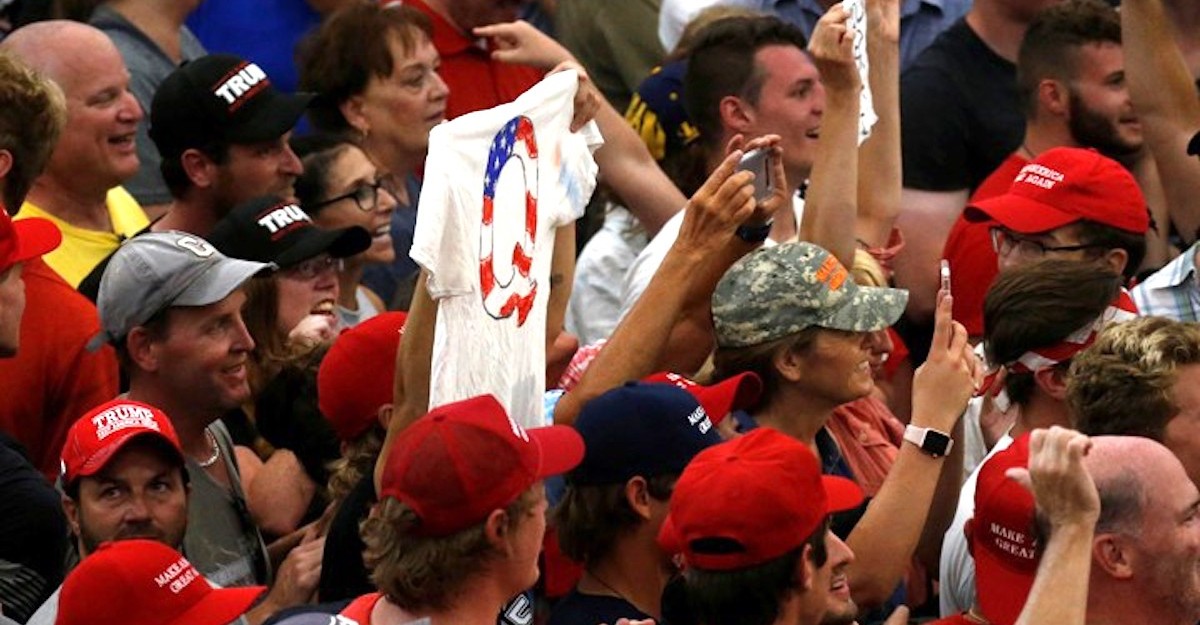
The Conspiracy Theory About Wayfair Is Spreading Quickly Among Lifestyle Influencers On Instagram
The theory plays into the bigger QAnon conspiracy theory, which baselessly claims that the world is controlled by a secret cabal of pedophiles that President Trump is actively fighting against.

Why Trump Wants You to Think All Dissent Is a “Conspiracy”
What Pizzagate, election fraud lies, and Trump’s crackdown on antifa have in common.

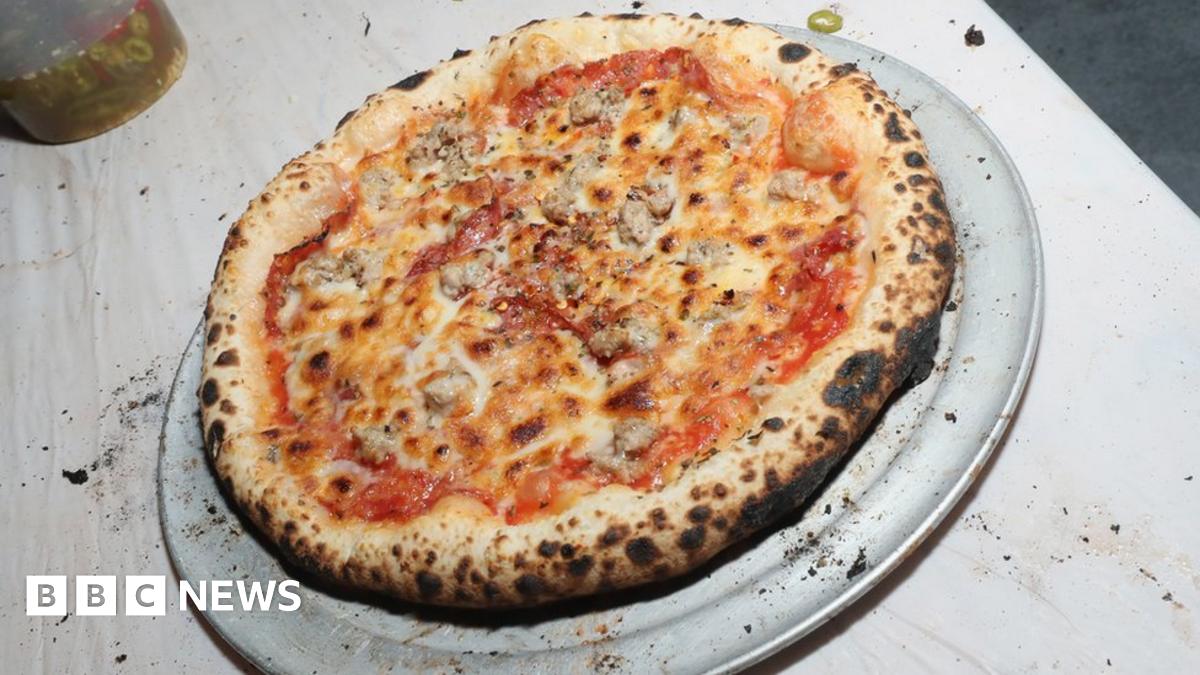
The saga of 'Pizzagate': The fake story that shows how conspiracy theories spread
Thousands of people are spreading a false rumour about a Washington pizza restaurant and a child sex ring. But why?
Who Falls for Fake News? Study Reveals Surprising Patterns - Neuroscience News
A global study of over 66,000 people reveals that susceptibility to misinformation varies across age, gender, education, and political ideology.
Facts and Myths about Misperceptions
Misperceptions threaten to warp mass opinion and public policy on controversial issues in politics, science, and health. What explains the prevalence and persistence of these false and unsupported beliefs, which seem to be genuinely held by many people? Though limits on cognitive resources and attention play an important role, many of the most destructive misperceptions arise in domains where individuals have weak incentives to hold accurate beliefs and strong directional motivations to endorse beliefs that are consistent with a group identity such as partisanship. These tendencies are often exploited by elites who frequently create and amplify misperceptions to influence elections and public policy. Though evidence is lacking for claims of a “post-truth” era, changes in the speed with which false information travels and the extent to which it can find receptive audiences require new approaches to counter misinformation. Reducing the propagation and influence of false claims will require further efforts to inoculate people in advance of exposure (for example, media literacy), debunk false claims that are already salient or widespread (for example, fact-checking), reduce the prevalence of low-quality information (for example, changing social media algorithms), and discourage elites from promoting false information (for example, strengthening reputational sanctions).

Opinion | Why We Got It So Wrong (Published 2024)
It turns out a lot of people don’t behave like ambassadors from this or that group. They think for themselves in unexpected ways.

Pluralistic: Conspiratorialism as a material phenomenon (29 Oct 2024) – Pluralistic: Daily links from Cory Doctorow
I think it behooves us to be a little skeptical of stories about AI driving people to believe wrong things and commit ugly actions. Not that I like the AI slop that is filling up our social media, but when we look at the ways that AI is harming us, slop is pretty low on the list.
Conspiracy Theory GIF - Conspiracy Theory Explaining - Discover & Share GIFs
Click to view the GIF