

Disabled people have a right to independence and equal access to services. We’re fighting to re-fund public disability services cut after the NDIS rollout.
AI and the Future of Accessible Work
Many countries have legislation that prohibits discrimination against people with disabilitiesa in the context of employment. For example, the U.S. Americans with Disabilities Act (ADA),b the U.K.’s Equality Act of 2010,c and European Union policyd prohibit employment-related discrimination and require employers to provide reasonable accommodations or adjustments so disabled employees can perform their jobs. More broadly, the United Nations Convention on the Rights of Persons with Disabilities (UNCRPD)e has influenced legal frameworks across the globe. Despite these anti-discrimination policies, disabled people remain significantly underrepresented in the workforce. Employment gaps between disabled and non-disabled people exist globally.28 Among blind and low-vision Americans, for instance, only 44% are employed compared to 79% of those without disabilities.f Only 54% of d/Deaf peopleg in the U.S. are employed, compared to 70% of hearing people.8 These discrepancies are worse for multiply marginalized disabled people. For example, employment rates for disabled women are significantly lower than rates for disabled men.21

The Curb-Cut Effect and the Perils of Accessibility without Disability
By Blake Reid, Published on 01/01/24
Belonging Is a Right, Not a Reward
CW: Ableism Disabled people have been made to prove their worth for too long. Society sees value in work, earnings, or productivity, and anyone who doesn’t meet these standards is expected to…

Social Model of Disability | The Paper Pilot
The Paper Pilot's digital garden of thoughts on philosophy, politics, and sociology
Fix the health crisis – Victorian Socialists
Healthcare should be universal and free, not for profit. We’re fighting for fully funded public health and the expansion of free community health clinics.
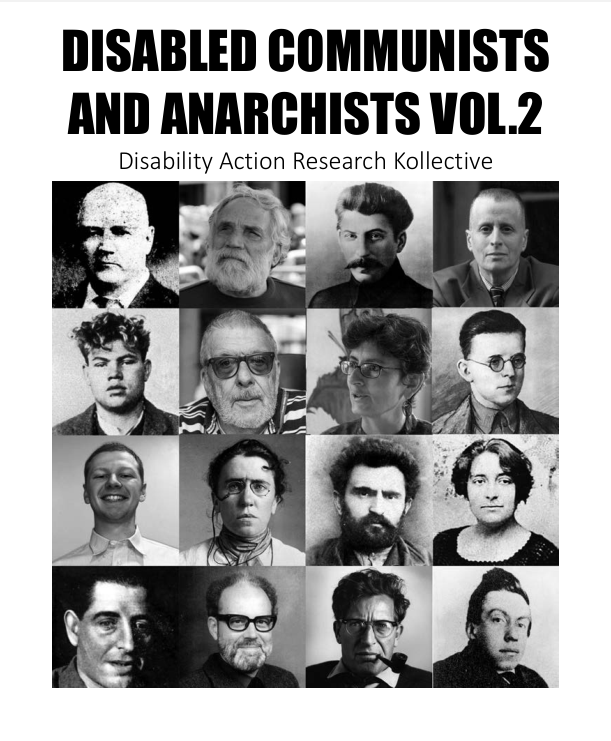
Disabled Communists and Anarchists (Volume 2)
When communists and anarchists are remembered, their disabilities often go unacknowledged, even though they likely deeply impacted their lives and perspectives. Disabilities should not be seen as a shameful personal failure but as a neutral characteristic within the natural variation of humanity. Here is a brief biography of some of those revolutionaries.
Disability-Driven Development
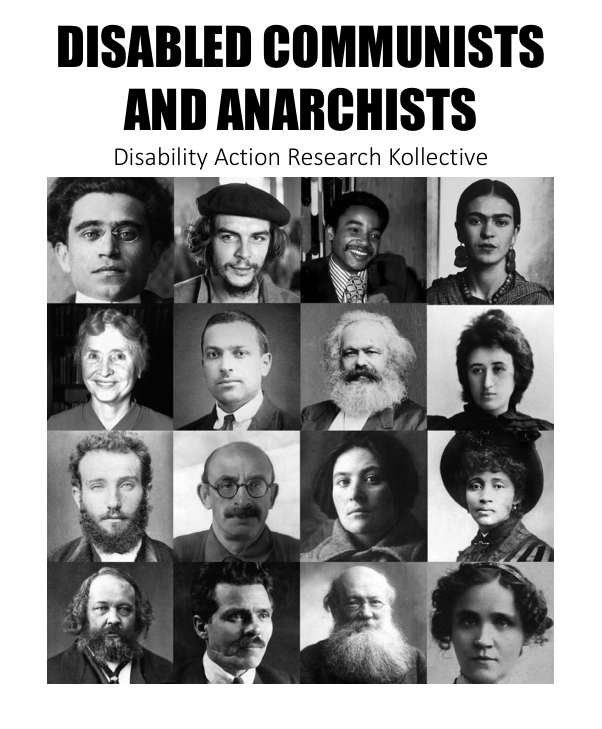
Disabled Communists and Anarchists (Volume 1)
Like many people in history, when communists and anarchists are remembered, their disabilities often go unacknowledged, even though they likely deeply impacted their lives and perspectives. Disabilities should not be seen as a shameful personal failure but as a neutral characteristic within the natural variation of humanity. Here is a brief biography of some of those revolutionaries.
Challenging Ableism: A Critical Turn Toward Disability Justice in HCI
A reflection on our learnings from the CHI 2022 "Dreaming Disability Justice in HCI" workshop, and why we continue to call for disability justice, despite the limitations of how we practice it within academia and industry.
Crip Technoscience Manifesto
As disabled people engaged in disability community, activism, and scholarship, our collective experiences and histories have taught us that we are effective agents of world building and dismantling toward more socially just relations.The grounds for social justice and world remaking, however, are frictioned;technologies, architectures, and infrastructures are often designed and implemented without committing to disability as a difference that matters. This manifesto calls attention to the powerful, messy, non-innocent, contradictory, and nevertheless crucial work of what we name as “crip technoscience,” practices of critique, alteration, and reinvention of our material-discursive world. Disabled people are experts and designers of everyday life. But we also harness technoscience for political action, refusing to comply with demands to cure, fix, or eliminate disability. Attentive to the intersectional workings of power and privilege, we agitate against independence and productivity as requirements for existence. Instead, we center technoscientific activism and critical design practices that foster disability justice.
10 Principles of Disability Justice | Sins Invalid
INTERSECTIONALITY “We do not live single issue lives” –Audre Lorde. Ableism, coupled with white supremacy, supported by capitalism, underscored by heteropatriarchy, has rendered the vast majority of the world “invalid.”
Dignity and security for older people – Victorian Socialists
Older people deserve dignity and security, not neglect. We’re fighting to ban for-profit aged care and guarantee public housing for pensioners.
The Curb-Cut Effect (SSIR)
Laws and programs designed to benefit vulnerable groups, such as the disabled or people of color, often end up benefiting all of society. <meta property=

Accessible and sustainable transport – Victorian Socialists
Public transport should be public. We’re fighting to reverse the privatisation of transport, make it free, and upgrade regional rail services.
Fighting for women’s liberation – Victorian Socialists
Women’s oppression is part of the fabric of capitalism. We’re fighting for free, accessible abortion, expanded paid parental leave, and free childcare.
The social model of disability: thirty years on
This year marks exactly 30 years since I published a book introducing the social model of disability onto an unsuspecting world and yet, despite the impact this model has had, all we now seem to do...
