


We think of ourselves as full-time projects, but what if doing so much inner work does more harm than good?
Deep work. Essentialism in asynchronous culture
Deep work Nowadays, we are getting accustomed to working in a continuously interrupting environment. Smartphone notifications, hundreds of e-mails, open spaces, and meetings slicing our workday. We are feeling busy, and overworked, but are we more productive? If I am a salesman or project coordinator that way of working can bring good effects and even improve my skills. However, for Software Developers, Designers, and other professionals that need a quiet environment for creative effort, it can lead only to frustration and burnout. They need something that is called deep work. Deep work is a concept popularized by Cal Newport in his book under the same title published in 2016. The author divides mental activity into two categories: shallow work, that does not need intensive concentration like sending e-mails, formatting documents, chatting using communicators, etc. deep work, that demands distraction-free focus on one task like writing a document, learning a new skill, designing a software system, etc.
How to be more productive without forcing yourself
Imagine you could work more and be wildly productive. And you wouldn’t need to force yourself to work.
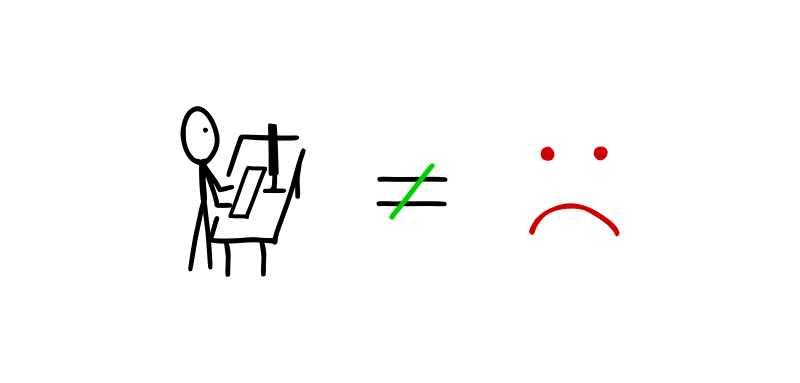
Is full-time work bad for our brains?
If you’re over 40, working more than 25 hours a week could be affecting your intelligence, new research suggests

What Happens When Your Career Becomes Your Whole Identity
Many people with high-pressure jobs find themselves unhappy with their careers, despite working hard their whole lives to get to their current position. Hating your job is one thing – but what happens if you identify so closely with your work that hating your job means hating yourself?Psychologists use the term “enmeshment” to describe a situation where the boundaries between people become blurred, and individual identities lose importance. Enmeshment prevents the development of a stable, independent sense of self. While identifying closely with your career isn’t necessarily bad, it makes you vulnerable to a painful identity crisis if you burn out, get laid off, or retire. Individuals in these situations frequently suffer anxiety, depression, and despair. By claiming back some time for yourself and diversifying your activities and relationships, you can build a more balanced and robust identity in line with your values.

It's the 21st century – why are we working so much? | Owen Hatherley
Owen Hatherley: The right calls for hard work, the left for more jobs. The dream of mechanisation leading to shorter working hours seems forgotten

Imagining your future projects is holding you back.
There is no book. There is only Idea Debt.

How to balance full-time work with creative projects – The Creative Independent
A guide to finding the right day job, protecting your time, and building creative habits by Jeffrey Silverstein. Illustrated by Sunny Eckerle.
Chasing life goals is a recipe for disaster – so try these tiny experiments instead
Whether its our careers, health or relationships, we often set the bar too high and end up feeling disappointed when it doesn’t work out. Try this new way of thinking … and you may just see some real results

Making $100k As An Employee Versus Being Self-Employed
<p>I’ve been self-employed for 2 years now. I love it and want to encourage others to go for it, but first, I need to answer a question as f...

If you don’t finish then you’re just busy, not productive – Jack Simpson
One of the biggest realisations I’ve come to as part of my PhD, is how little people care about how I spend my time, they only care about what I am able to deliver. Yet in order to deliver, you need to finish. I was recently reading an article on this topic, and I think the advice can be best summed up as:

Why efficiency is dangerous and slowing down makes life better | Psyche Ideas
The urge to do everything faster and better is risky. Far wiser to do what’s good enough for the range of possible futures

I'm addicted to being useful
When I get together with my friends in the industry, I feel a little guilty about how much I love my job. This is a tough time to be a software engineer. The job was less stressful in the late 2010s than it is now, and I sympathize with anyone who is upset about the change. There are a lot of objective reasons to feel bad about work. But despite all that, I’m still having a blast. I enjoy pulling together projects, figuring out difficult bugs, and writing code in general. I like spending time with computers. But what I really love is being useful.

Some Thoughts About Work
I think there are three things that can make work rewarding: working with cool people, working on cool things, and working in cool ways.
Efficiency is the Enemy
If you ever find yourself stressed, overwhelmed, sinking into stasis despite wanting to change, or frustrated when you can’t respond to new opportunities, you need more slack in your life. Here’s how slack works and why you need more of it.
Doing nothing at work
Many engineers should be doing less work. I don’t necessarily mean producing less code or fewer changes, but literally working fewer hours in the day. When they do work, they should be working at a slower pace. I like to aim to be running at 80% utilization by default: unless I have a high-pressure project going on, I spend 20% of my workday away from the computer.
On Making
TLDR: I gain a lot of fulfillment by making things. I don't consider things built by others at my request to be made by me, and are therefore much less fulfilling. And then I feel sad. This article starts strong and then heads off into the weeds.